Stories of the prophets
إبراهيم
Ibrahim - The Friend of God
He breaks every idol in the room but one, walks out of a fire that should have killed him, and then walks away from everything he's ever known.
September 2, 2026 · Sourced from the Qur'an
وَكَذَٰلِكَ نُرِىٓ إِبْرَٰهِيمَ مَلَكُوتَ ٱلسَّمَـٰوَٰتِ وَٱلْأَرْضِ وَلِيَكُونَ مِنَ ٱلْمُوقِنِينَ
And thus did We show Abraham the realm of the heavens and the earth that he would be among the certain [in faith].
Qur'an 6:75
Saheeh International

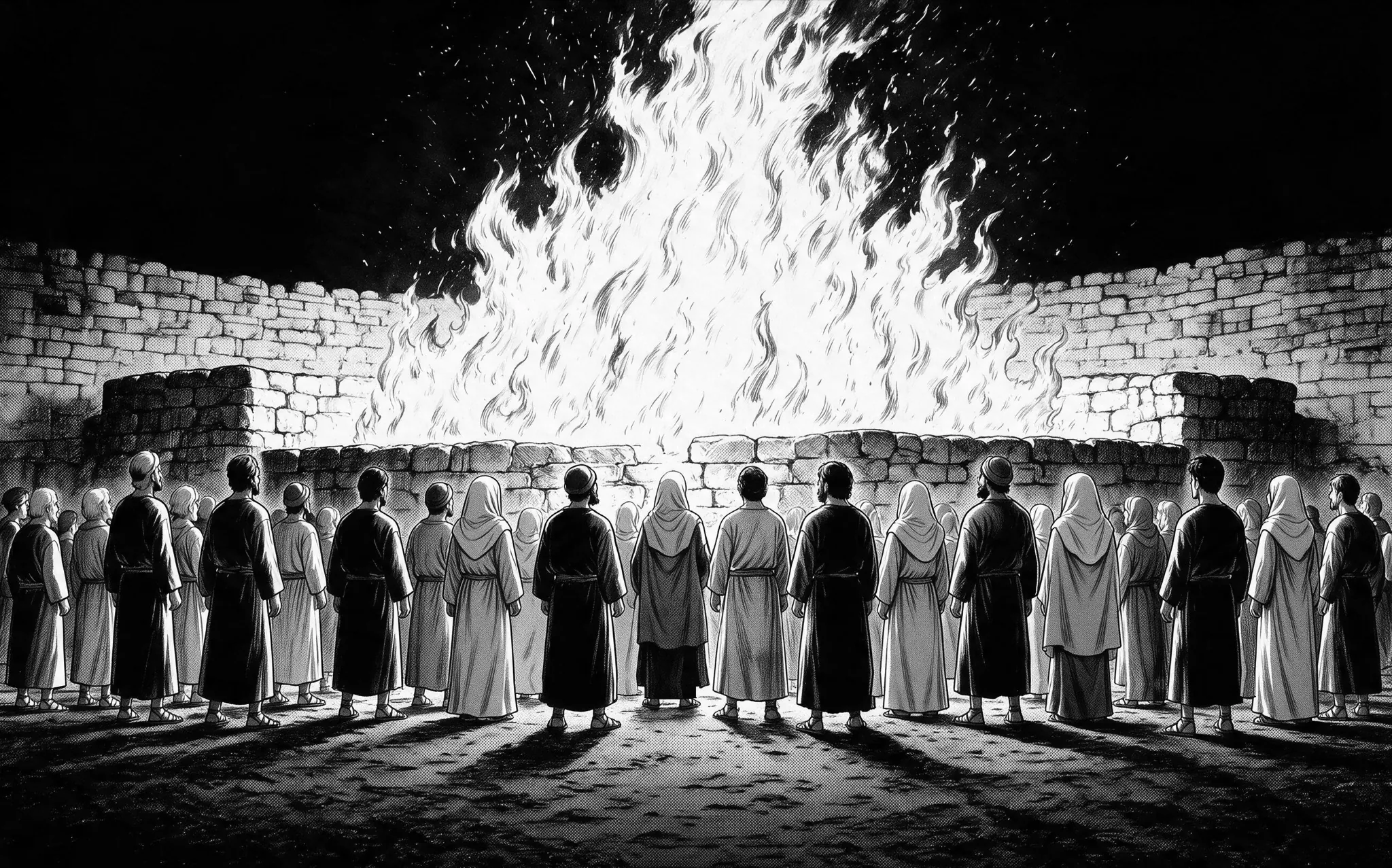
قُلْنَا يَـٰنَارُ كُونِى بَرْدًا وَسَلَـٰمًا عَلَىٰٓ إِبْرَٰهِيمَ
We [i.e., Allāh] said, "O fire, be coolness and safety upon Abraham."
Qur'an 21:69
Saheeh International
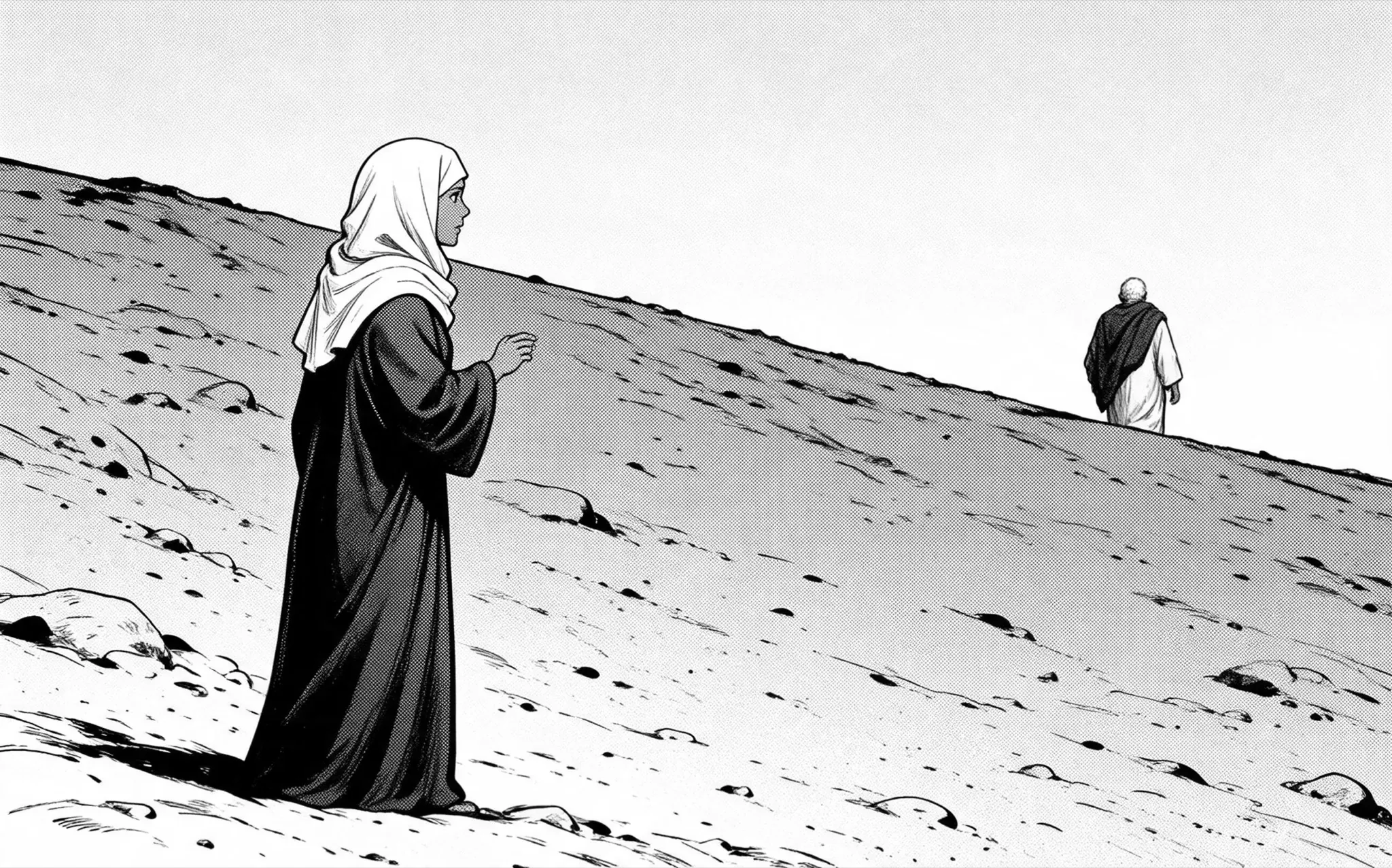
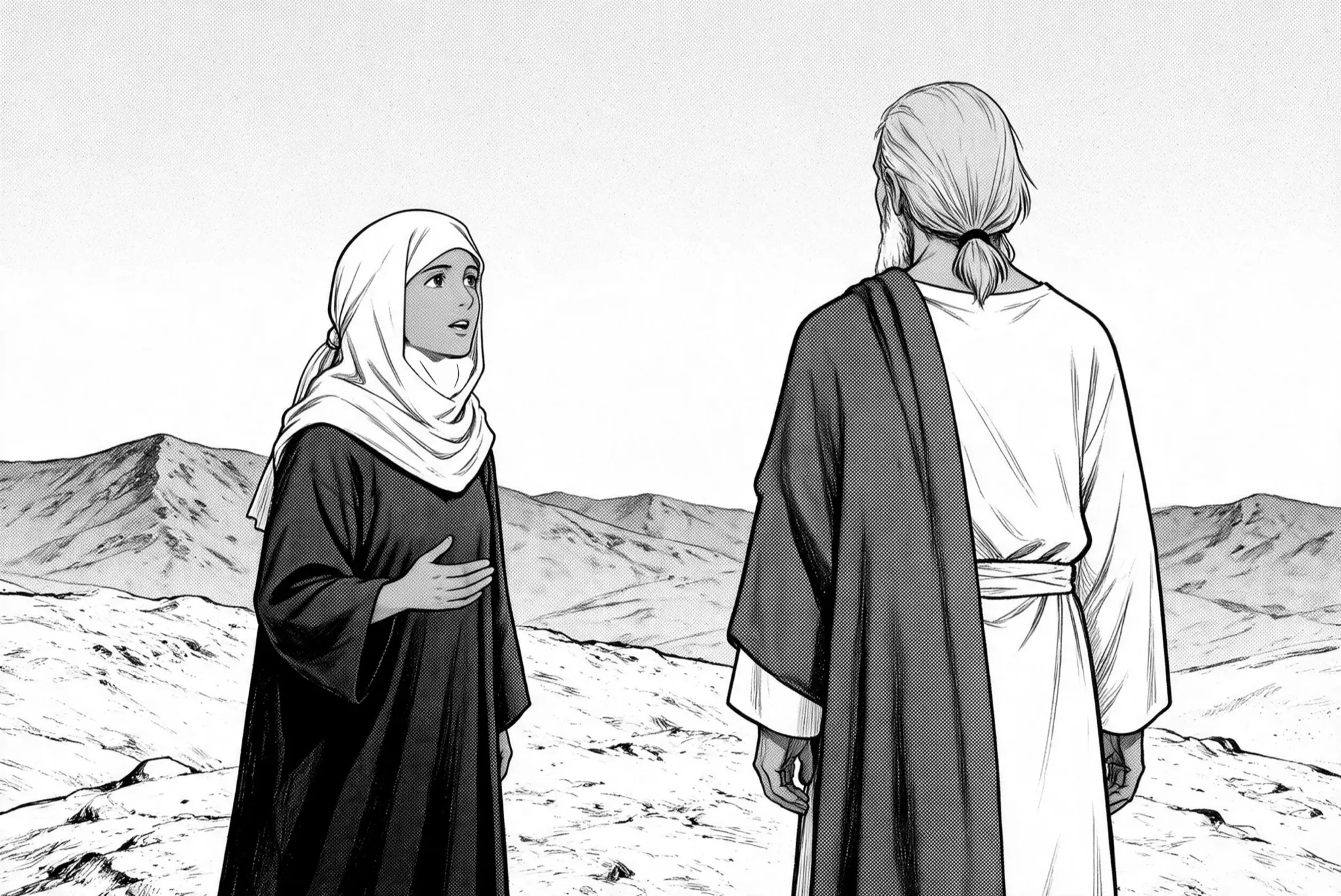
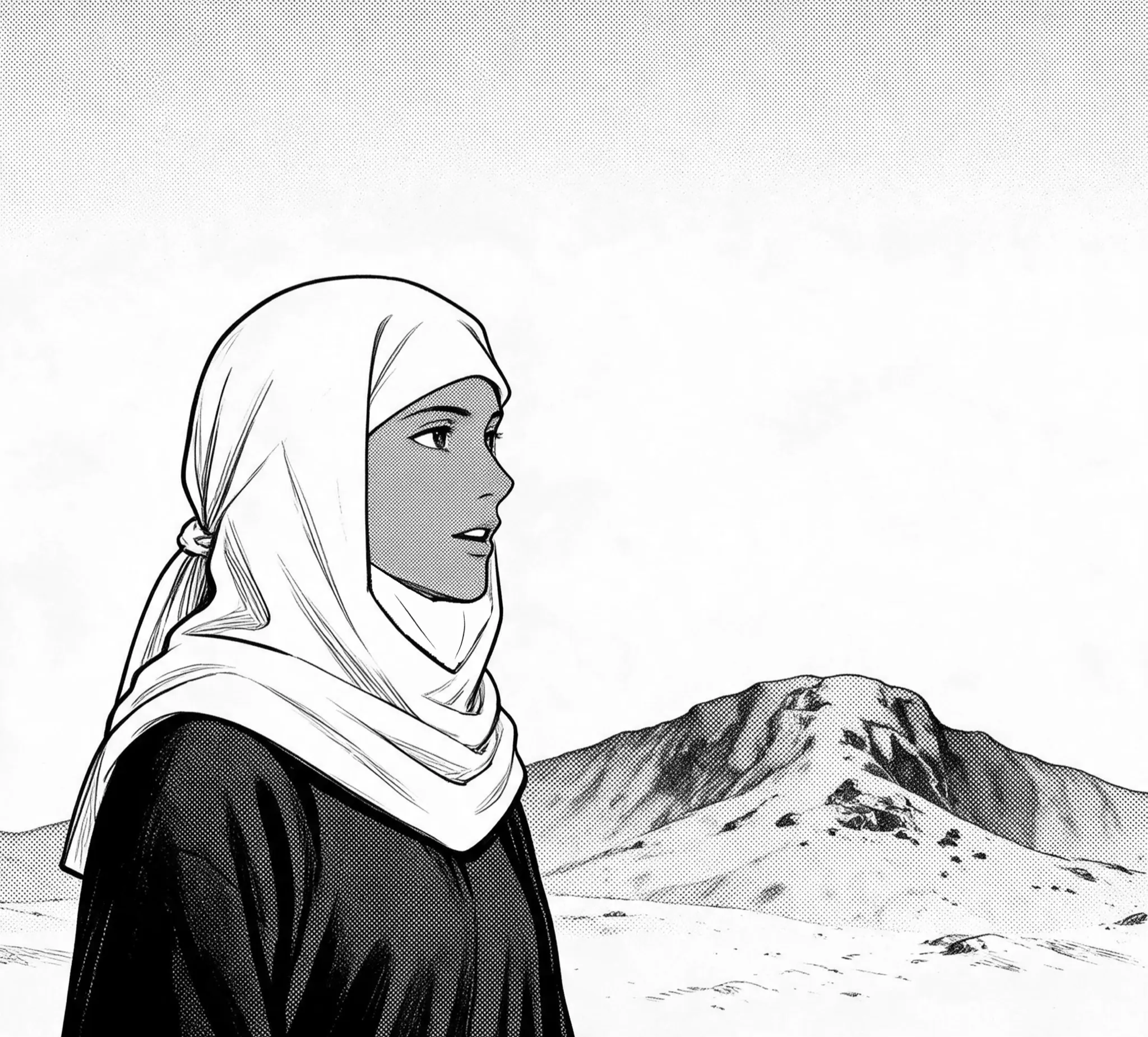
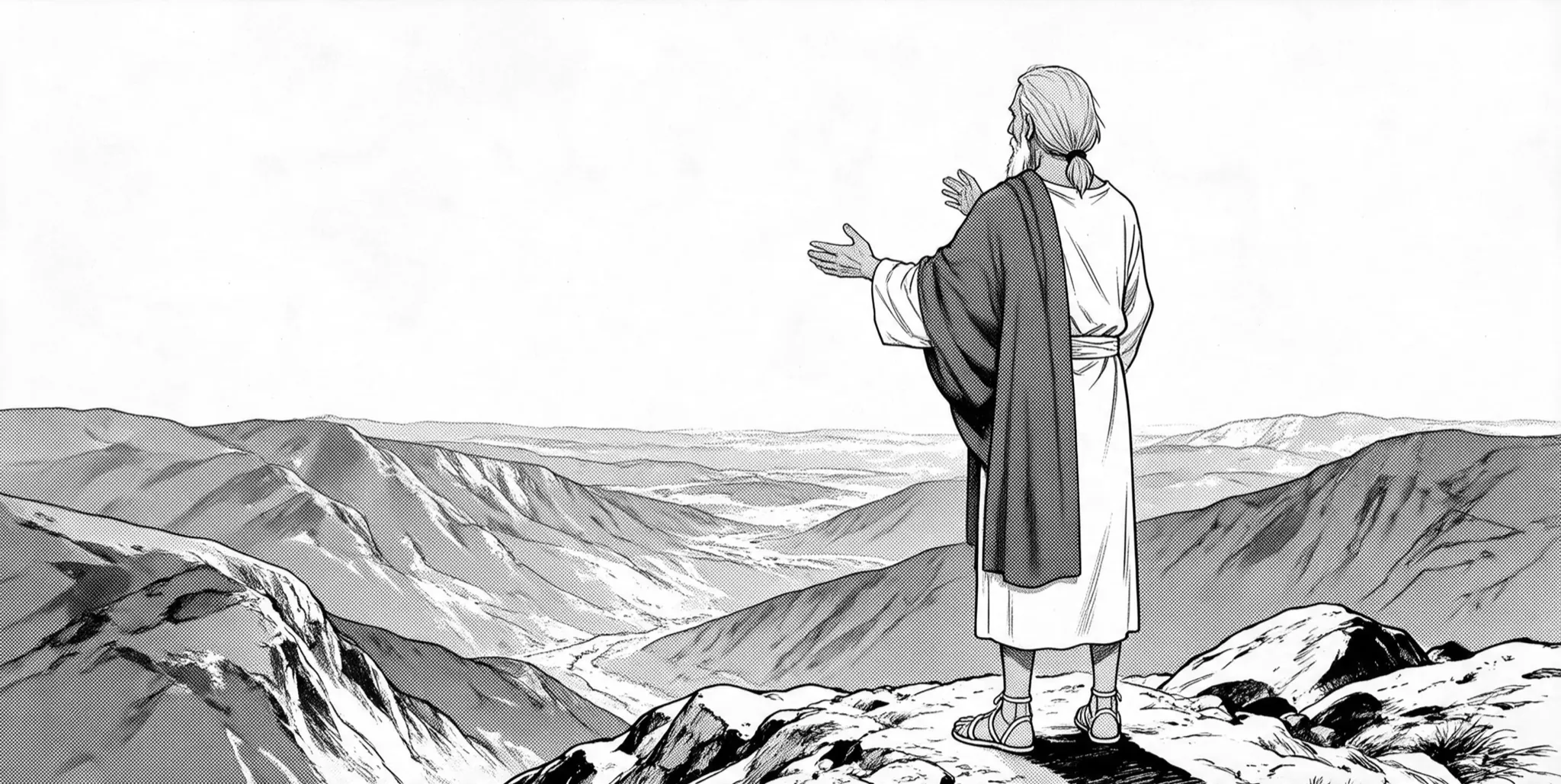
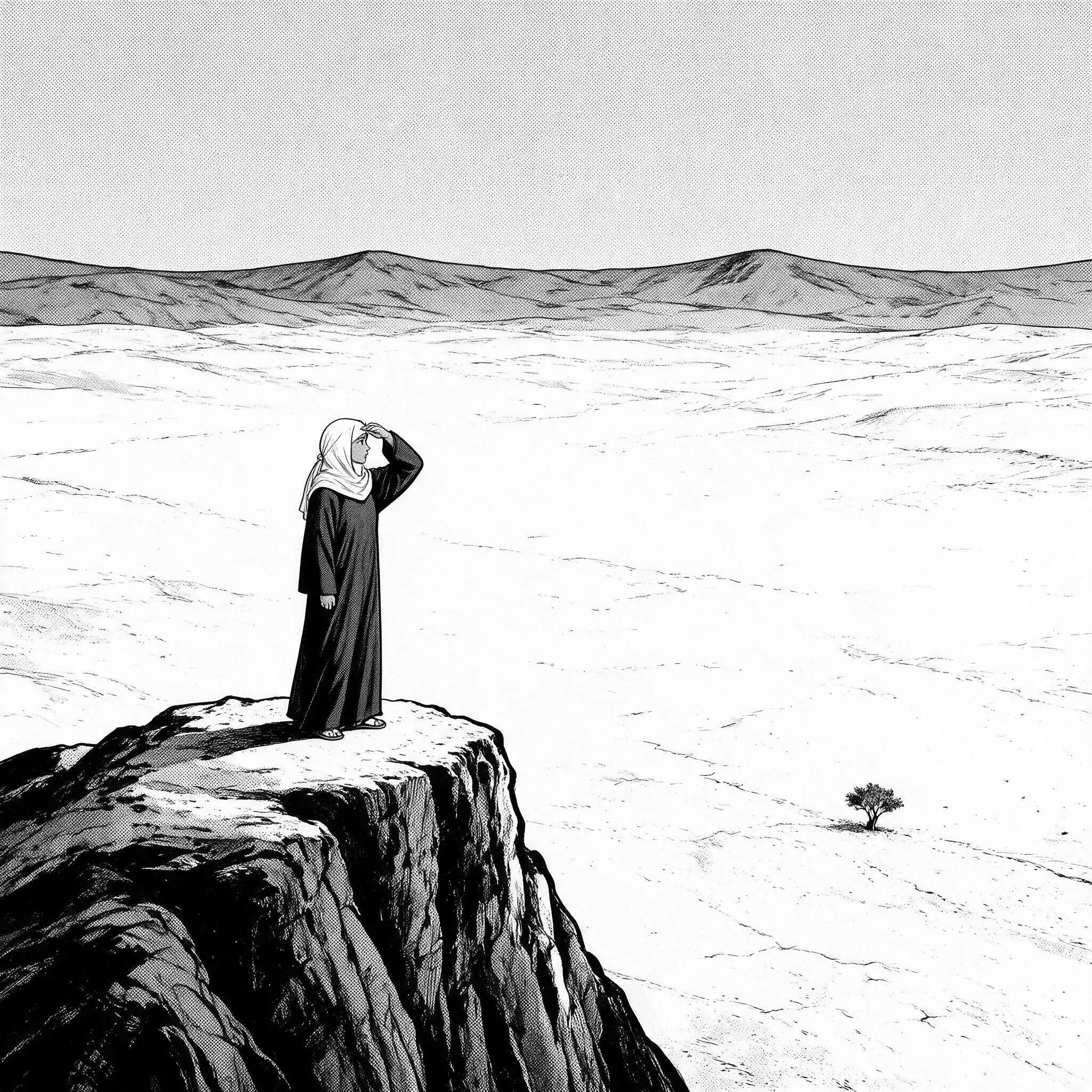
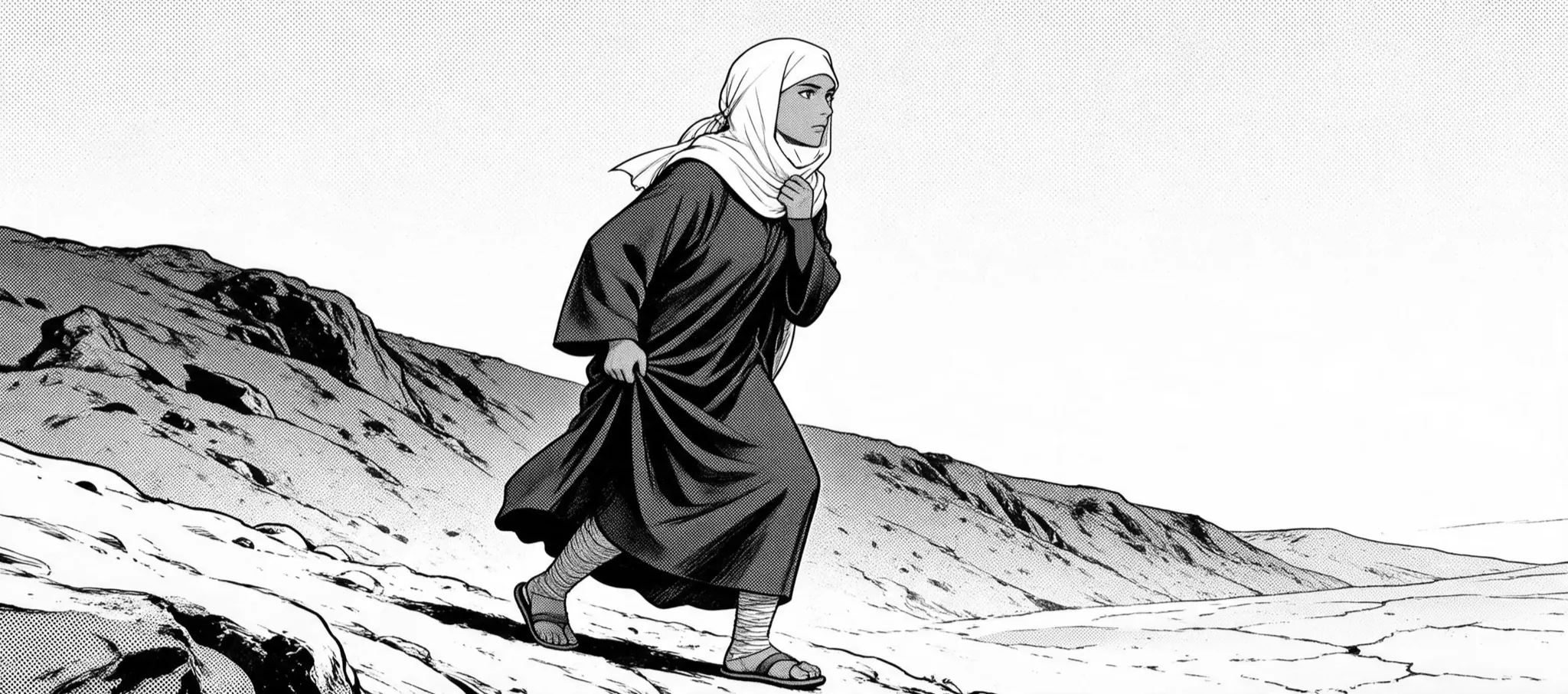
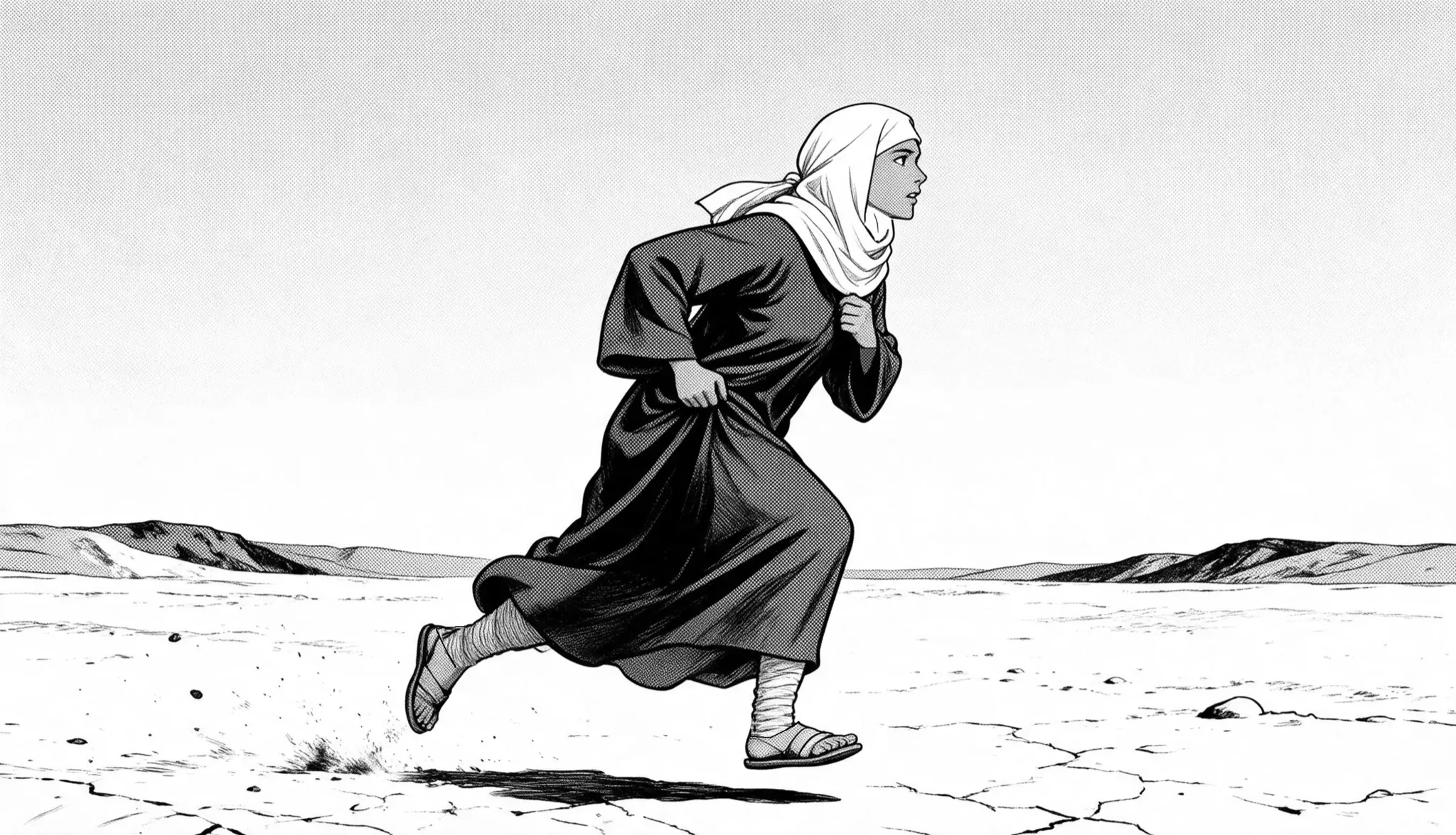
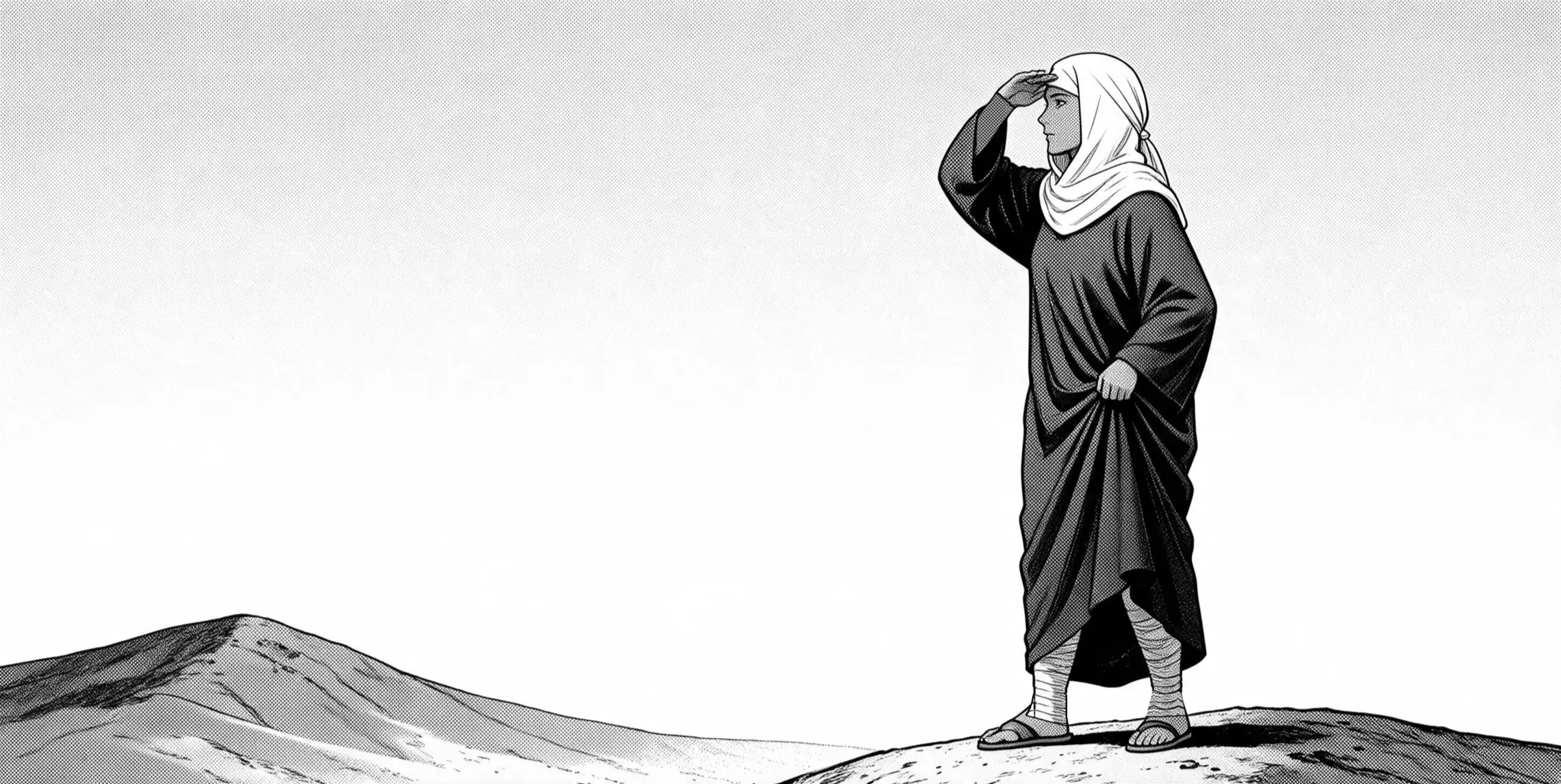
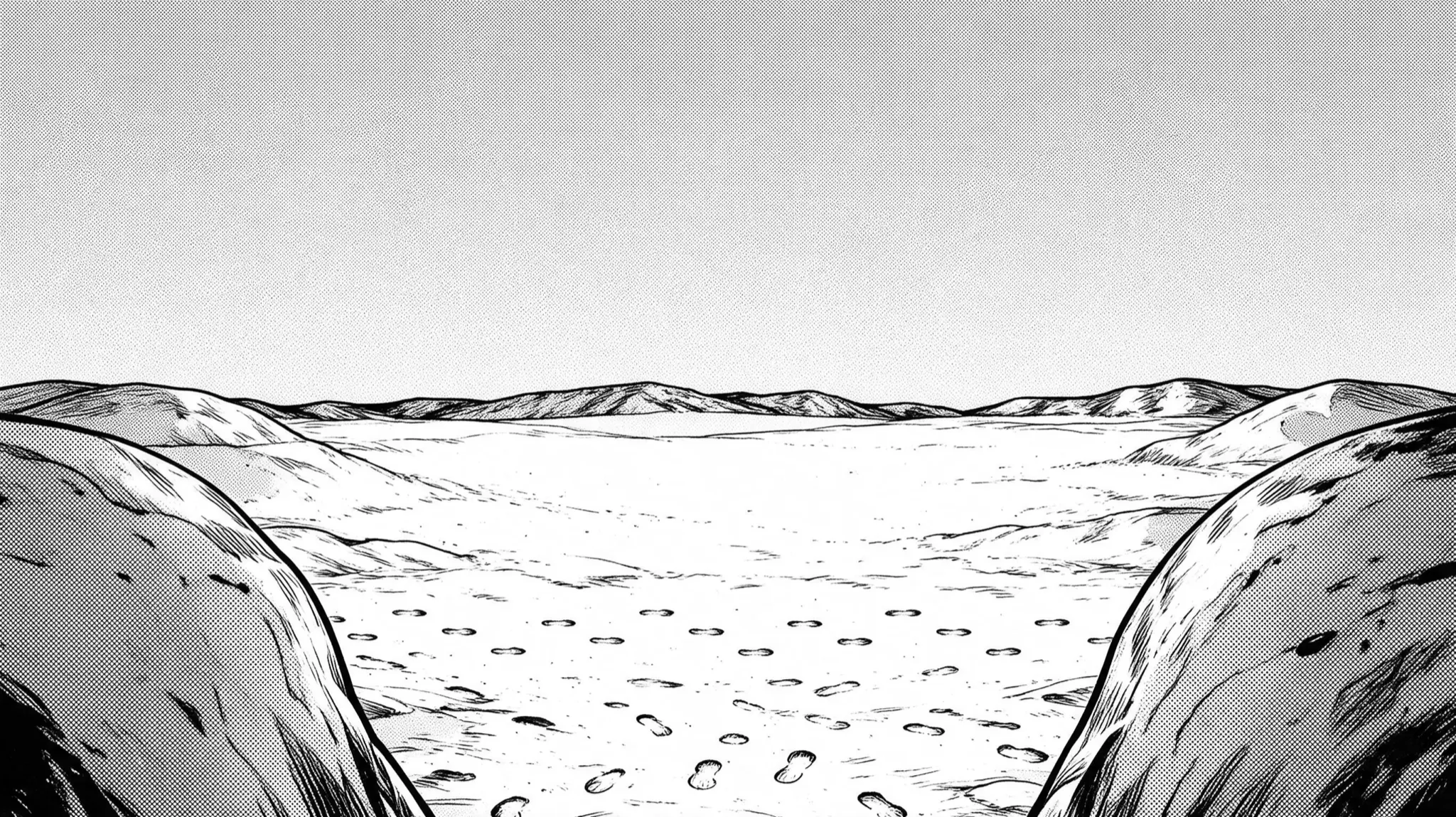
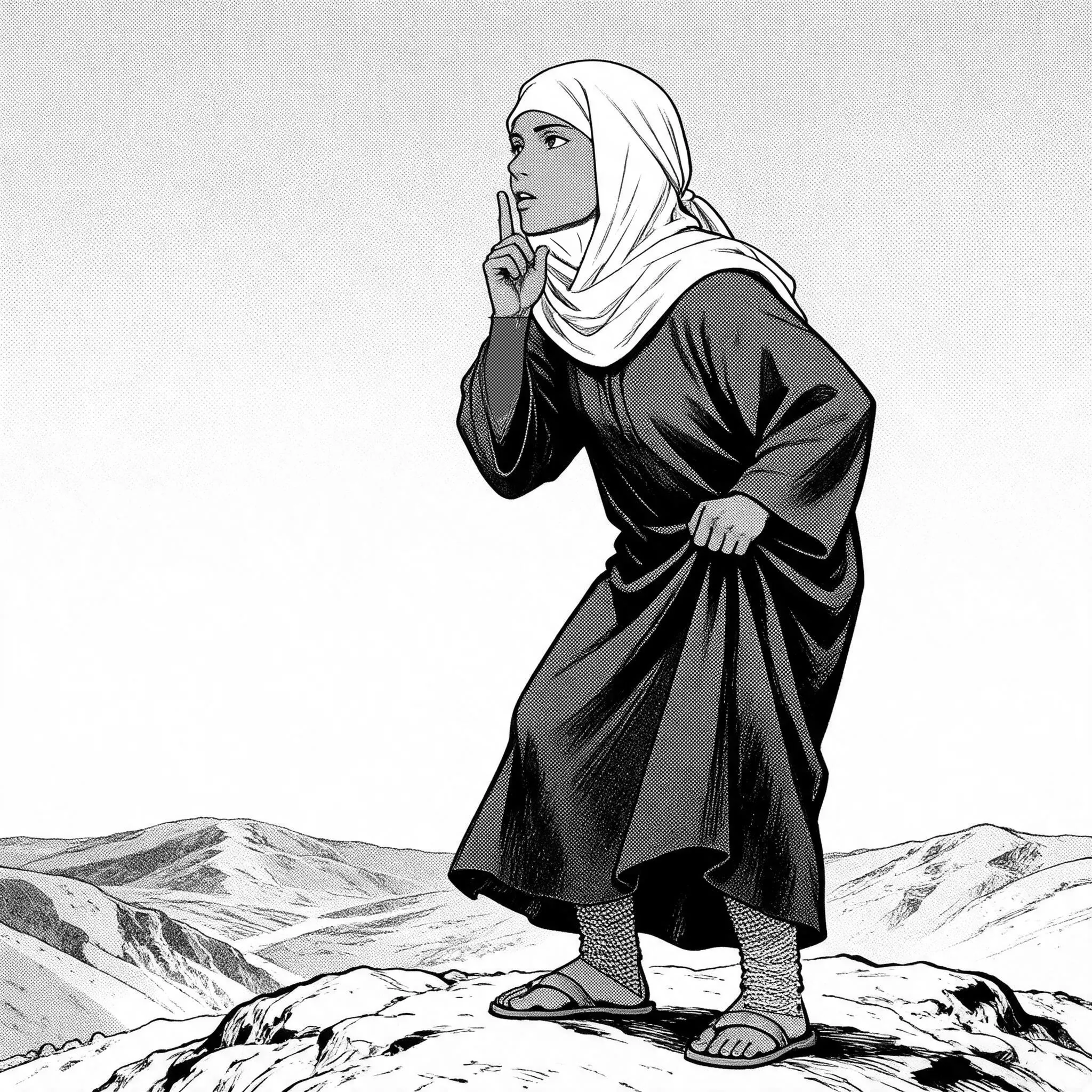
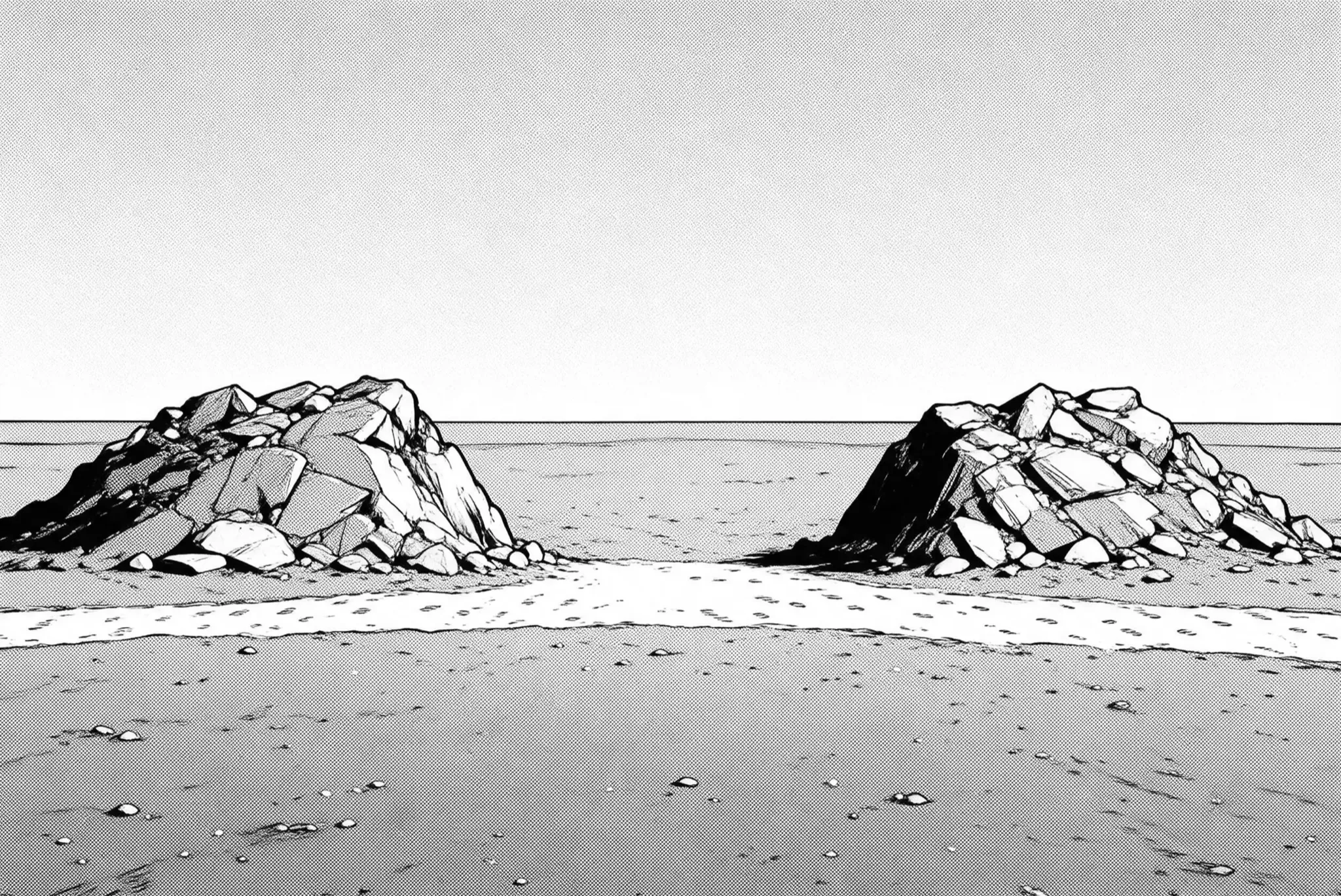
۞ إِنَّ ٱلصَّفَا وَٱلْمَرْوَةَ مِن شَعَآئِرِ ٱللَّهِ ۖ فَمَنْ حَجَّ ٱلْبَيْتَ أَوِ ٱعْتَمَرَ فَلَا جُنَاحَ عَلَيْهِ أَن يَطَّوَّفَ بِهِمَا ۚ وَمَن تَطَوَّعَ خَيْرًا فَإِنَّ ٱللَّهَ شَاكِرٌ عَلِيمٌ
Indeed, aṣ-Ṣafā and al-Marwah are among the symbols of Allāh. So whoever makes ḥajj [pilgrimage] to the House or performs ʿumrah - there is no blame upon him for walking between them. And whoever volunteers good - then indeed, Allāh is Appreciative and Knowing.
Qur'an 2:158
Saheeh International
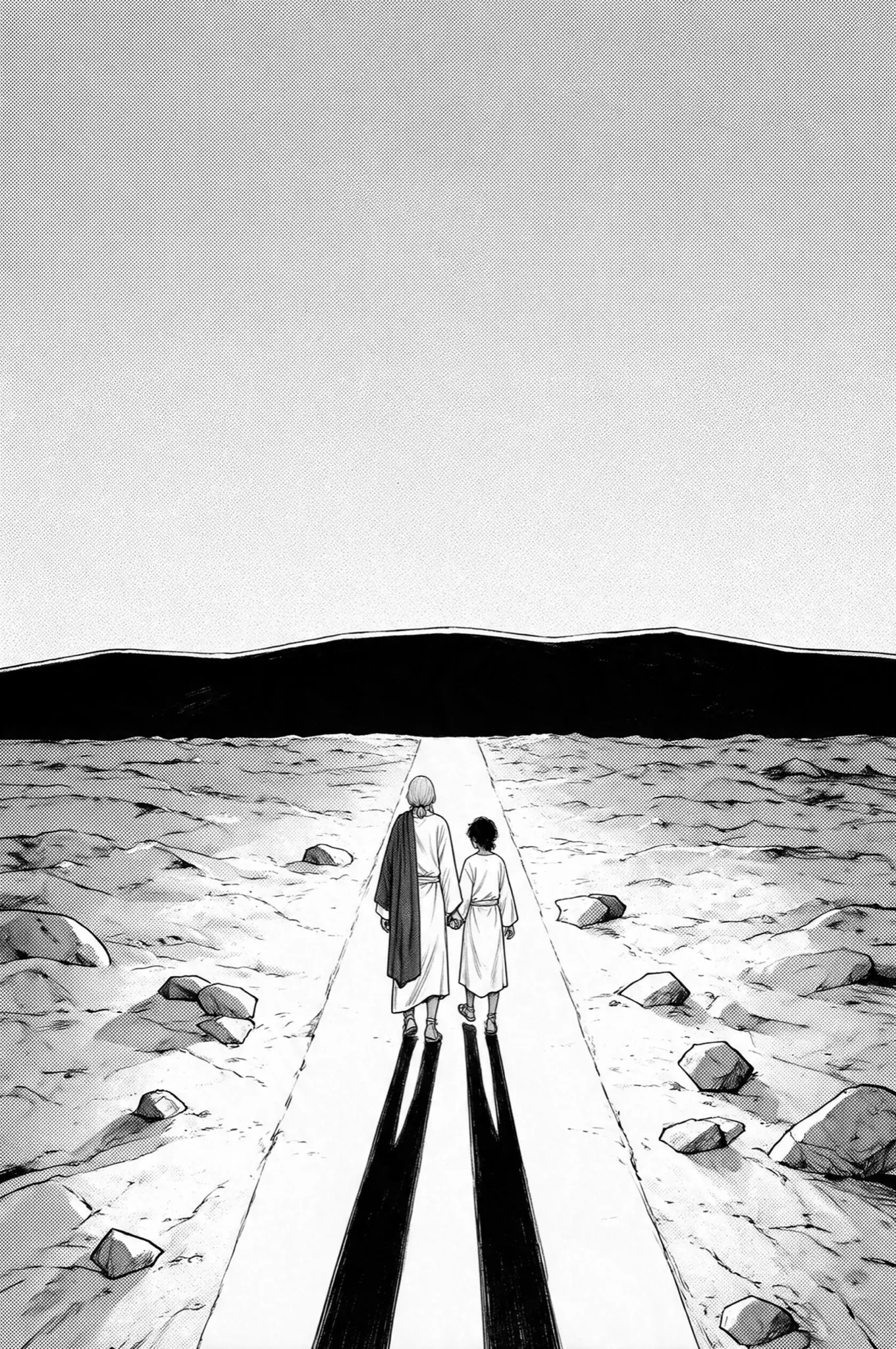
وَنَـٰدَيْنَـٰهُ أَن يَـٰٓإِبْرَٰهِيمُ قَدْ صَدَّقْتَ ٱلرُّءْيَآ ۚ إِنَّا كَذَٰلِكَ نَجْزِى ٱلْمُحْسِنِينَ إِنَّ هَـٰذَا لَهُوَ ٱلْبَلَـٰٓؤُا۟ ٱلْمُبِينُ وَفَدَيْنَـٰهُ بِذِبْحٍ عَظِيمٍ
We called to him, "O Abraham, You have fulfilled the vision." Indeed, We thus reward the doers of good. Indeed, this was the clear trial. And We ransomed him with a great sacrifice,
Qur'an 37:104-107
Saheeh International
Sources
- Qur'an 37:95-96; 21:52-54; 26:70-71 - his people carved their idols with their own hands and worshipped them; 'wood and stone' is Ibn Kathir's gloss in al-Bidaya on 37:95
- Qur'an 6:74 - 'his father Azar'; Sahih al-Bukhari 3350 - Ibrahim meets his father Azar on the Day of Resurrection; al-Tabari's own verdict on 6:74 and Ibn Kathir on 6:74 ('good and strong') - Azar is his father; both also record the genealogists' name for him, Tarih
- Qur'an 6:74; 19:42-44 - Azar worshipped the idols
- Ibn Ishaq in al-Tabari on 6:76 - one hedged report that Azar made idols and sent Ibrahim to sell them; it is not told in this chapter
- Qur'an 21:51 - 'We had certainly given Ibrahim his sound judgement before'; Ibn Kathir on 21:51 (from childhood); Mujahid in al-Tabari on 21:51 (the source for p03's caption)
- Qur'an 16:120; 6:161; 3:67; 21:52-56 - a hanif, never of the polytheists
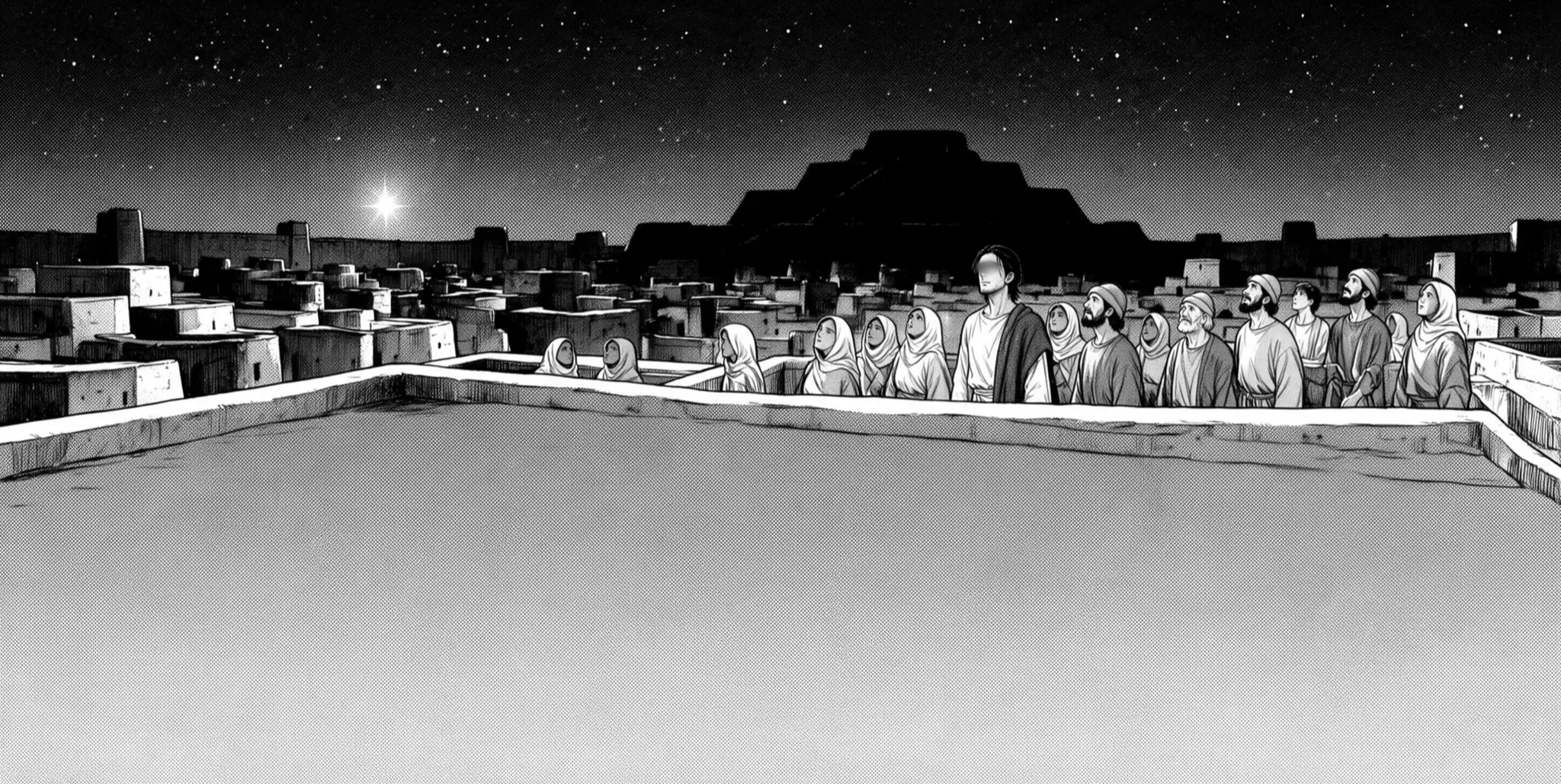
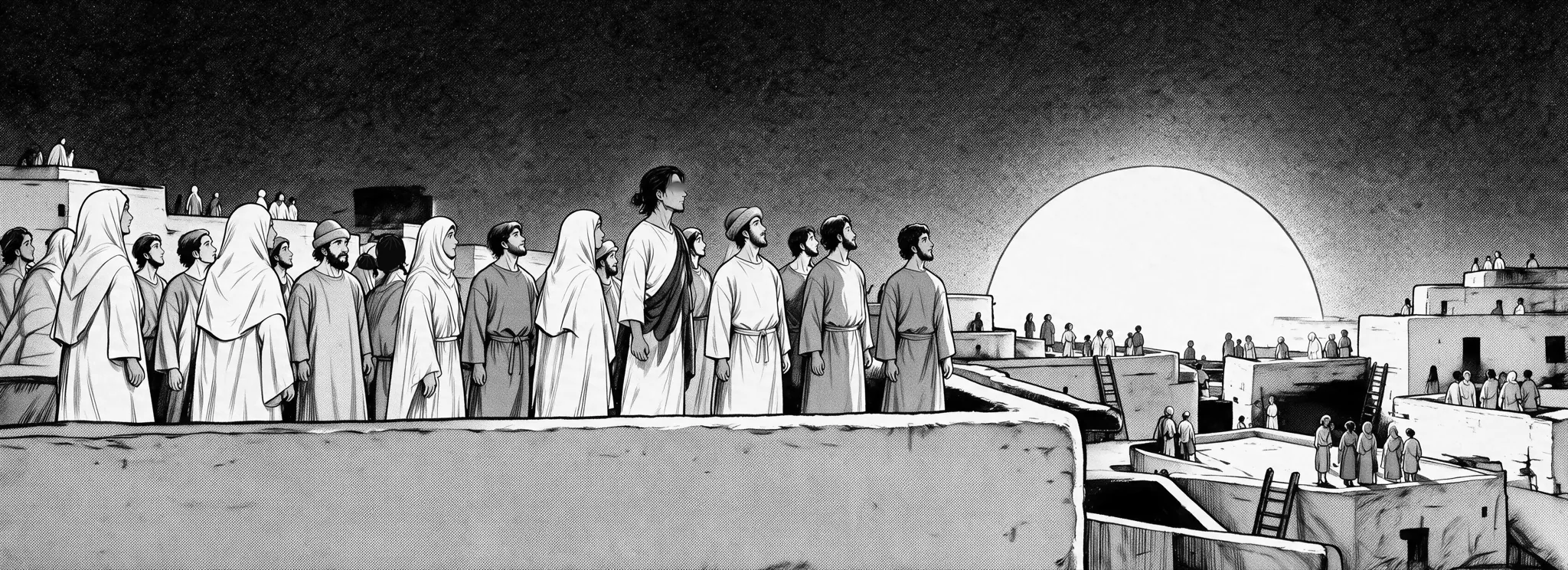
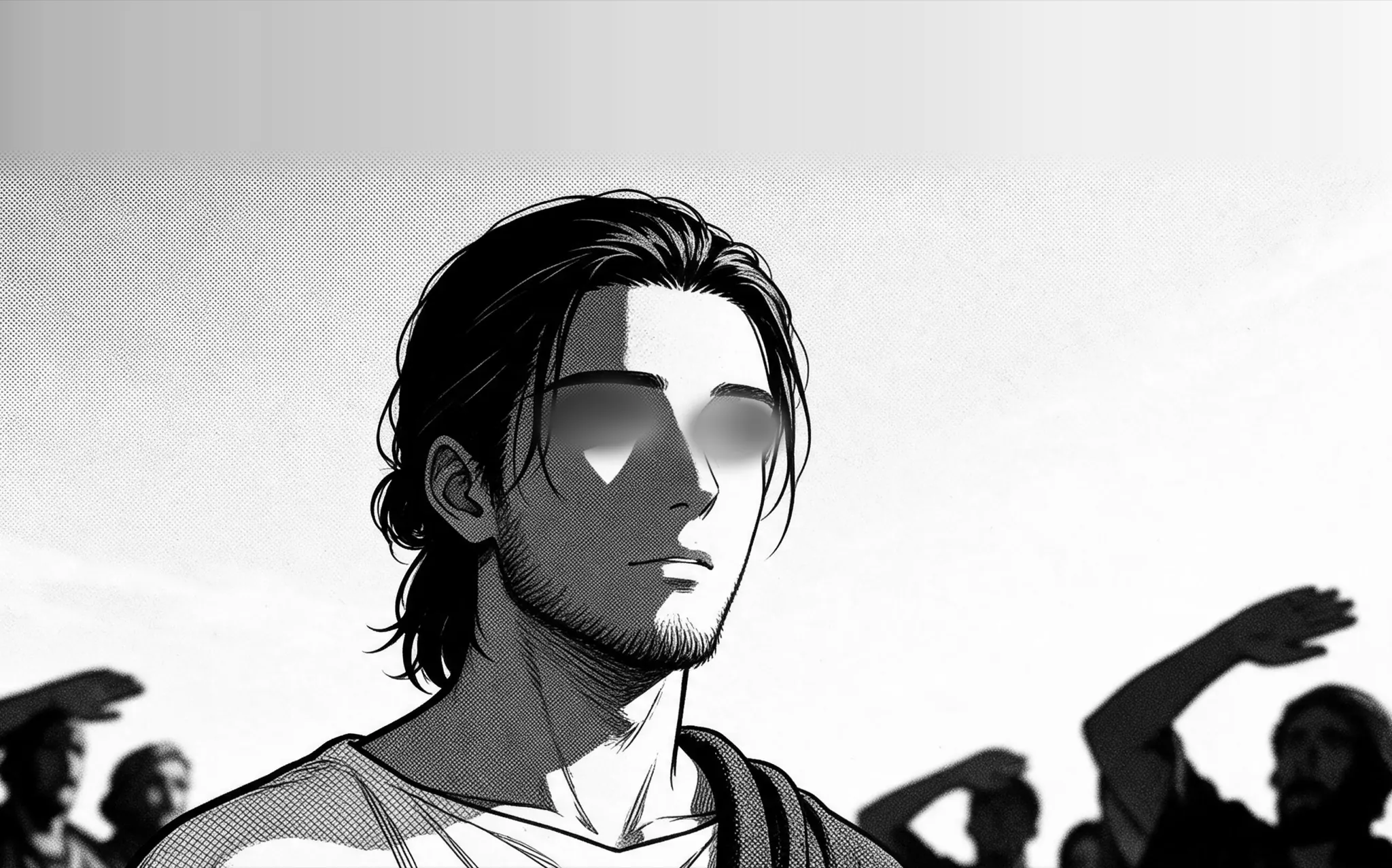
- Qur'an 6:75 - the pause page; 6:76-78 - the star, the moon, the sun; 6:83 - 'that was Our argument which We gave Ibrahim against his people'. The scholars read the scene two ways. Ibn Kathir on 6:79 reads it as a debate with his people, by 21:51-52, 16:120 and 6:161, and so do al-Zajjaj (in al-Qurtubi on 6:76) and the first of the four interpretations al-Baghawi reports on 6:76 from those who reject the literal reading (to draw his people on and show them their error); this is the reading the chapter draws, with his people in every sky panel and the sky panels kept in the one city. al-Tabari's own verdict on 6:76 is the other reading, from Ibn Abbas, a stage of his own reflection, and Ibn Kathir records it as his choice. Ibn Kathir's al-Bidaya sets the address among the star-worshippers of Harran
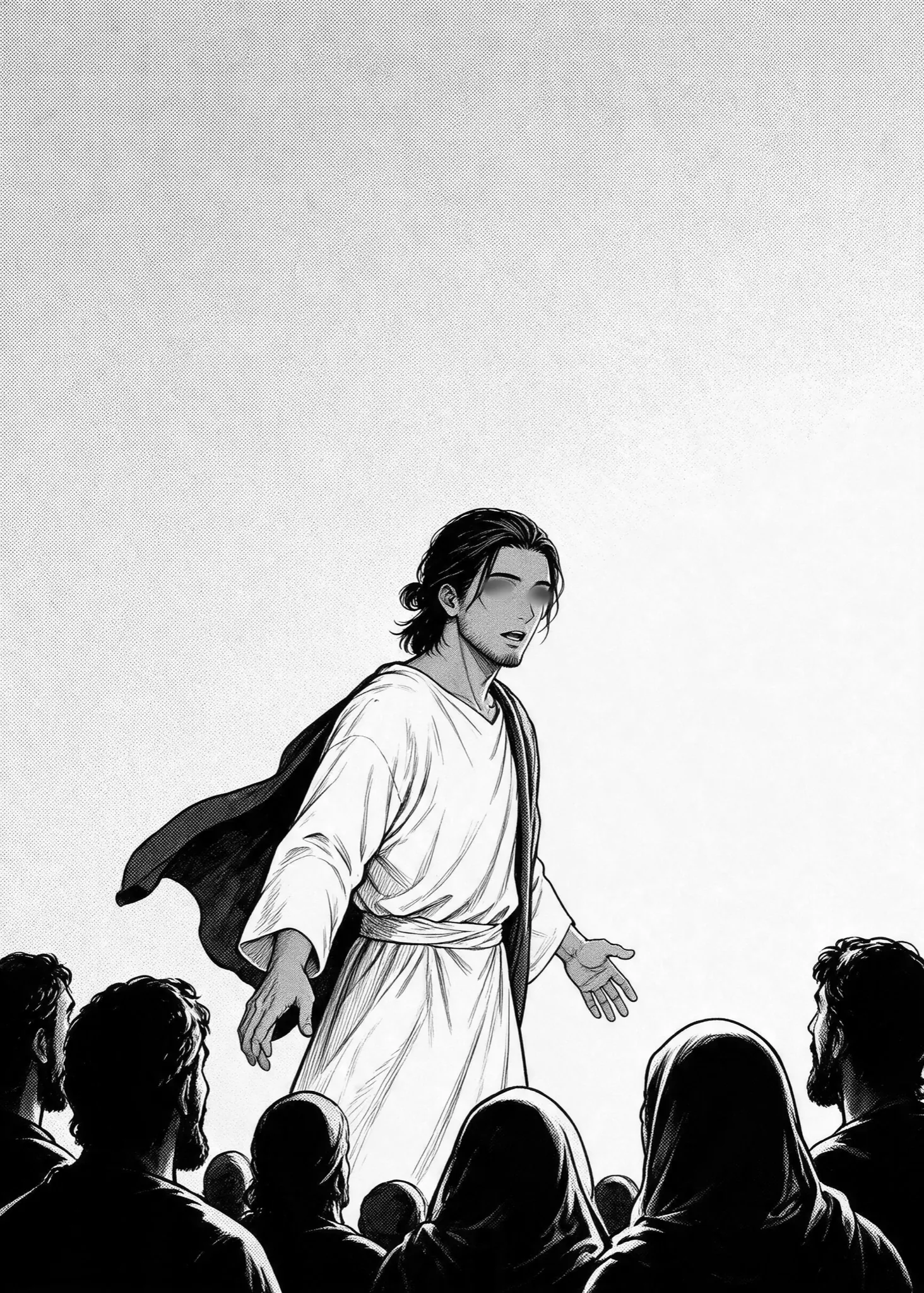
- Qur'an 6:79 - Ibrahim's declaration (p08)
- Qur'an 19:41-47 - the appeal to his father, the threat, the greeting of peace (p09 to p11); Ibn Kathir on 19:42-45 - the gentleness of the address; 9:114 and 60:4 - how his asking forgiveness for his father ended, which this chapter does not tell
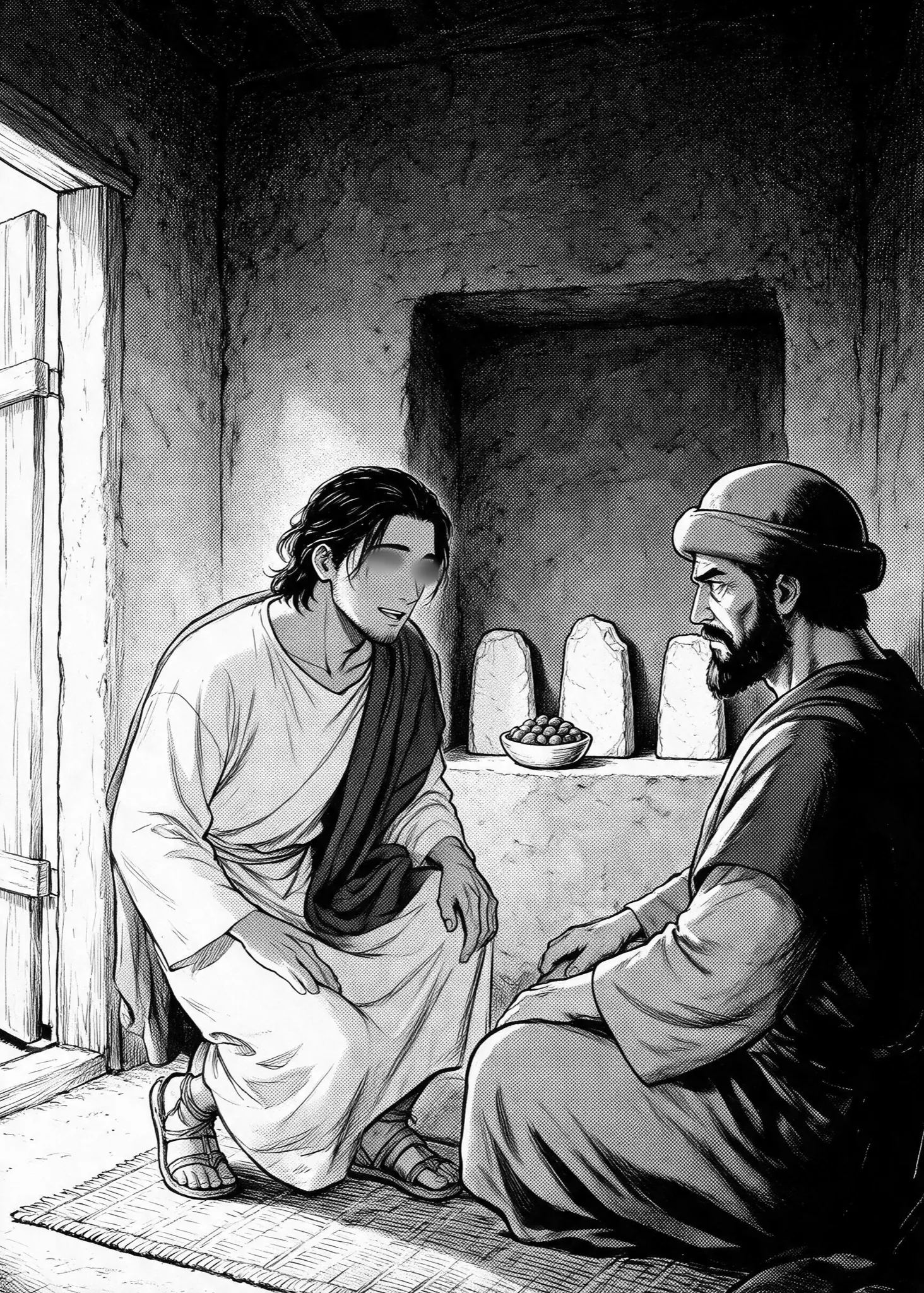
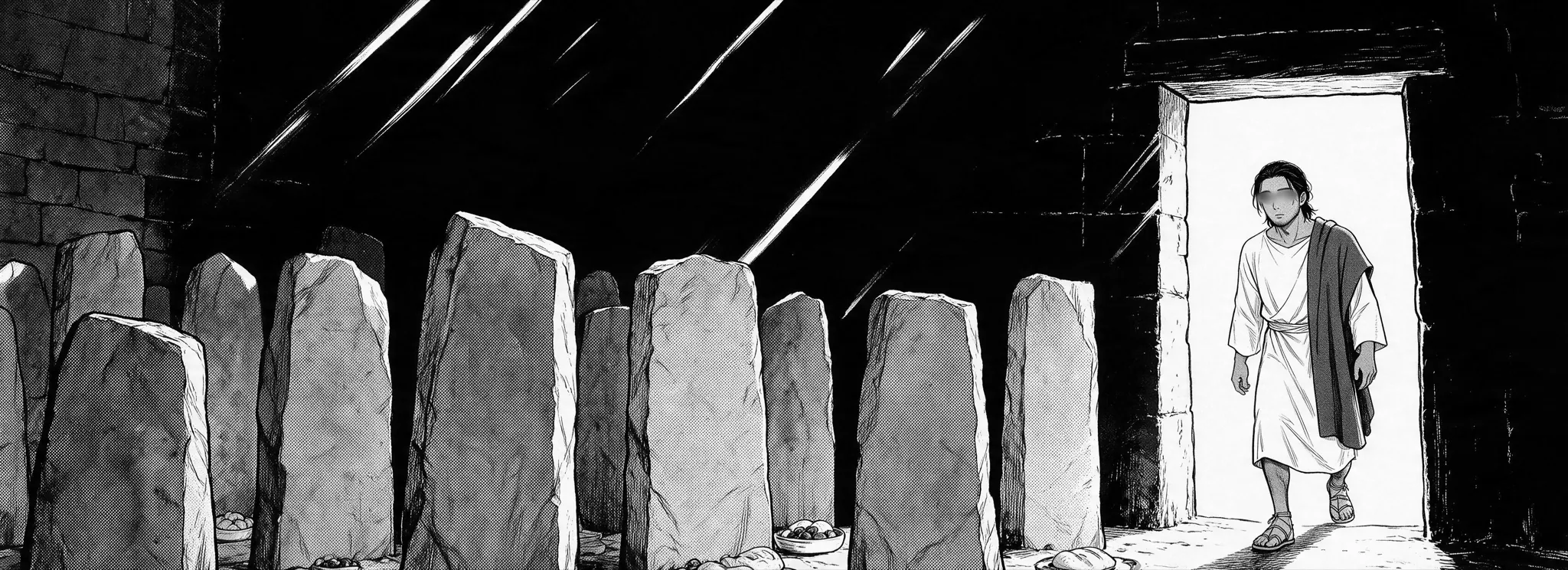
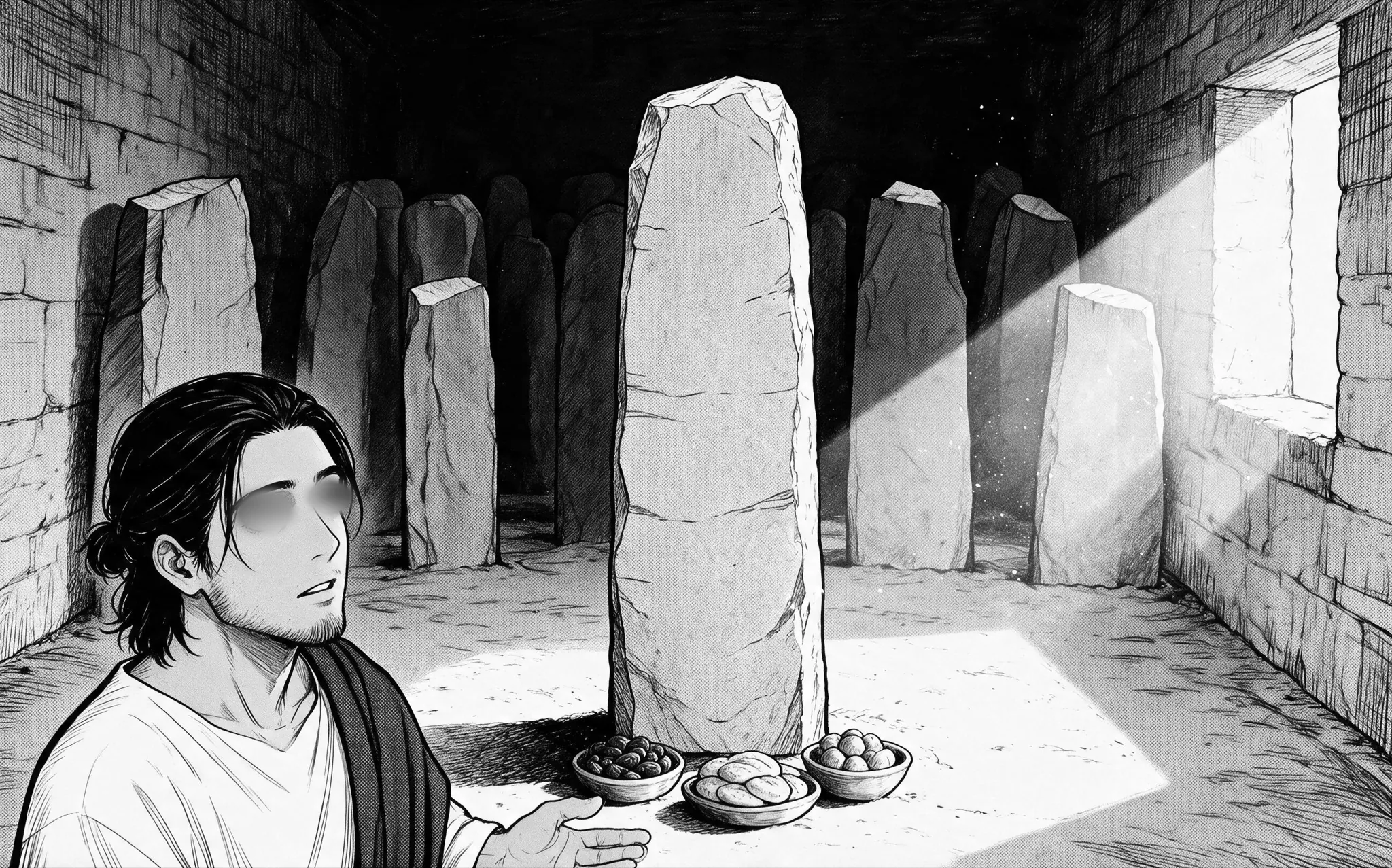
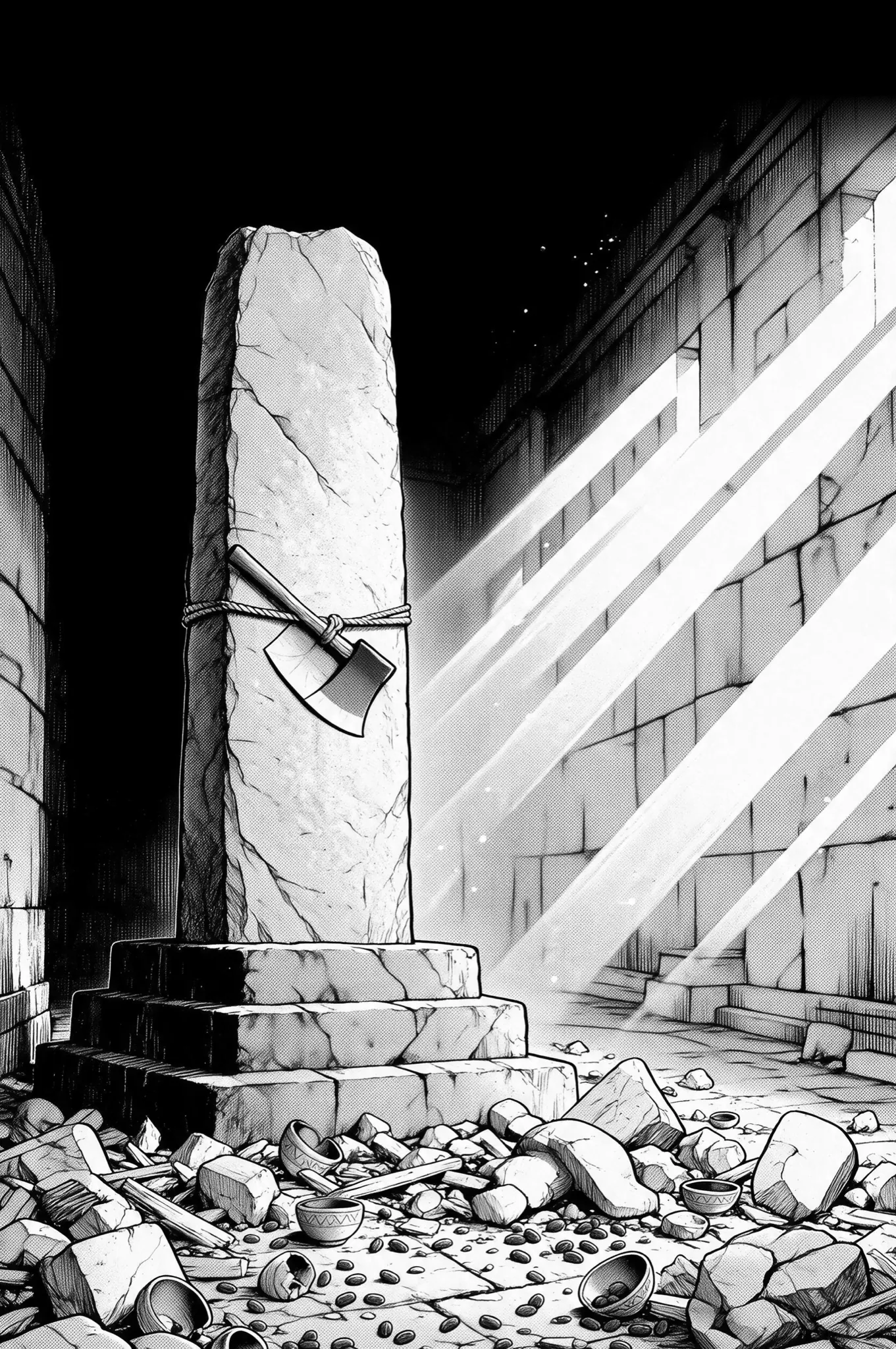
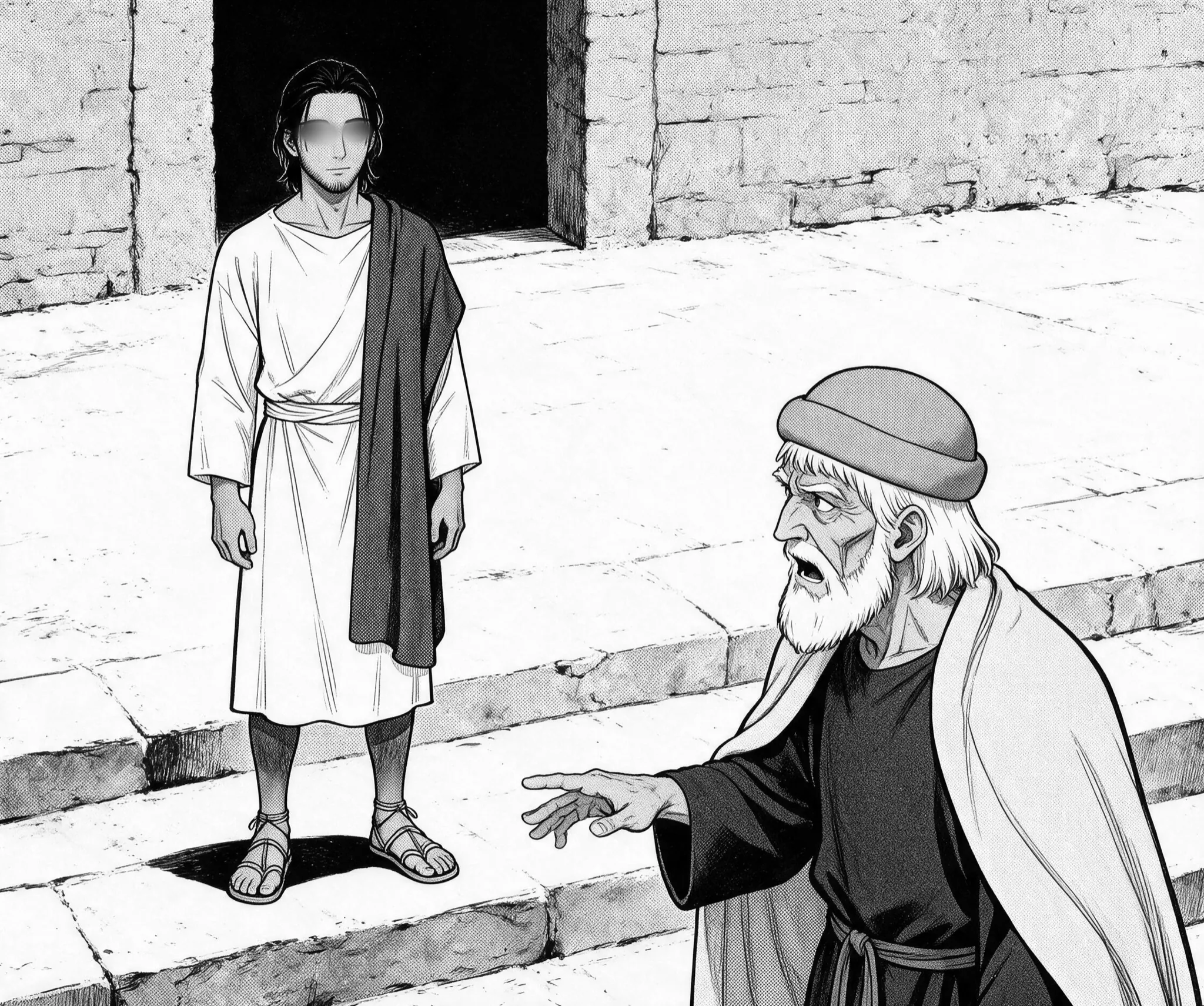
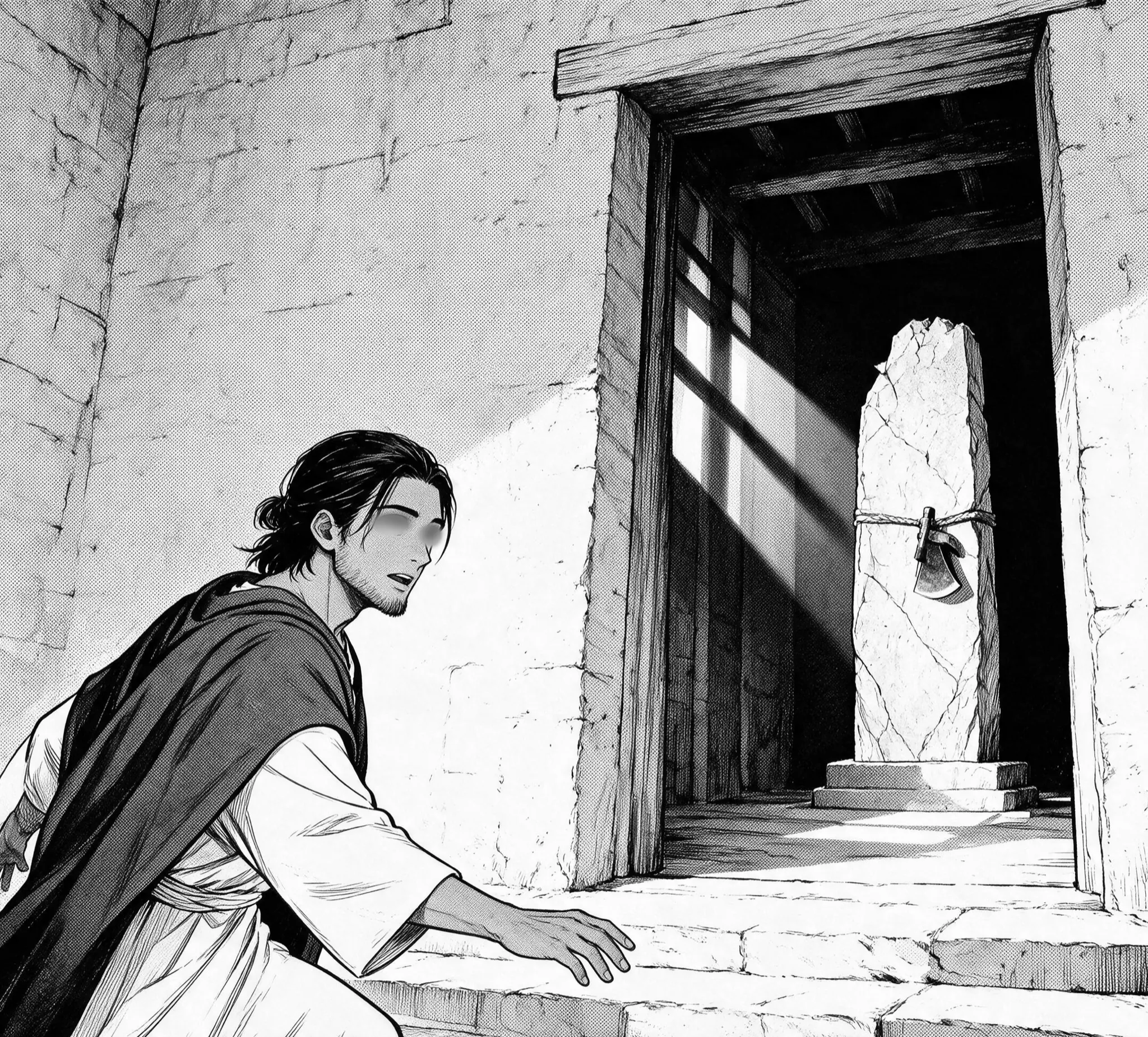
- Qur'an 37:88-93; 21:57-58 - he turned away, the food before the idols, his question to them (p14), the blows with the right hand, all but the largest; al-Tabari on 37:93 - striking with the right hand, with an axe in his hand; Ibn Kathir, al-Bidaya - a yearly festival outside the town; al-Suddi in al-Tabari on 21:58 - the food set before the idols for a blessing, the great idol facing the door, the ranks in descending size, an iron axe hung on its neck; Mujahid in al-Tabari on 21:58 - the axe leaned against the chest of the largest, which is where the chapter draws it; Ibn Ishaq - tied to its hand; Ibn Kathir on 21:58 - an adze in its hand
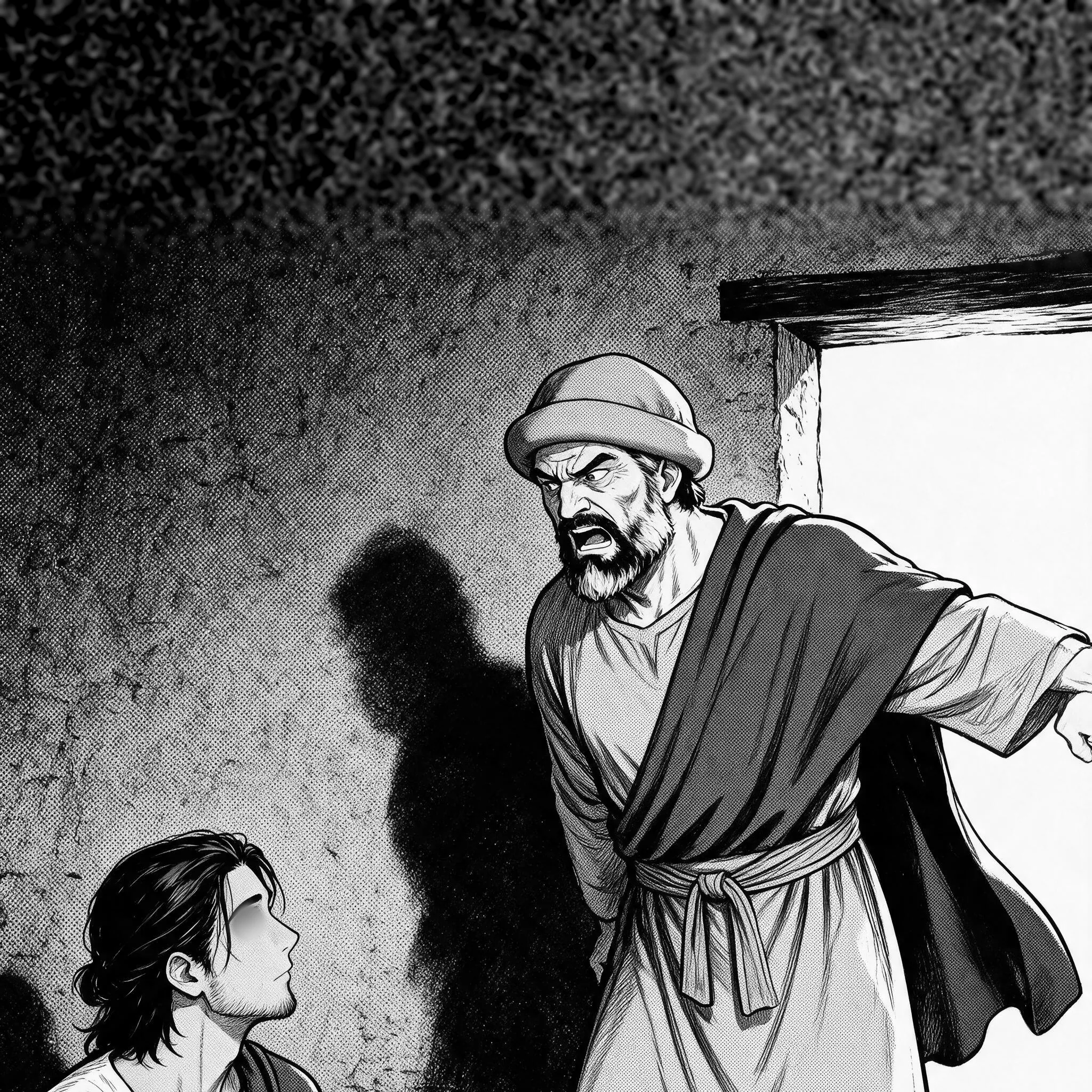
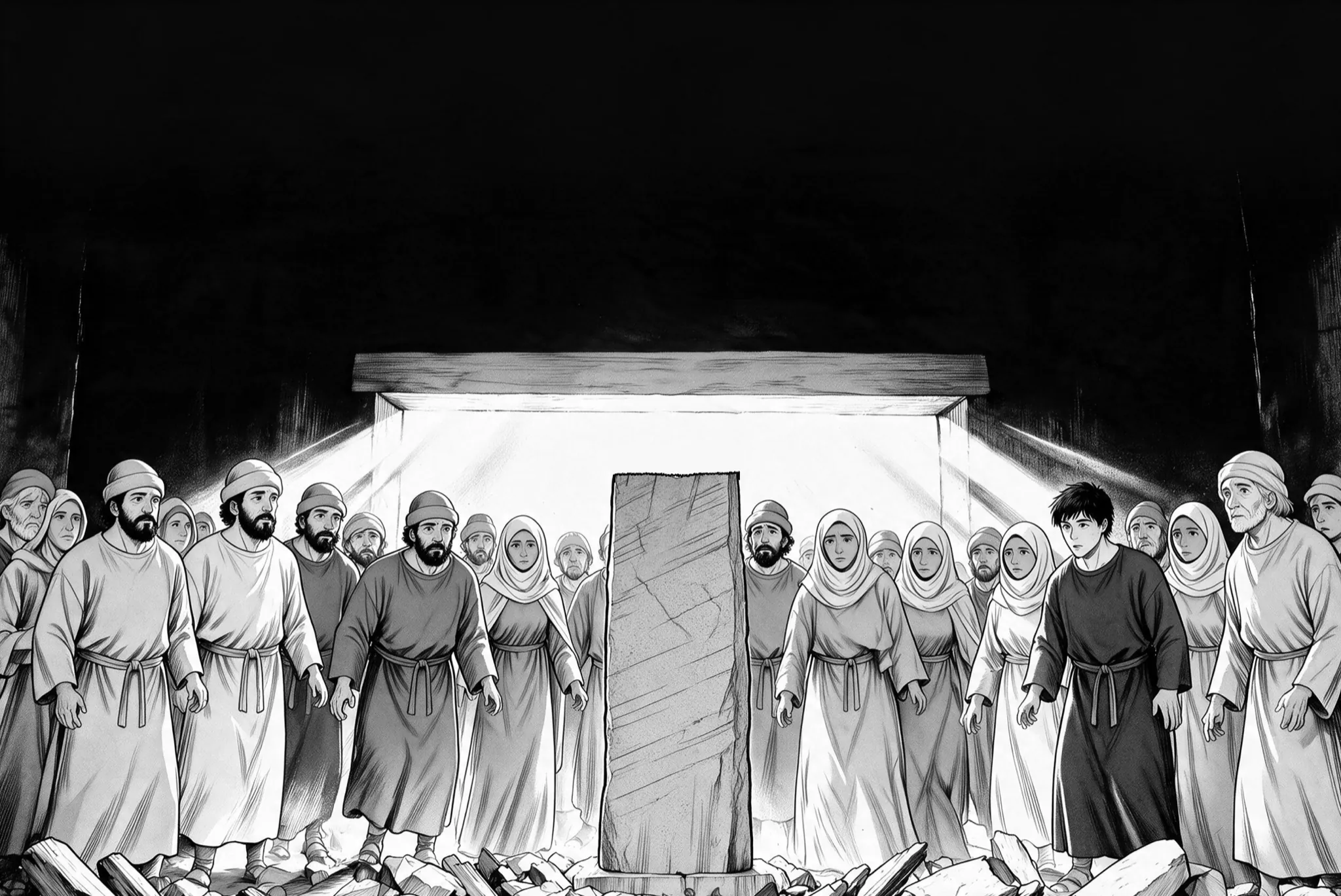
- Qur'an 21:59-61 - who did this, 'a young man called Ibrahim', bring him before the people; Ibn Kathir and al-Qurtubi on 21:60 - fata, a young man; Ibn Abbas in al-Qurtubi - every prophet was sent young; Shu'ayb al-Jaba'i (sixteen) and Ibn Jurayj (twenty-six) in al-Qurtubi - his age
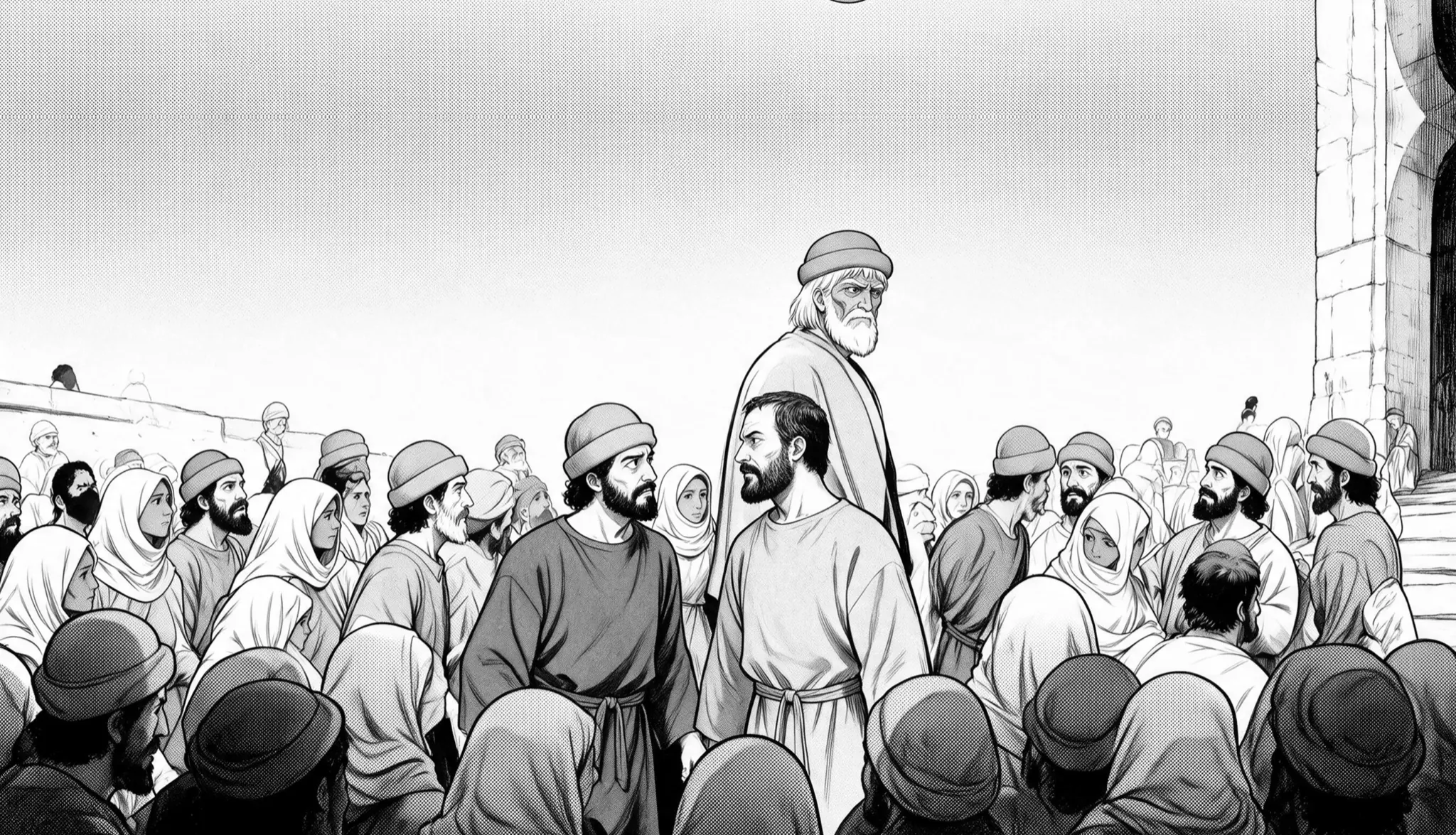
- Qur'an 21:62-67 - their question, his answer, their turning to one another and back, his rebuke (p17 to p20); al-Tabari on 21:64 - they looked at one another; Ibn Kathir on 21:64-65
- Qur'an 21:63 - 'Rather, this - the largest of them - did it, so ask them, if they should speak' is quoted as the Qur'an gives it, each bubble in its own edition's wording (p18). Sahih al-Bukhari 3358 and Sahih Muslim 2371 count it among three statements of Ibrahim, two of them for Allah's sake; Ibn Kathir on 21:63 - he meant them to come to it themselves and admit that the idols do not speak
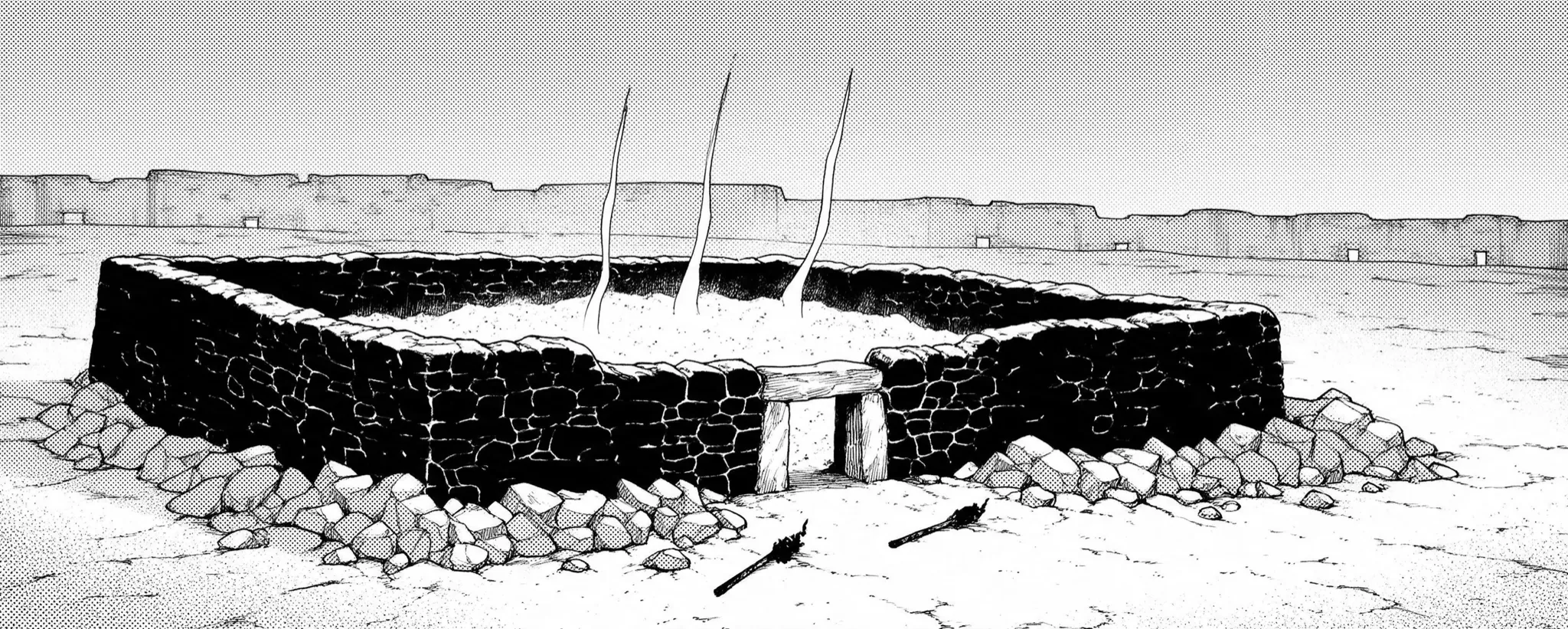
- Qur'an 21:68 - 'burn him and support your gods' (p21); 37:97 - 'build for him a structure and throw him into the blaze'; 29:24 - 'kill him or burn him'; al-Tabari on 21:68 (Mujahid, and Mujahid from Ibn Umar) - 'burn him' was said by one man, whom the chapter leaves unnamed; Ibn Abbas in al-Qurtubi on 37:97 and Muqatil in al-Baghawi on 37:97 - the stone enclosure, thirty cubits; al-Suddi and Ibn Ishaq - the wood gathered; al-Tabari on 37:97 - like an oven; Ibn Kathir - a pit
- al-Tabari on 21:69 (Mu'tamir's report), Ibn Kathir on 29:24 and al-Qurtubi on 21:68 (Ibn Ishaq) - he was bound before the throw; Ka'b al-Ahbar in al-Tabari, Ibn Kathir, al-Qurtubi and al-Baghawi on 21:69 - the fire burned nothing of him but his bonds. The chapter draws neither the binding nor the cord
- Ibn Kathir on 21:68 and in al-Bidaya, al-Qurtubi and al-Baghawi - the catapult, which al-Tabari does not have; it is not told or drawn here
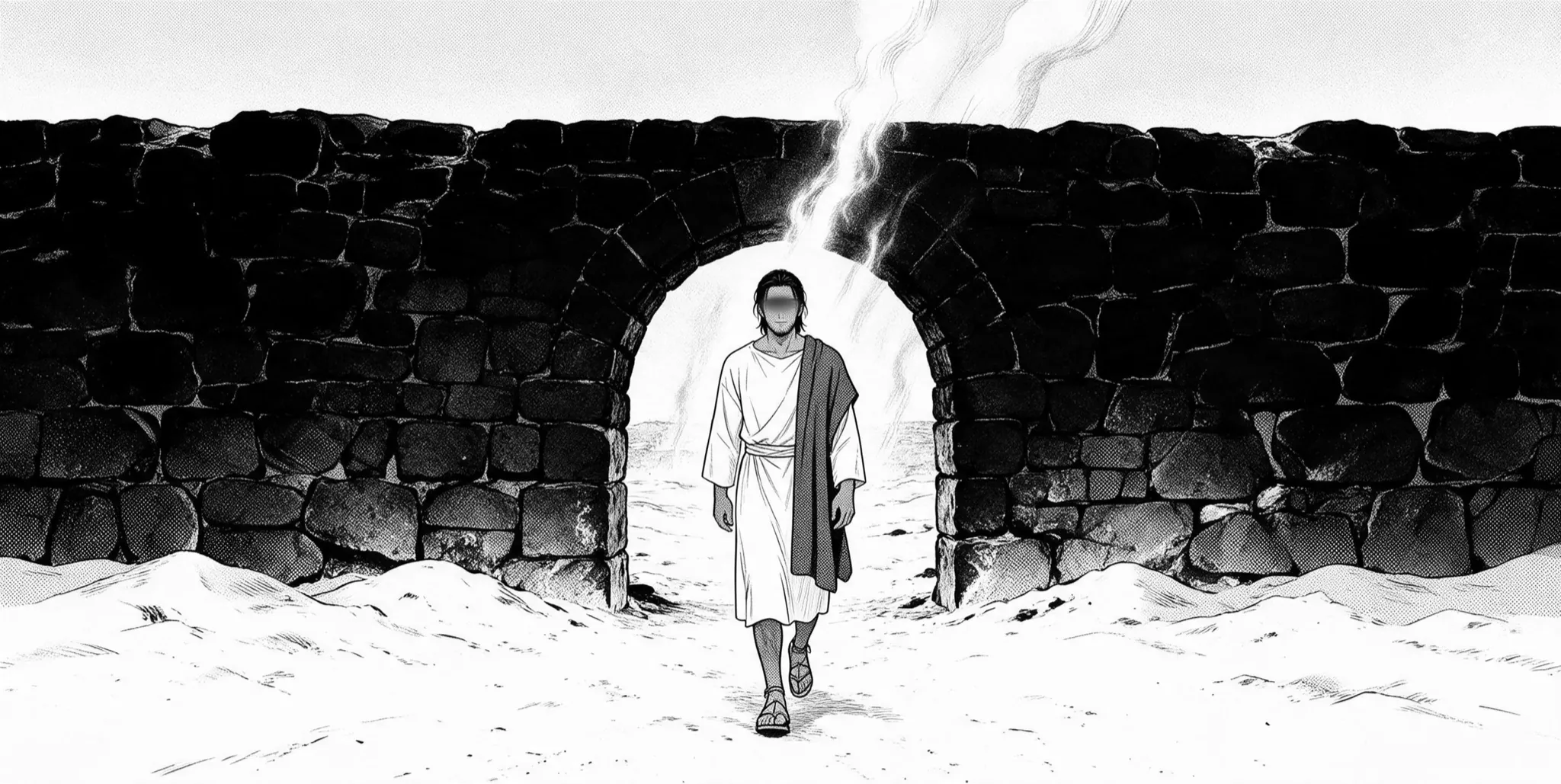
- Qur'an 21:69 - the pause page; 21:70; 37:98; 29:24 - he came out unharmed and they were the losers; Sahih al-Bukhari 4563 and 4564 (Ibn Abbas) - 'Sufficient for us is Allah' was said by Ibrahim when he was thrown into the fire; al-Minhal - forty or fifty days in it, not told here
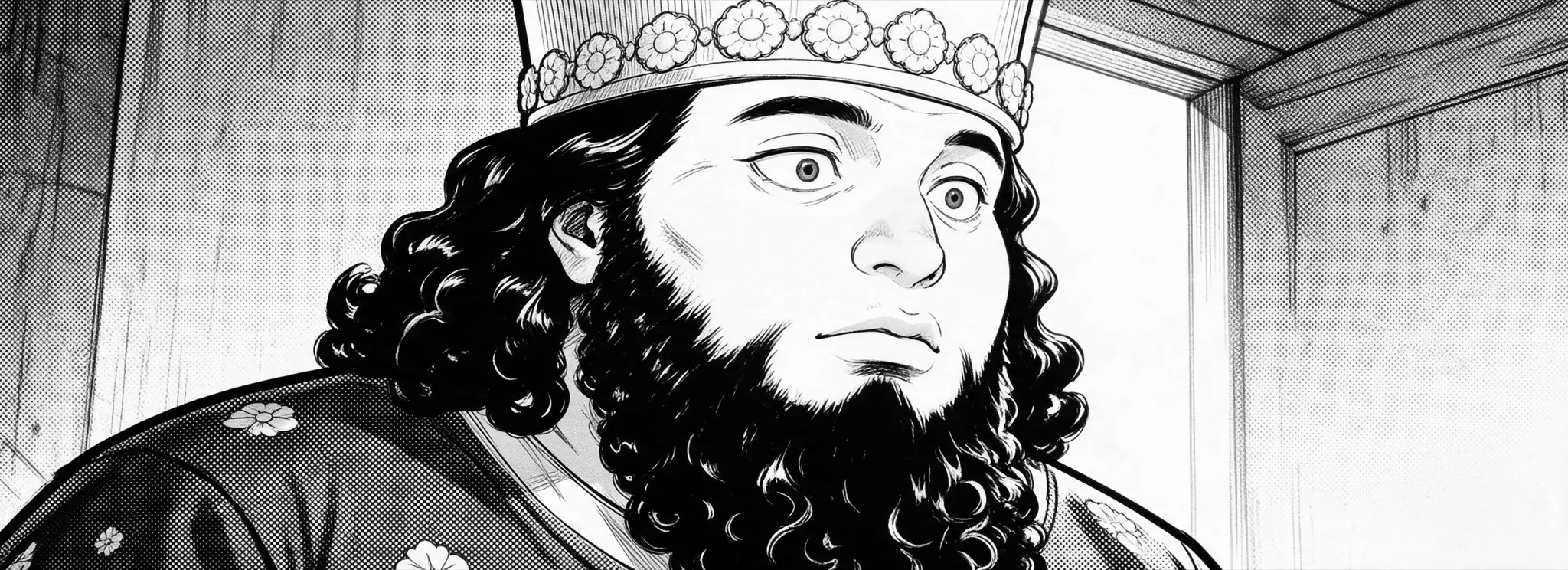
- Qur'an 2:258 - the king who argued with Ibrahim about his Lord, their exchange, and 'the disbeliever was confounded' (p28 to p32); Mujahid, Qatada, al-Rabi', al-Suddi, Ibn Ishaq and Zayd ibn Aslam in al-Tabari on 2:258, and Ibn Kathir on 2:258 and in al-Bidaya - tradition names him Namrud; the name is not in the Qur'an, nor in Sahih al-Bukhari or Sahih Muslim; Ibn Kathir on 2:258 - he had no answer
- Qatada, Ibn Ishaq and al-Suddi in al-Tabari on 2:258; Ibn Kathir on 2:258 - the two men, one killed and one spared; not told or drawn here
- When the debate took place is disputed: Muqatil in al-Baghawi on 2:258 (before the fire); al-Suddi in al-Tabari on 2:258, whose placement Ibn Kathir reports on 2:258 without ruling for it, and al-Bidaya (after he came out of the fire); Zayd ibn Aslam in Ibn Kathir on 2:258 (on a journey for provisions). The chapter follows al-Bidaya's order - the fire, the debate, the emigration - and the narrator does not say when
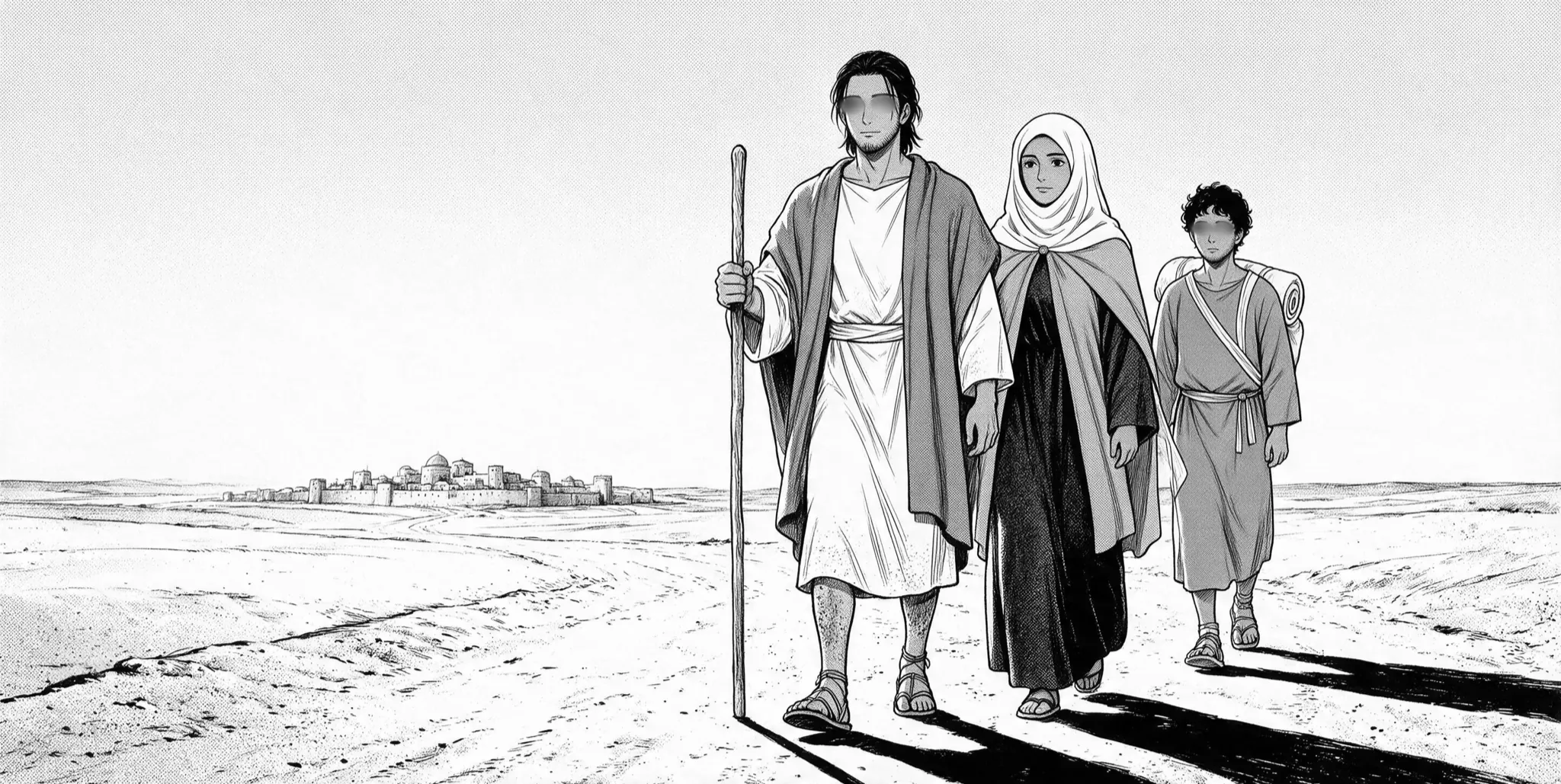
- Qur'an 29:26 - 'and Lut believed him'; Ibn Kathir on 29:26 - of his people none believed him but Lut, and Sara, Ibrahim's wife; Muqatil - the first to emigrate, with Lut and Sara
- Qur'an 37:99 - 'I will go to my Lord; He will guide me' (p34), after the fire in the surah's order (37:97-98); Sulayman ibn Surad in al-Qurtubi places the words before the fire
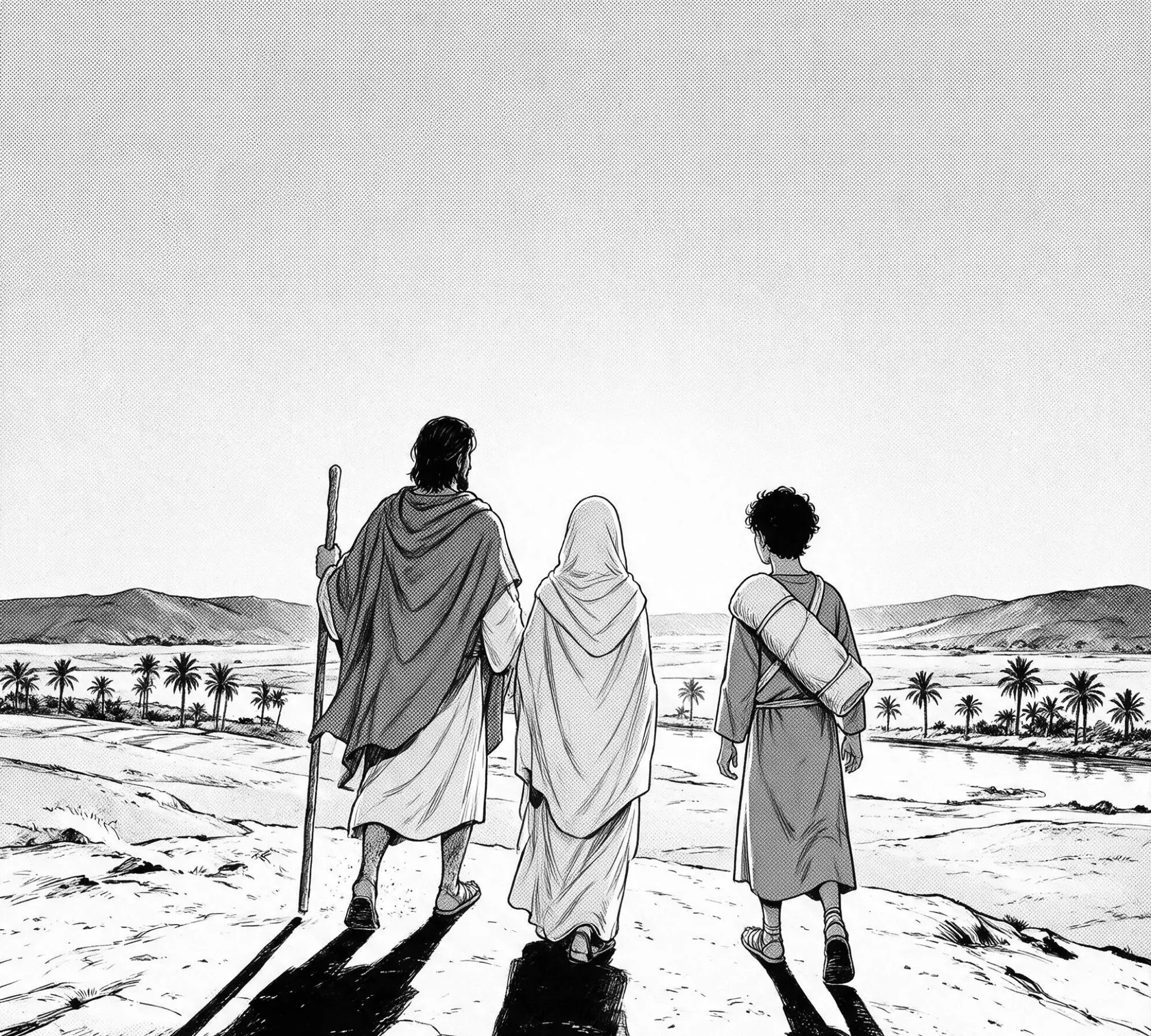
- Qur'an 21:71 - Ibrahim and Lut delivered to the land Allah blessed; Qatada, Ubayy ibn Ka'b and Abu al-Aliya in al-Tabari and al-Bidaya on 21:71 - al-Sham; the chapter leaves it unnamed
- Qur'an 4:125 - Allah took Ibrahim as a close friend (khalil); 29:27; 57:26 - prophethood and the scripture in his descendants
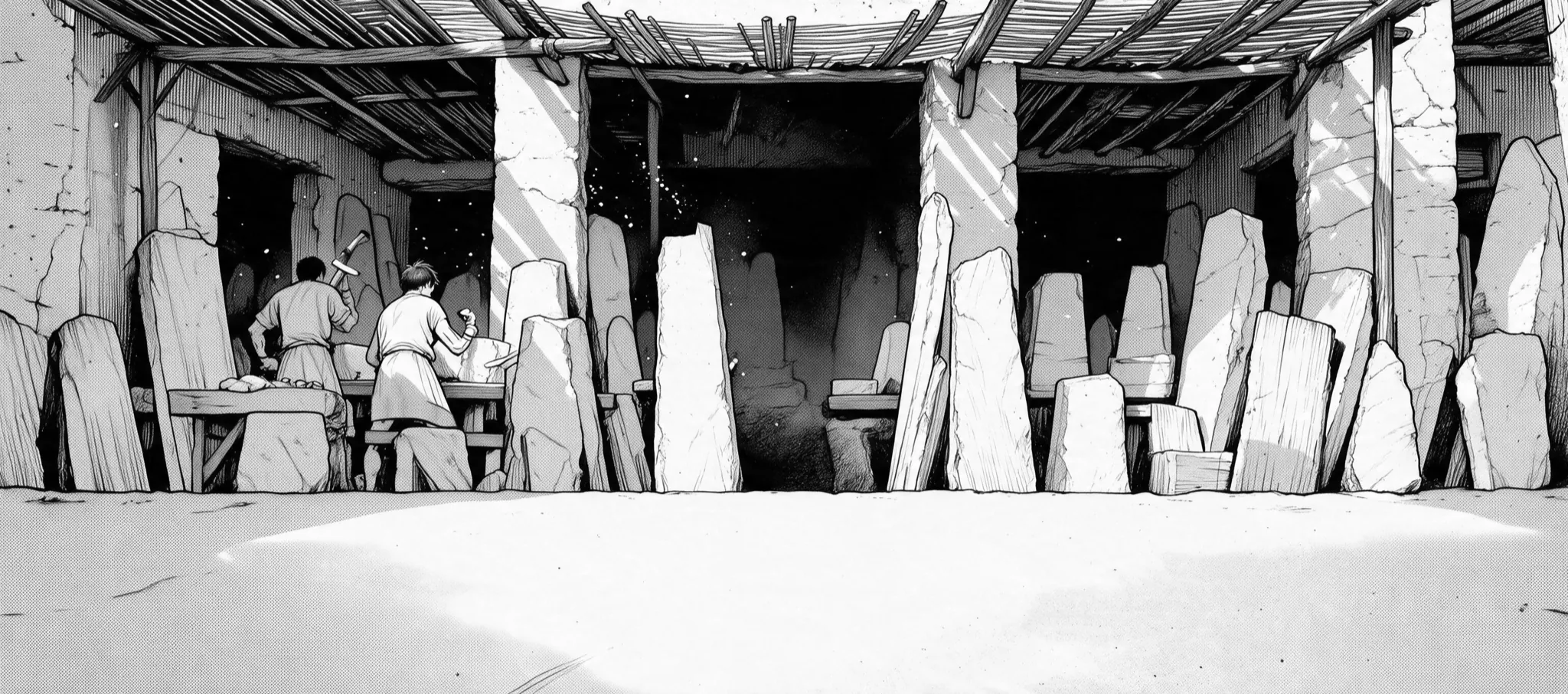
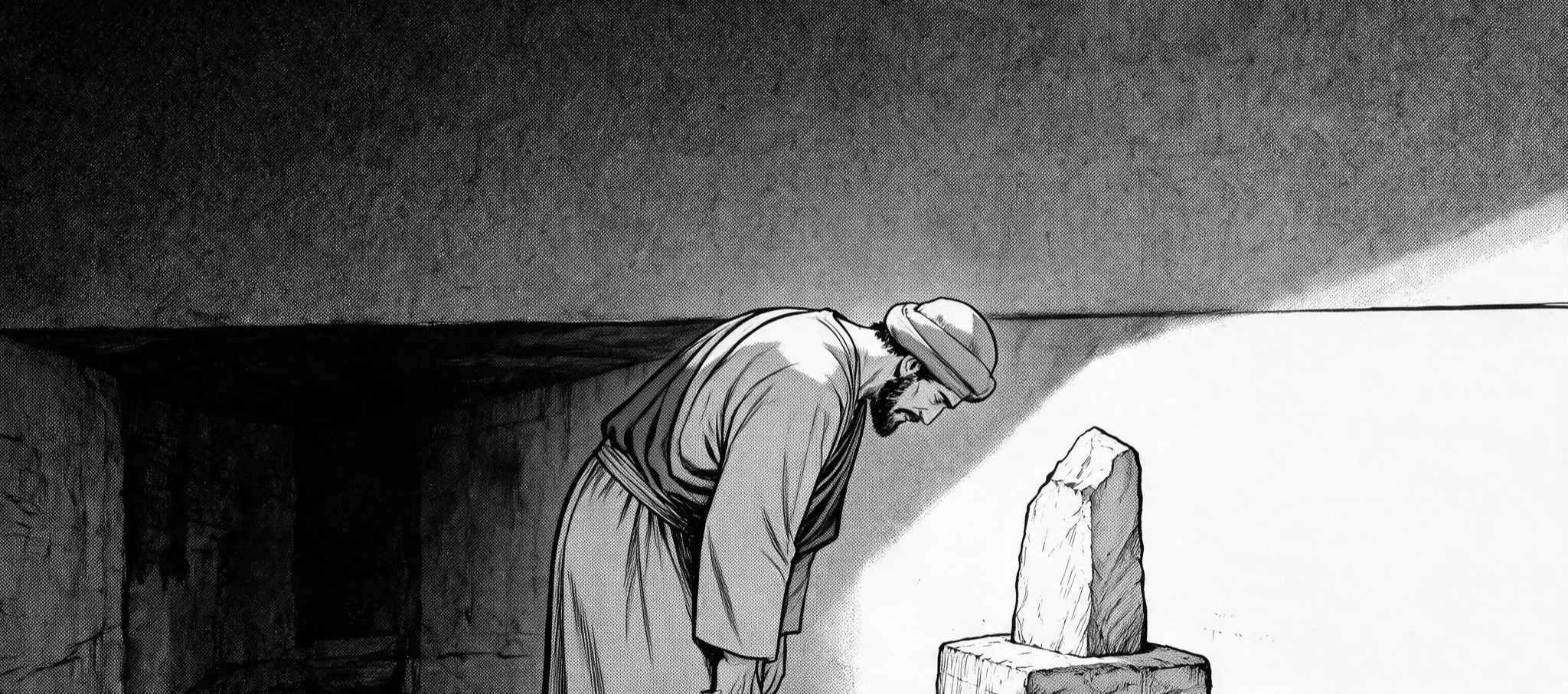
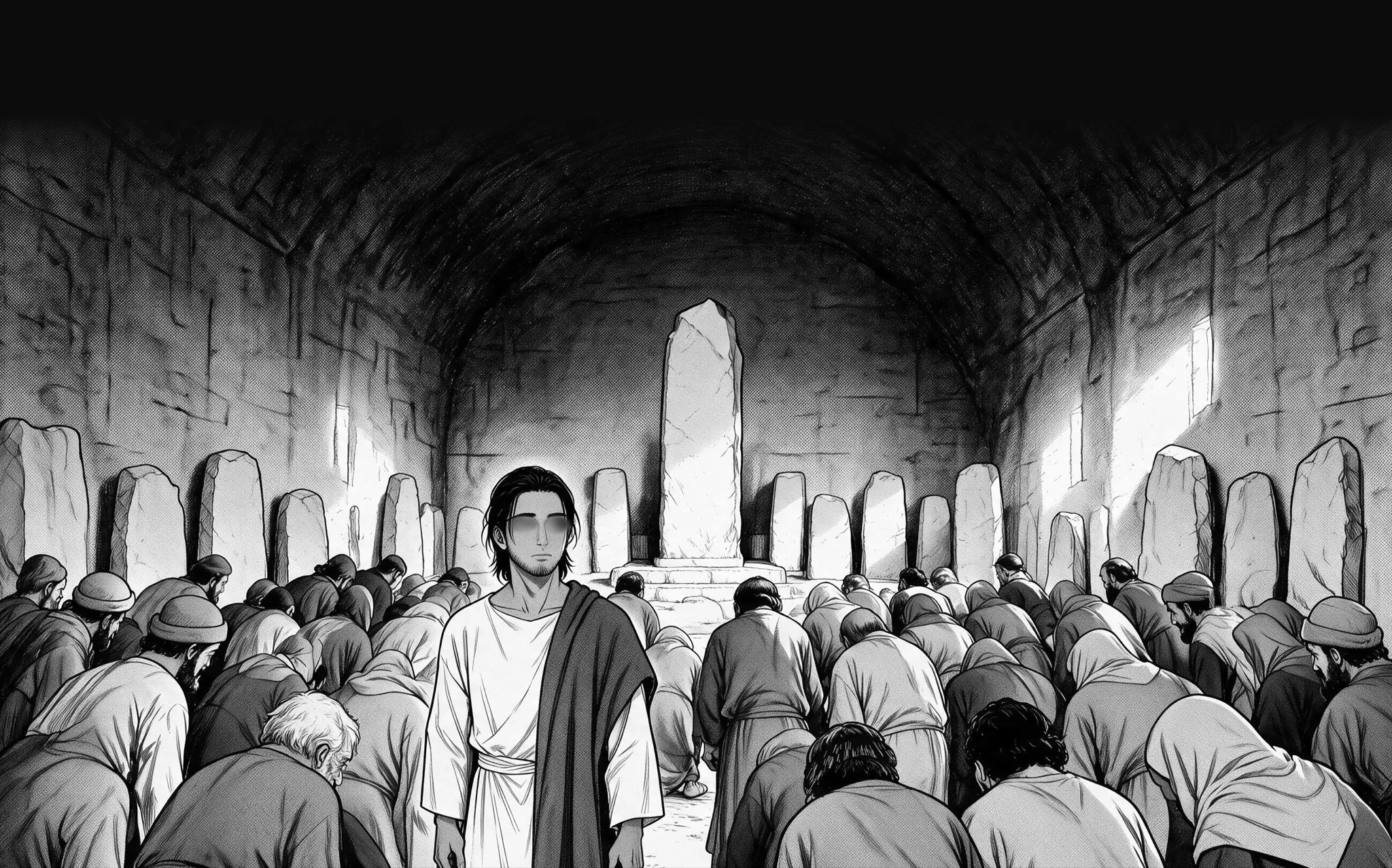
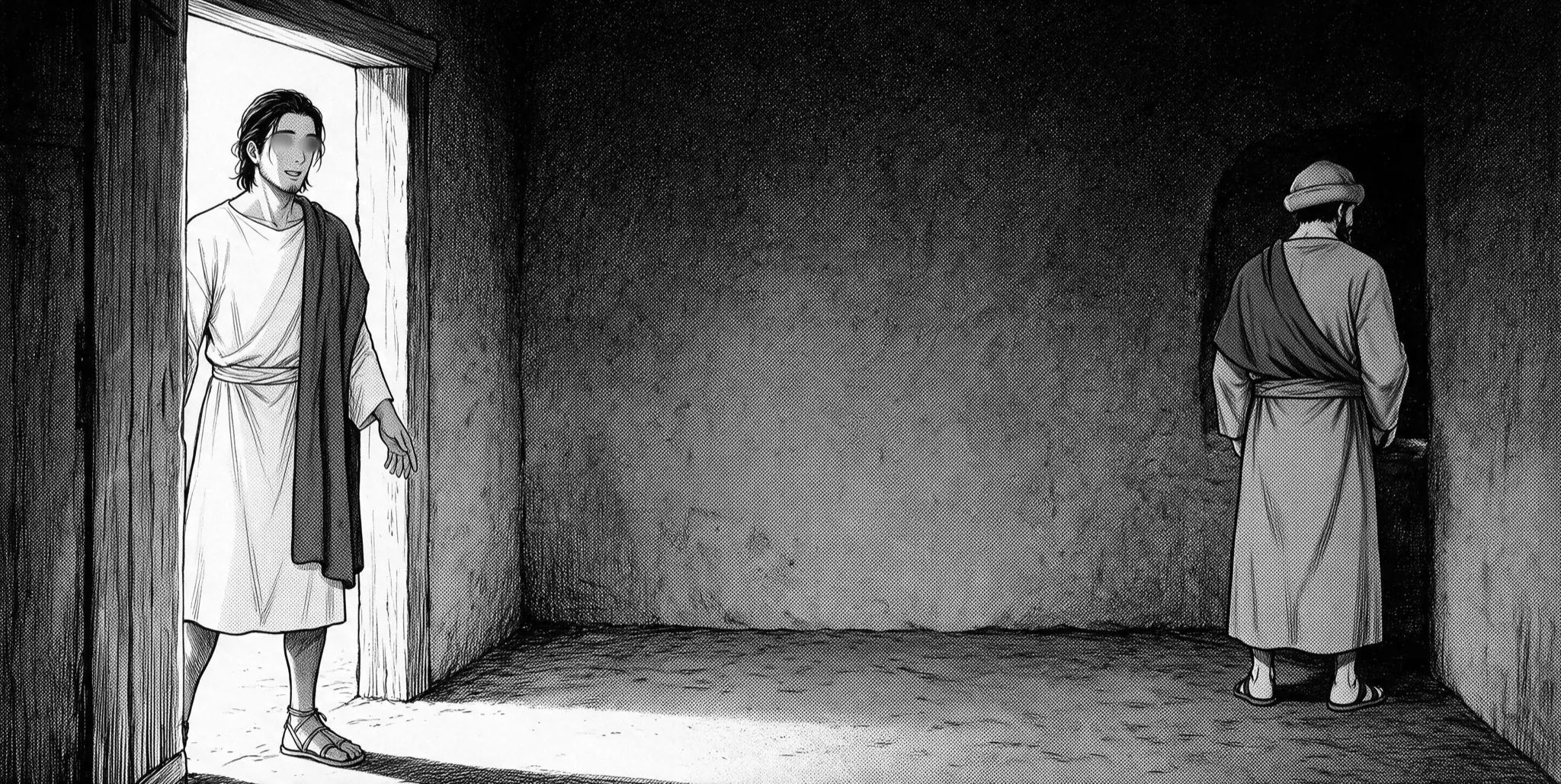
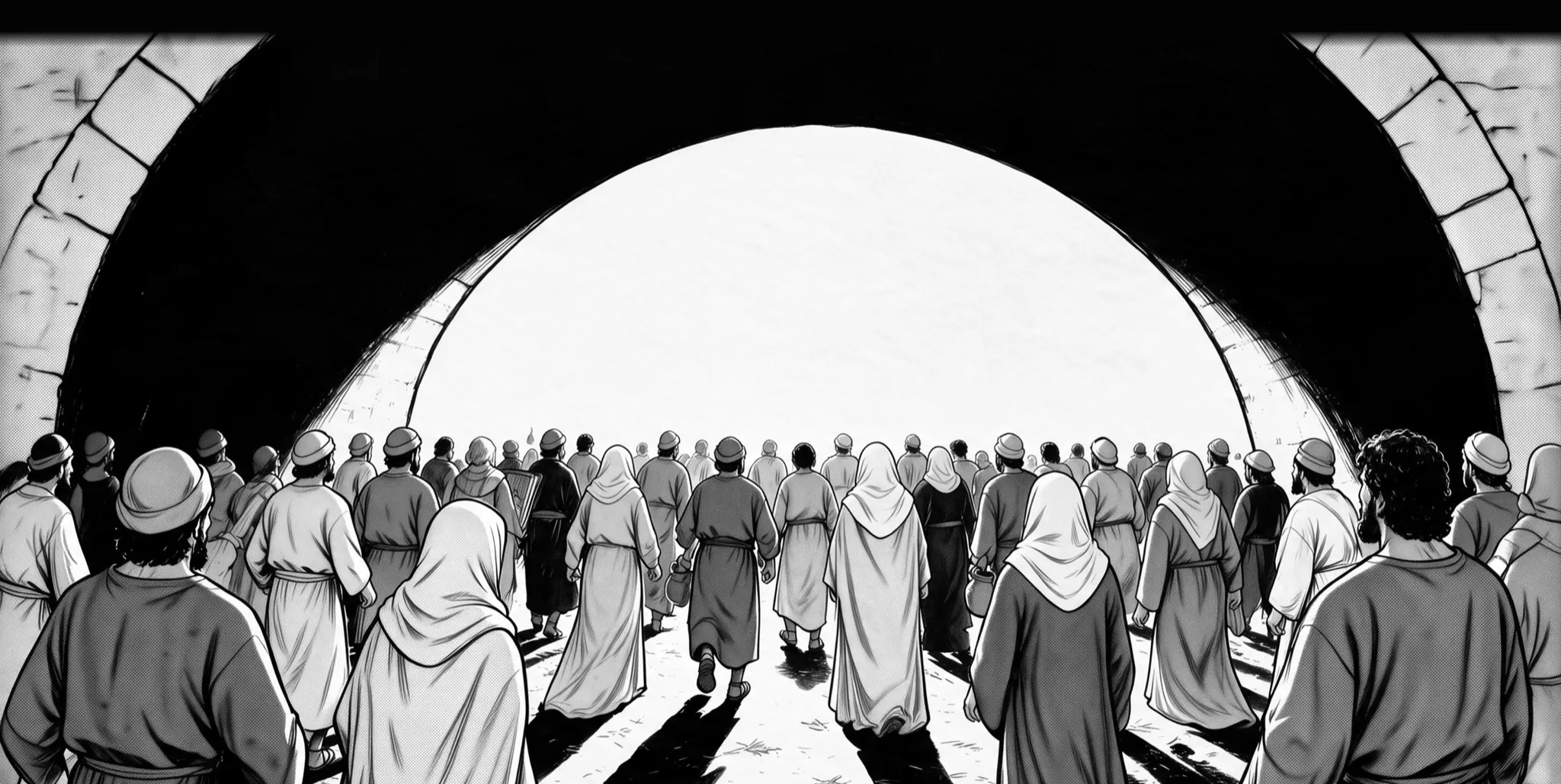
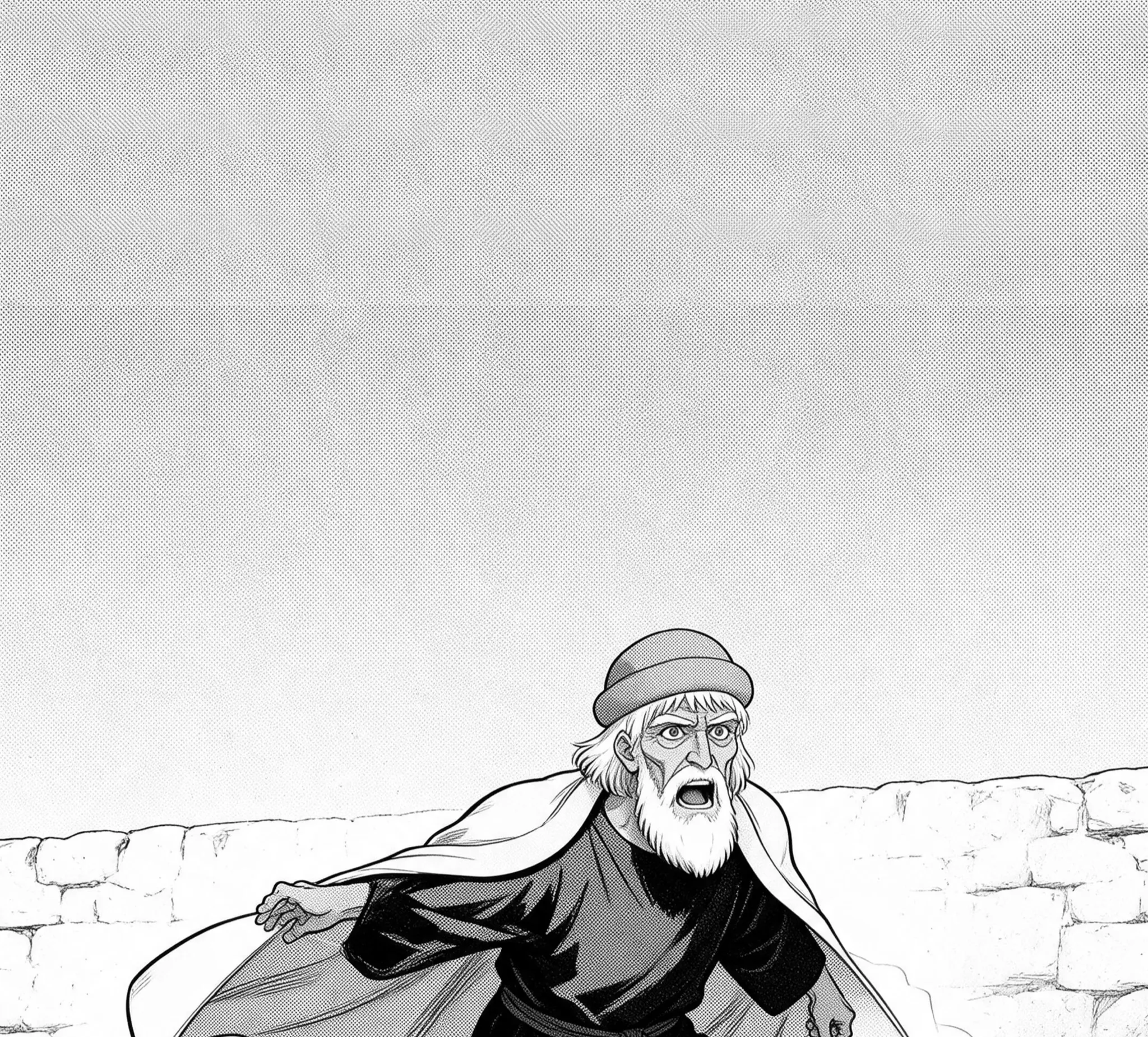
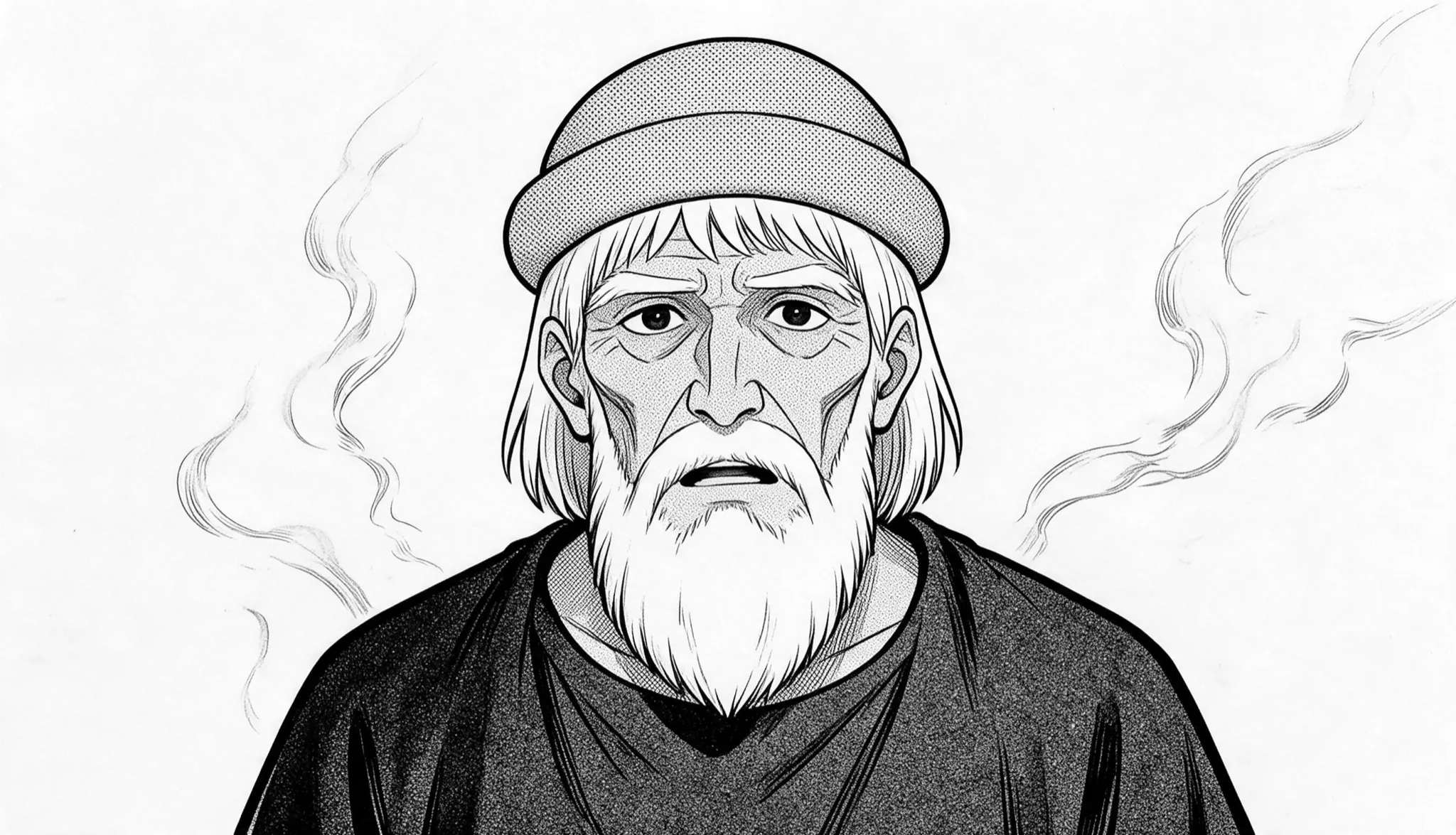
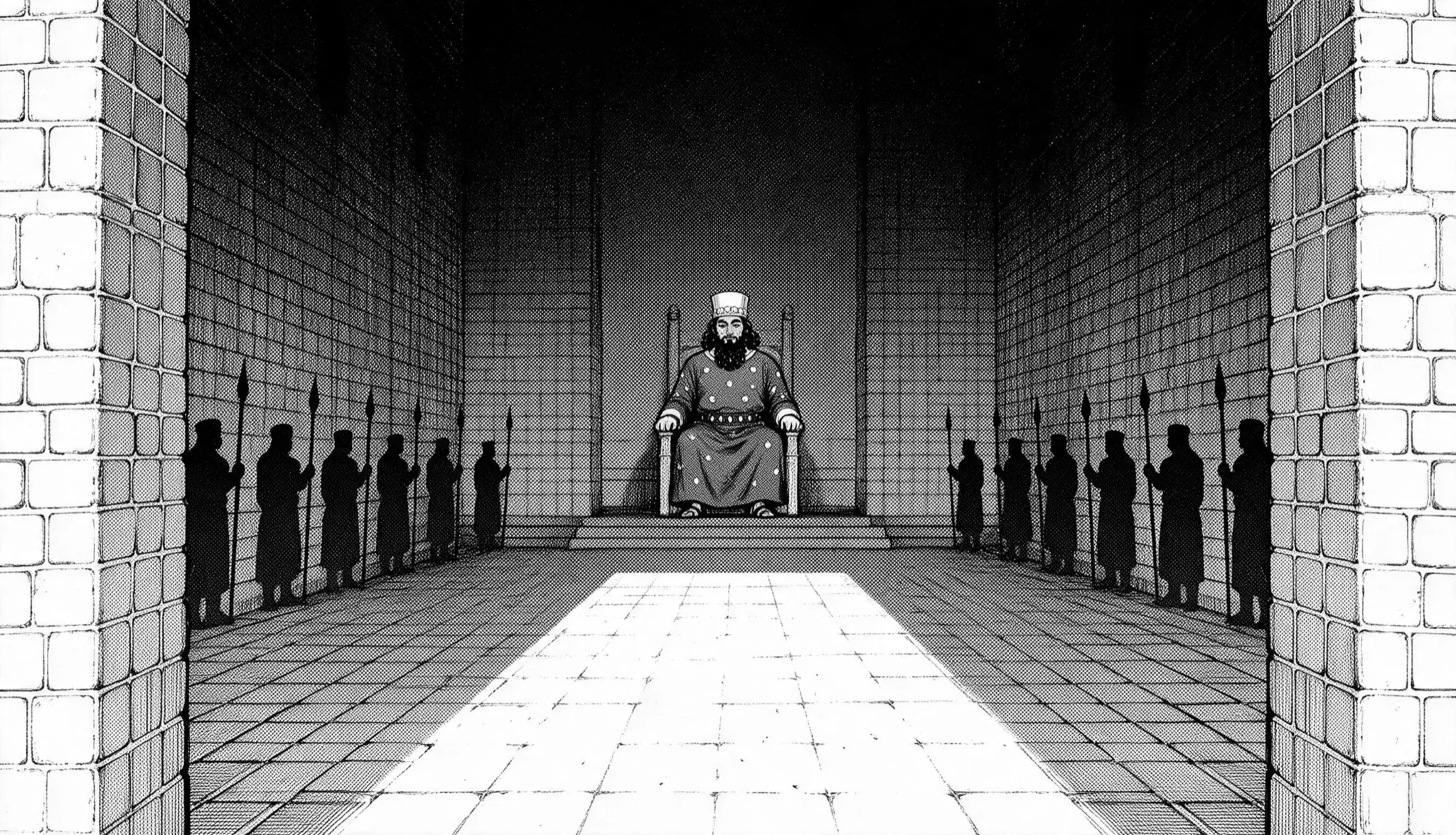
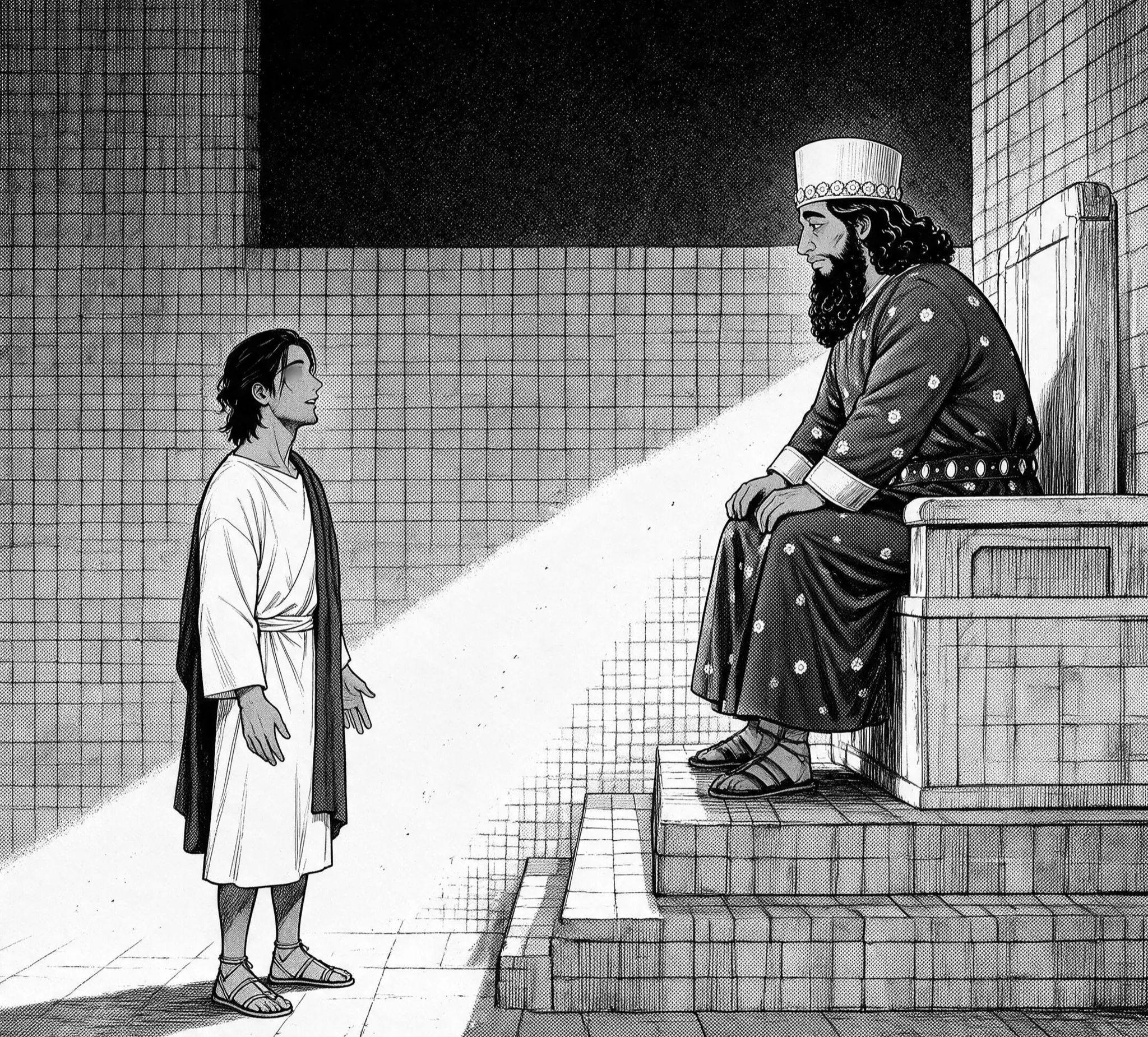
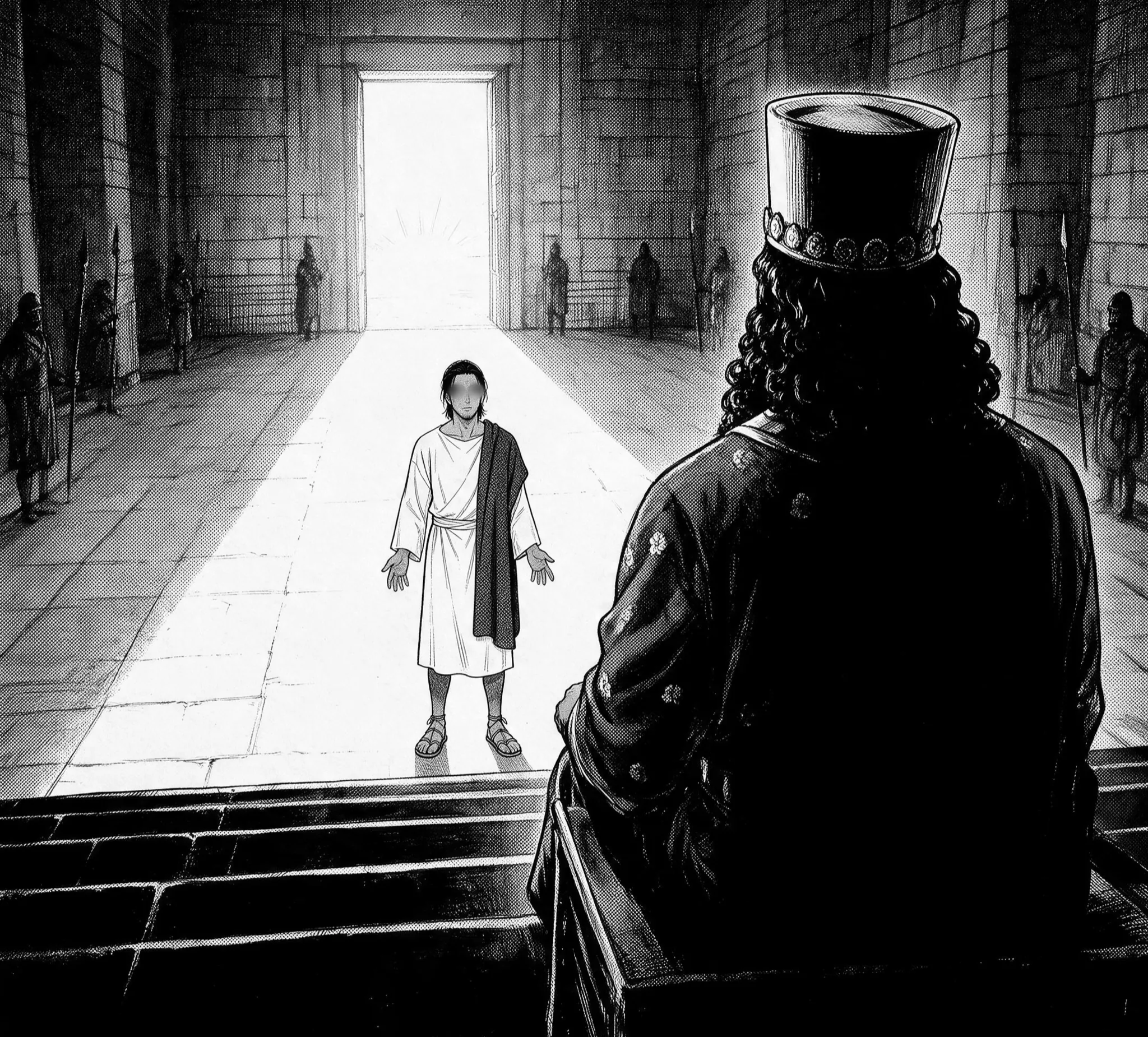
- What the chapter stages inside the verses is the studio's own: the carvers' lane, the bow from the waist in the idol house, the roofs, the house at dusk with the household idols in Azar's niche (19:46, 'my gods'), the festival lanes and the gate, the trial in the square, the pyre in a walled enclosure at dusk, the grey morning after, the throne hall with the sun in its east door, the road at dawn, the camp and the lamp; and the elder, the king's court, the townsfolk, Lut and Sara as drawn, their ages included
- Qur'an 37:100 - Ibrahim's prayer for a righteous child, 'My Lord, grant me [a child] from among the righteous' (p38). The Qur'an speaks of his old age at the gift of his sons (14:39) and at the guests' news (15:54), not at this prayer; drawing him old from here on is the studio's staging (the card p37 and every picture after it)
- Qur'an 37:101 - the good news of a forbearing boy, which is Allah's speech: the narrator reports THAT it was given, in the narrator's own words (p39)
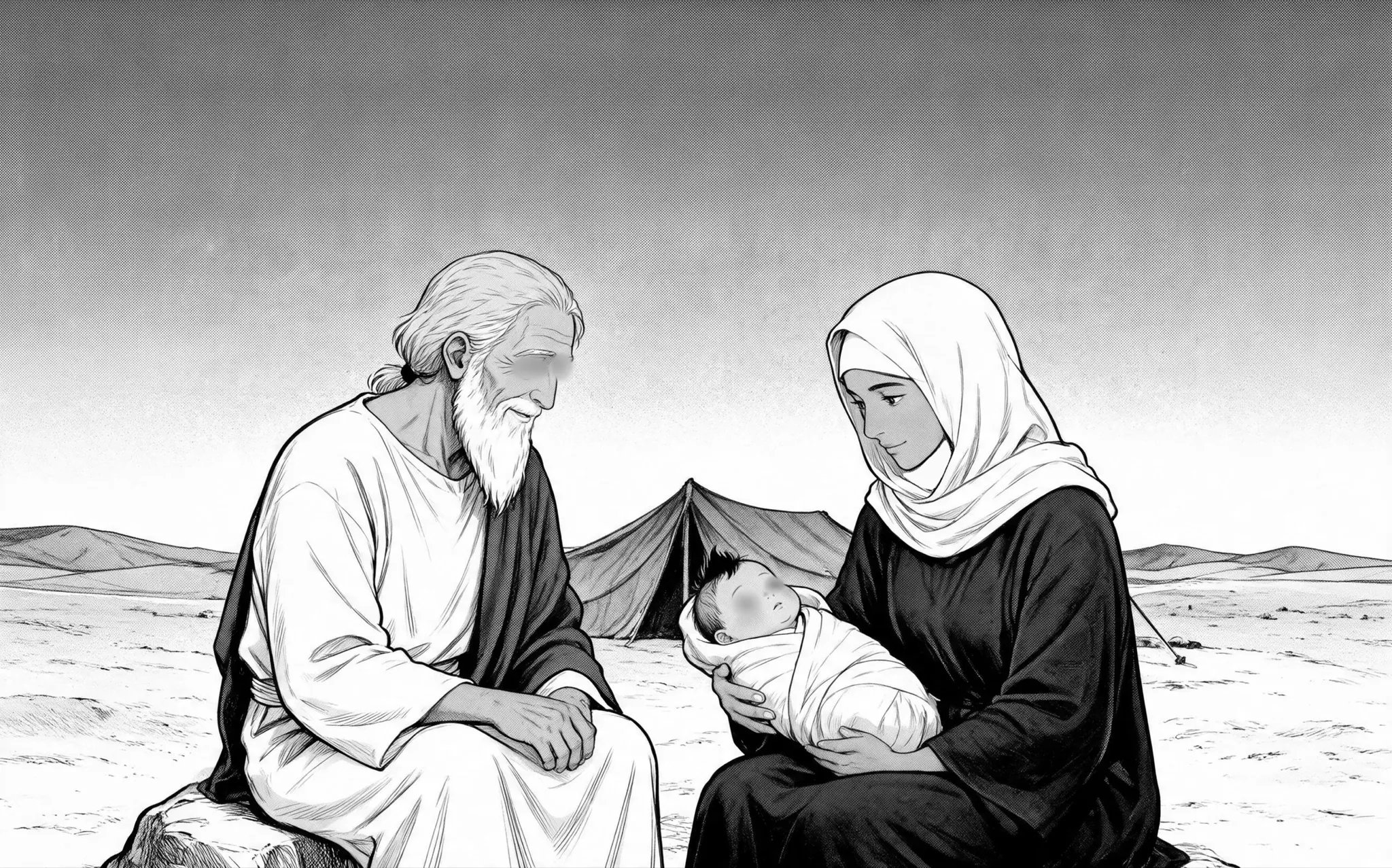
- Qur'an 14:39 - Ibrahim thanks Allah for giving him Ismail and Ishaq in his old age; Sahih al-Bukhari 3358 (Abu Huraira) - the name Hajar, and Abu Huraira's closing word that she is the mother of the Banu Ma' al-Sama', whom the commentators read as the Arabs of Ismail's line; al-Tabari (Tarikh) and Ibn Kathir (al-Bidaya wa-l-Nihaya) tell her as Ismail's mother; Sahih al-Bukhari 3364 (Ibn Abbas) - Ismail's mother and her son, the report the rest of her telling follows (the source for p40's caption). The rest of 3358 is not told here
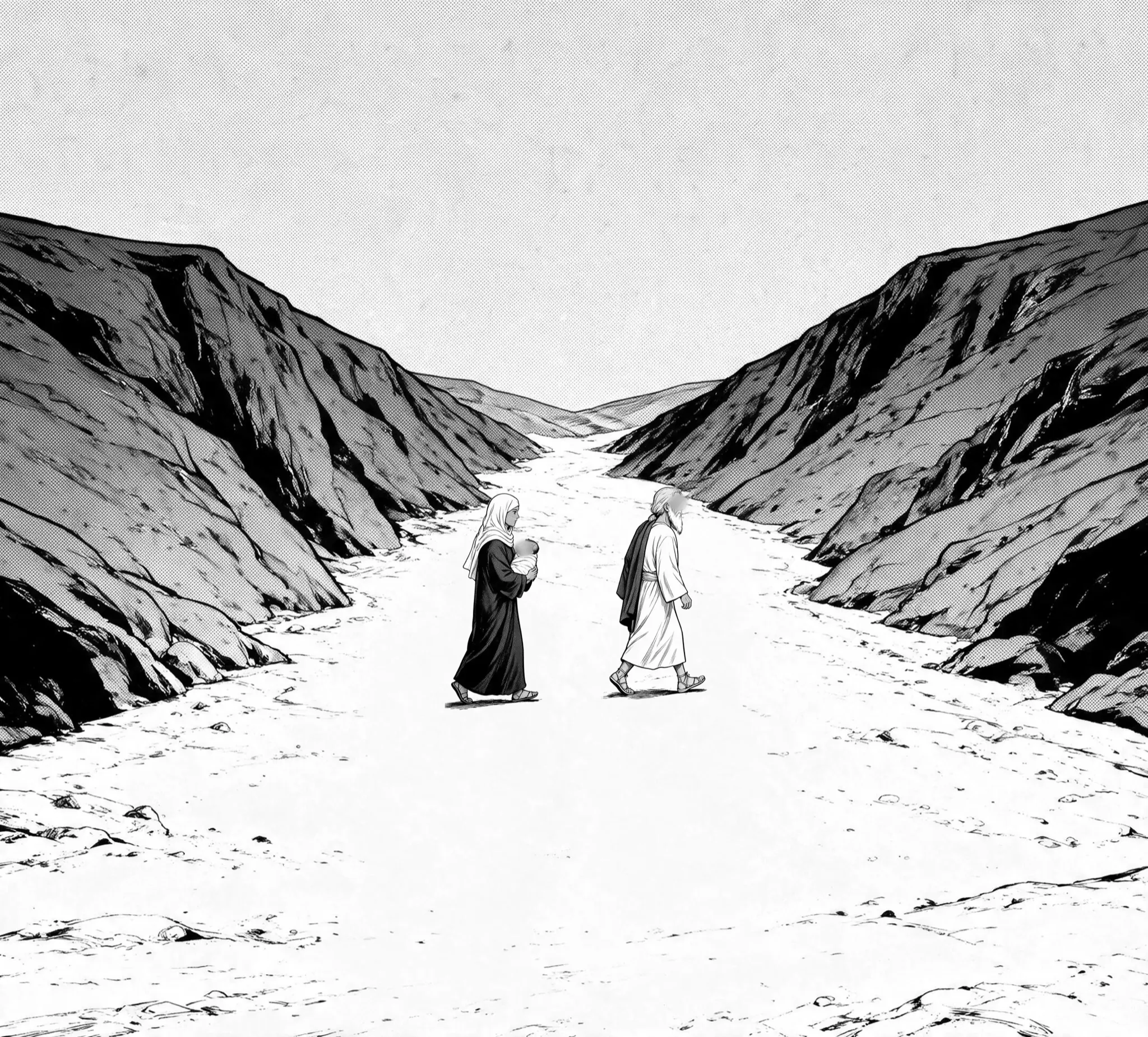
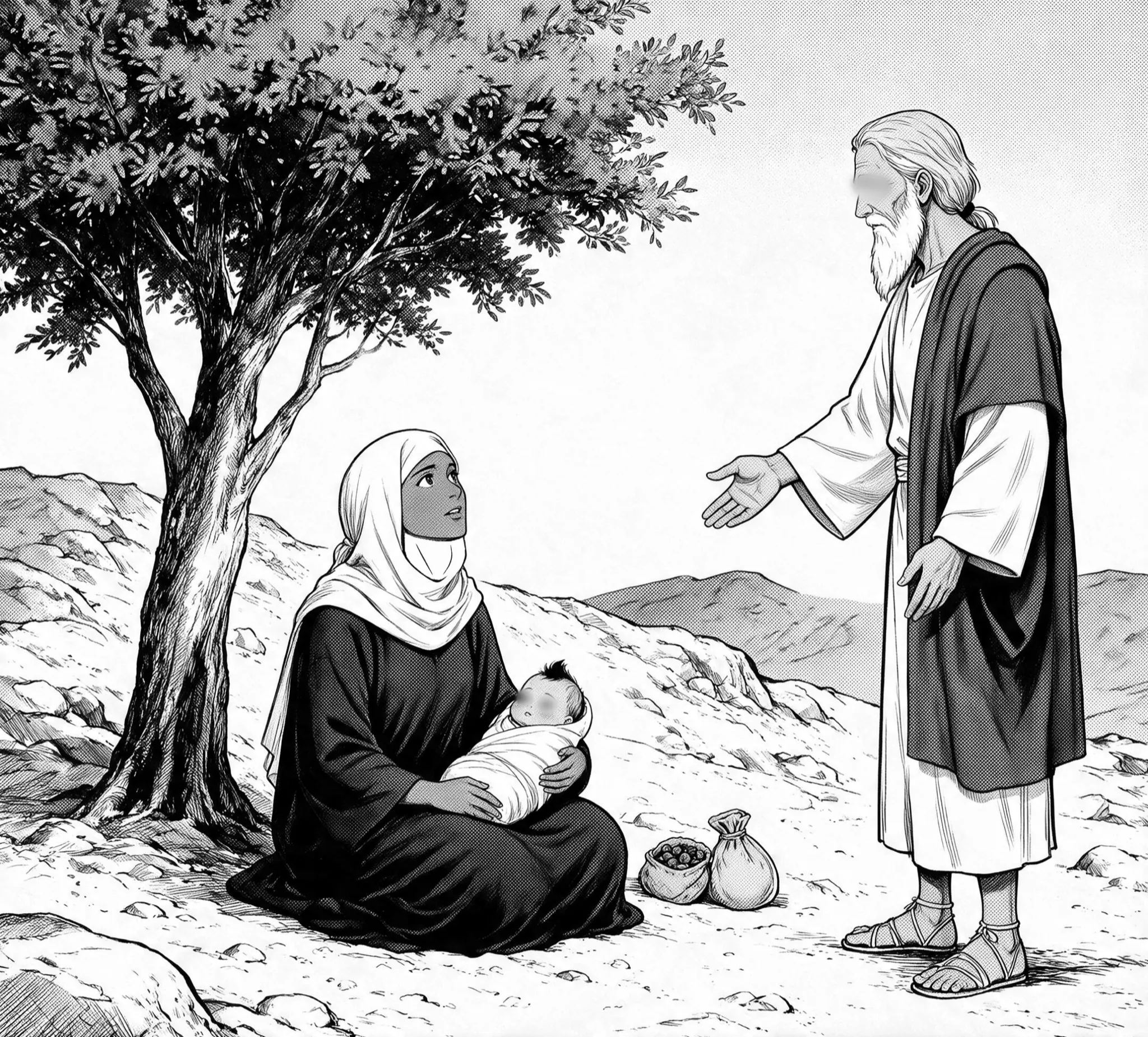
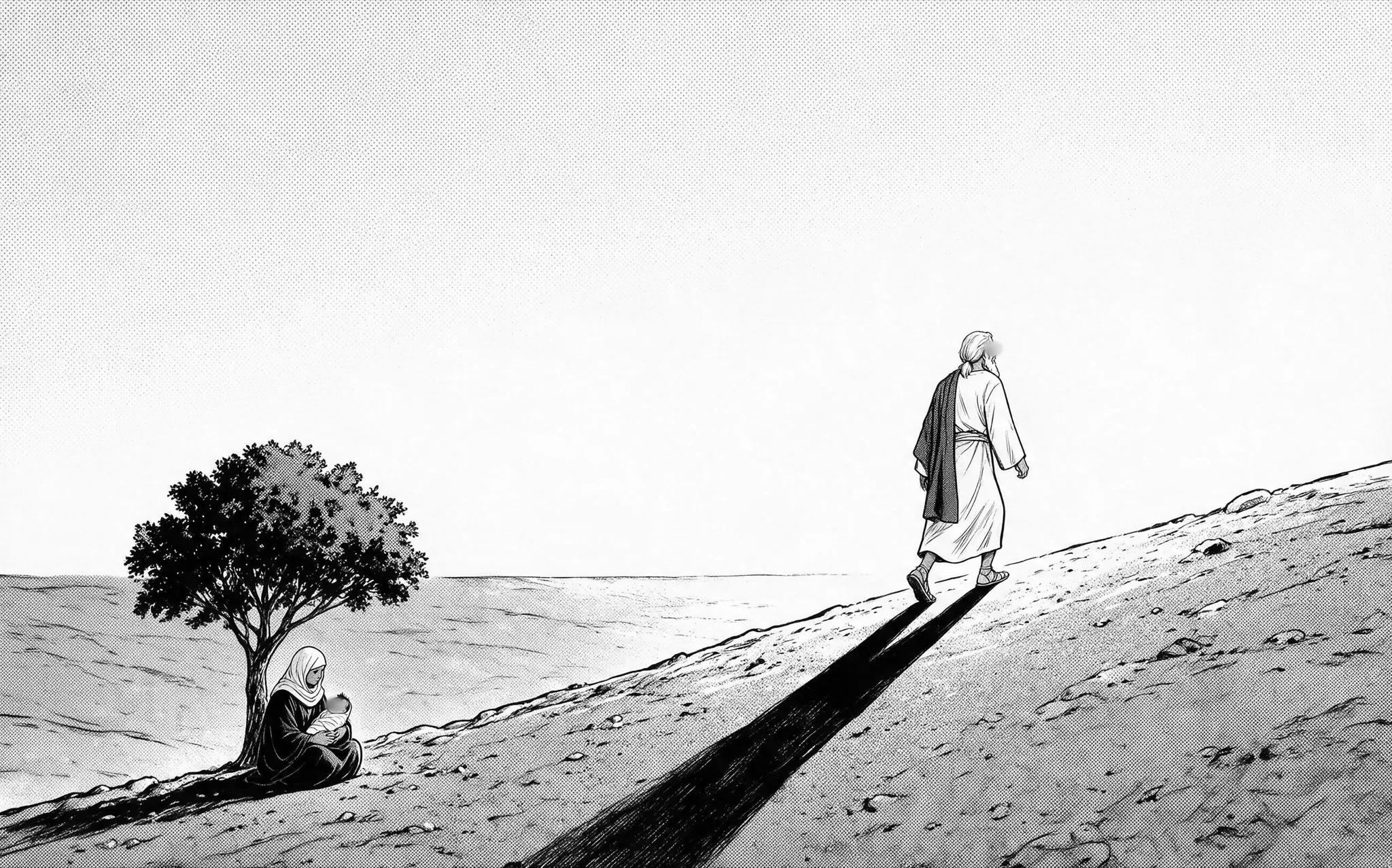
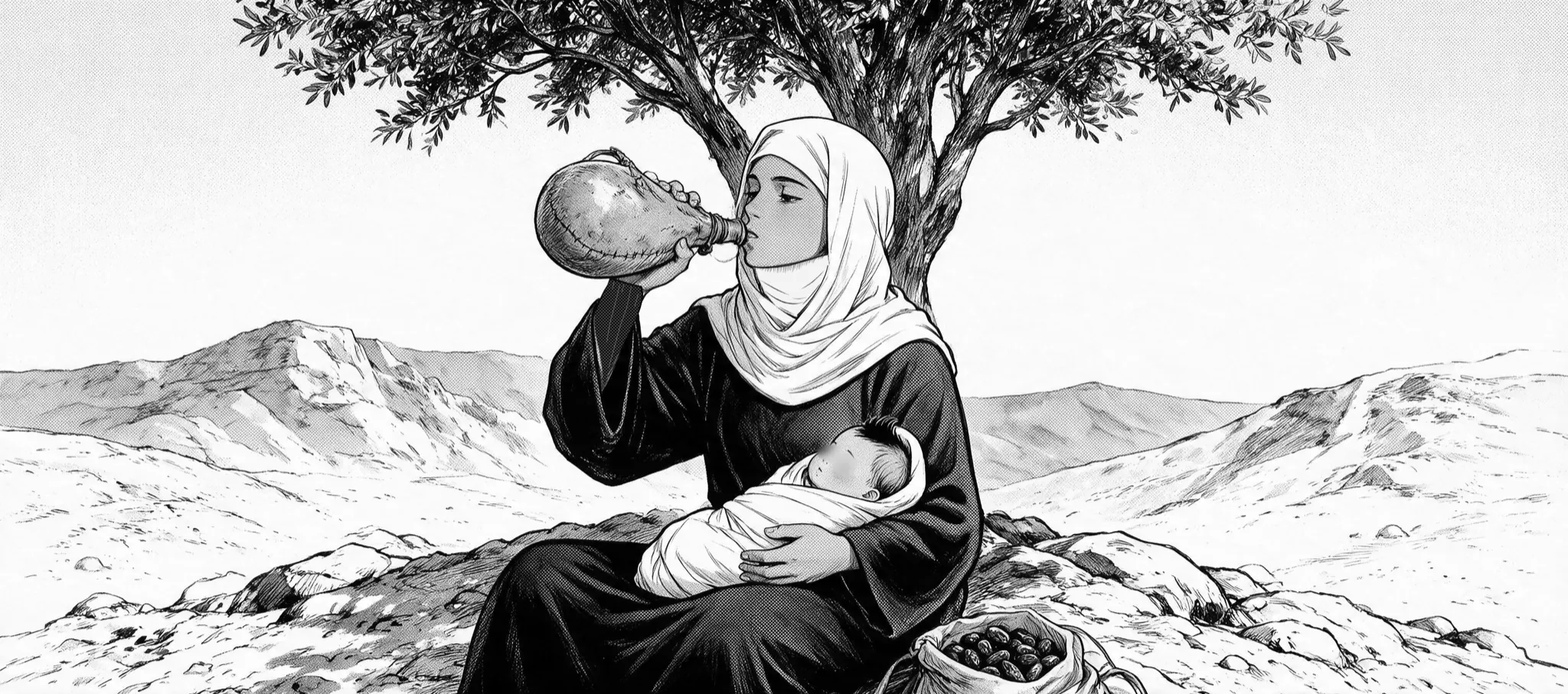
- Sahih al-Bukhari 3364 (Ibn Abbas) - Ibrahim brought Hajar and her nursing son to a place near the Ka'ba, under a tree, where Zamzam is; there was nobody in Makkah then and no water; he sat them down, left a leather bag of dates and a small water-skin, and set out for home (p41 to p43)
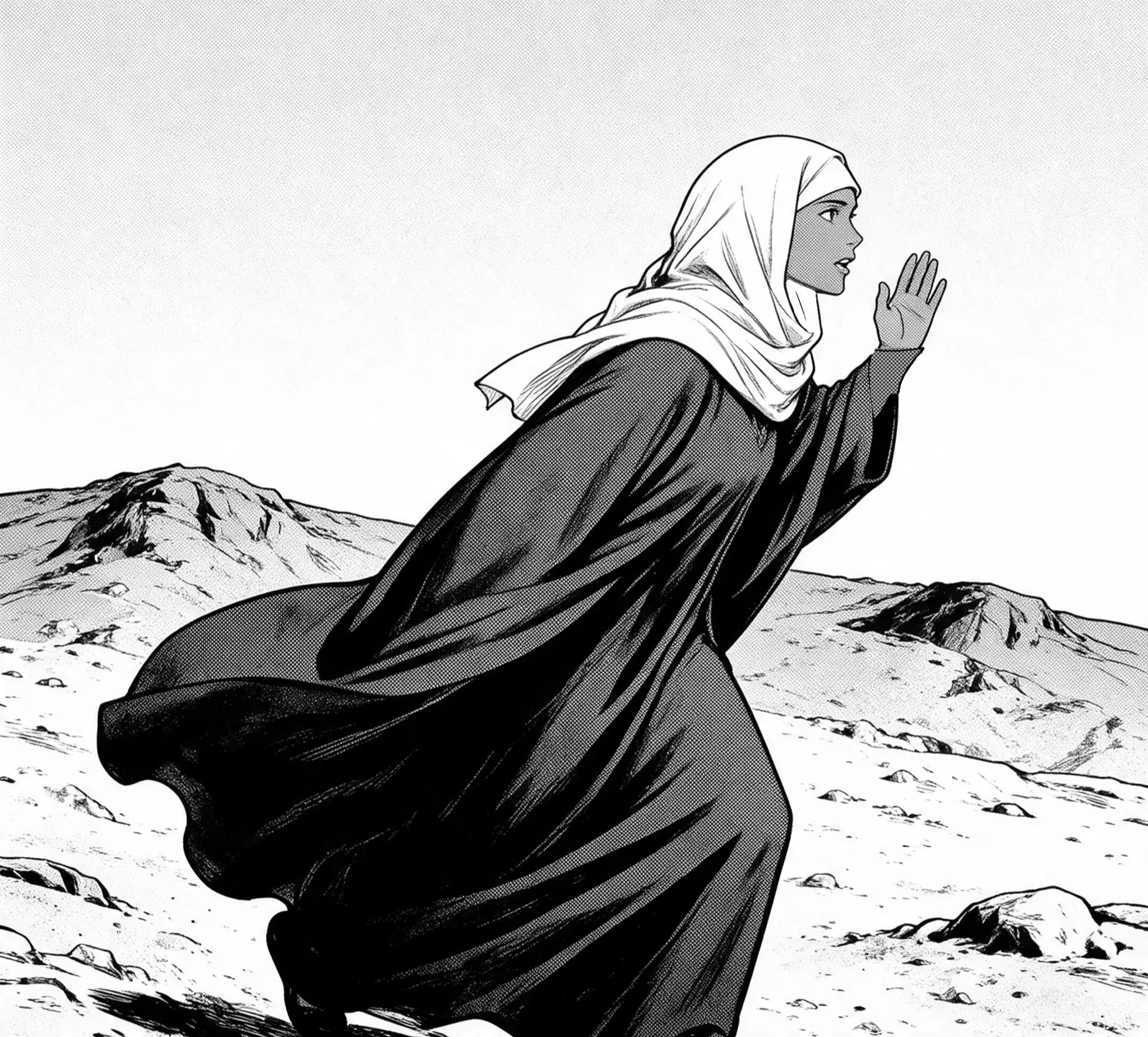
- Sahih al-Bukhari 3364 (Ibn Abbas) - Hajar followed him and asked where he was going, leaving them in a valley with no one in it; she said it to him many times and he did not look back; then 'Has Allah ordered you to do so?', his 'Yes.', and her 'Then He will not neglect us', verbatim (p44 to p47)
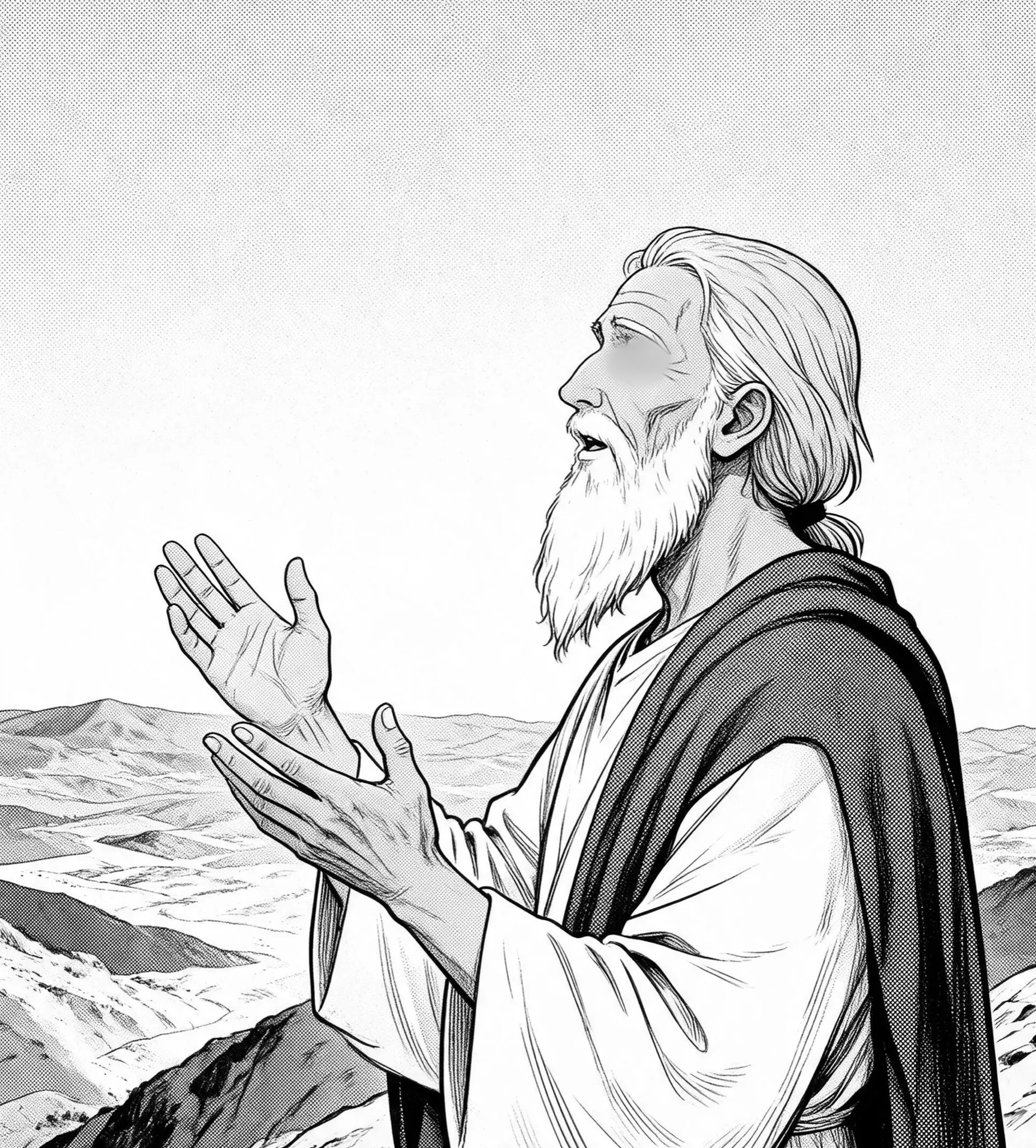
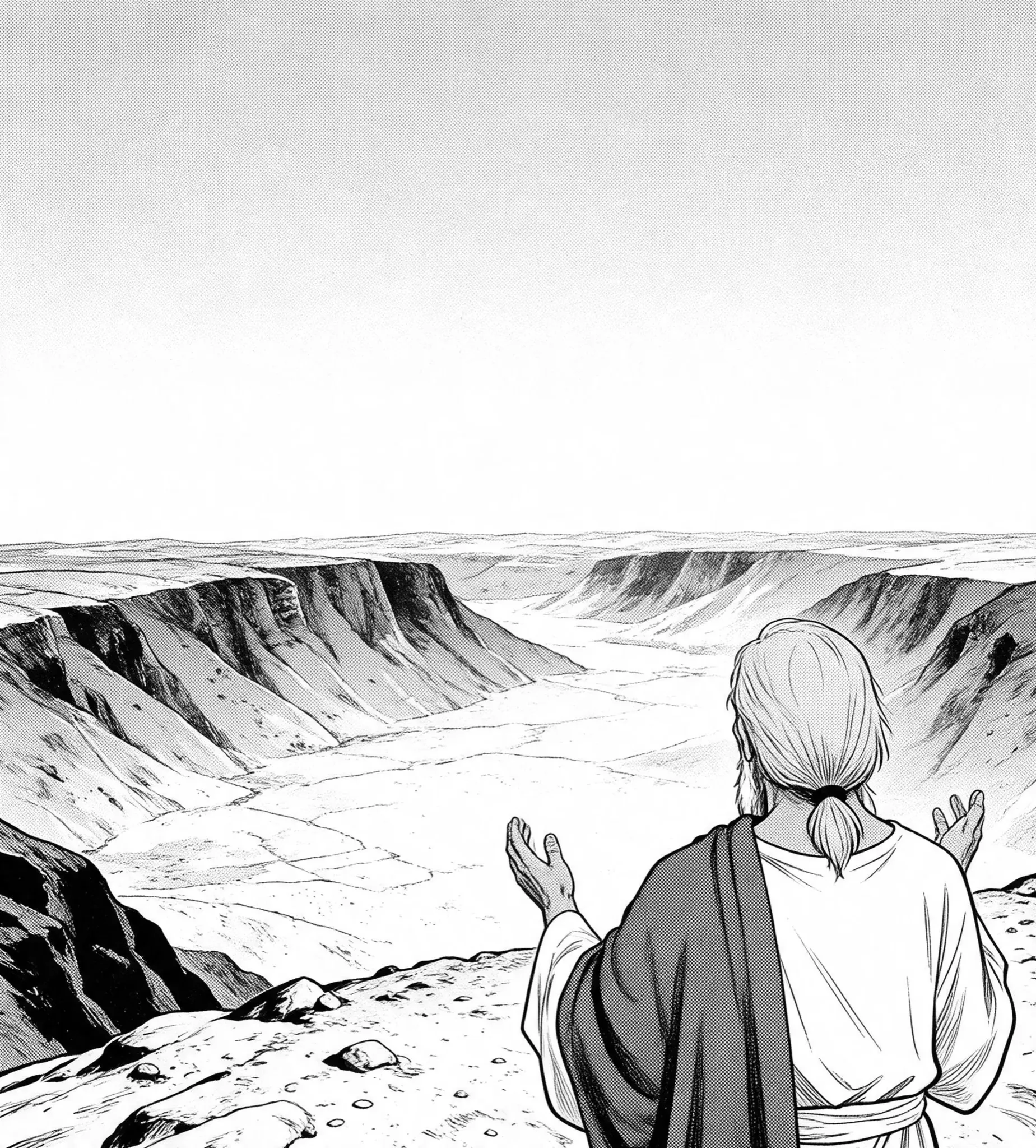
- Qur'an 14:37 - Ibrahim's prayer for the valley, in his own words (p49, p50); Sahih al-Bukhari 3364 (Ibn Abbas) - he made it at the pass called al-Thaniya, where they could no longer see him, with both hands raised (p48); the report says he faced the House, and the caption says the valley, as the House is not built in this telling
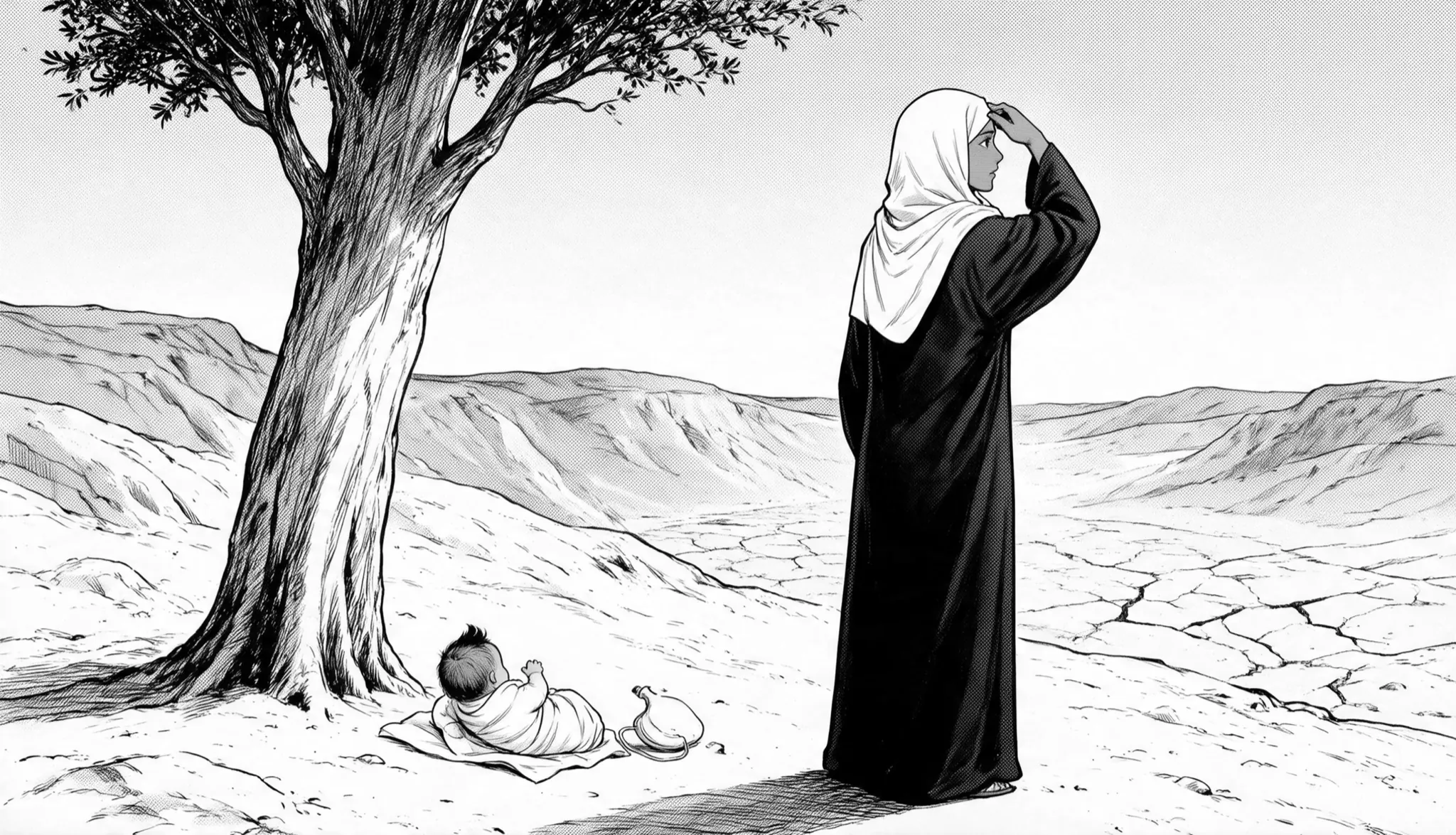
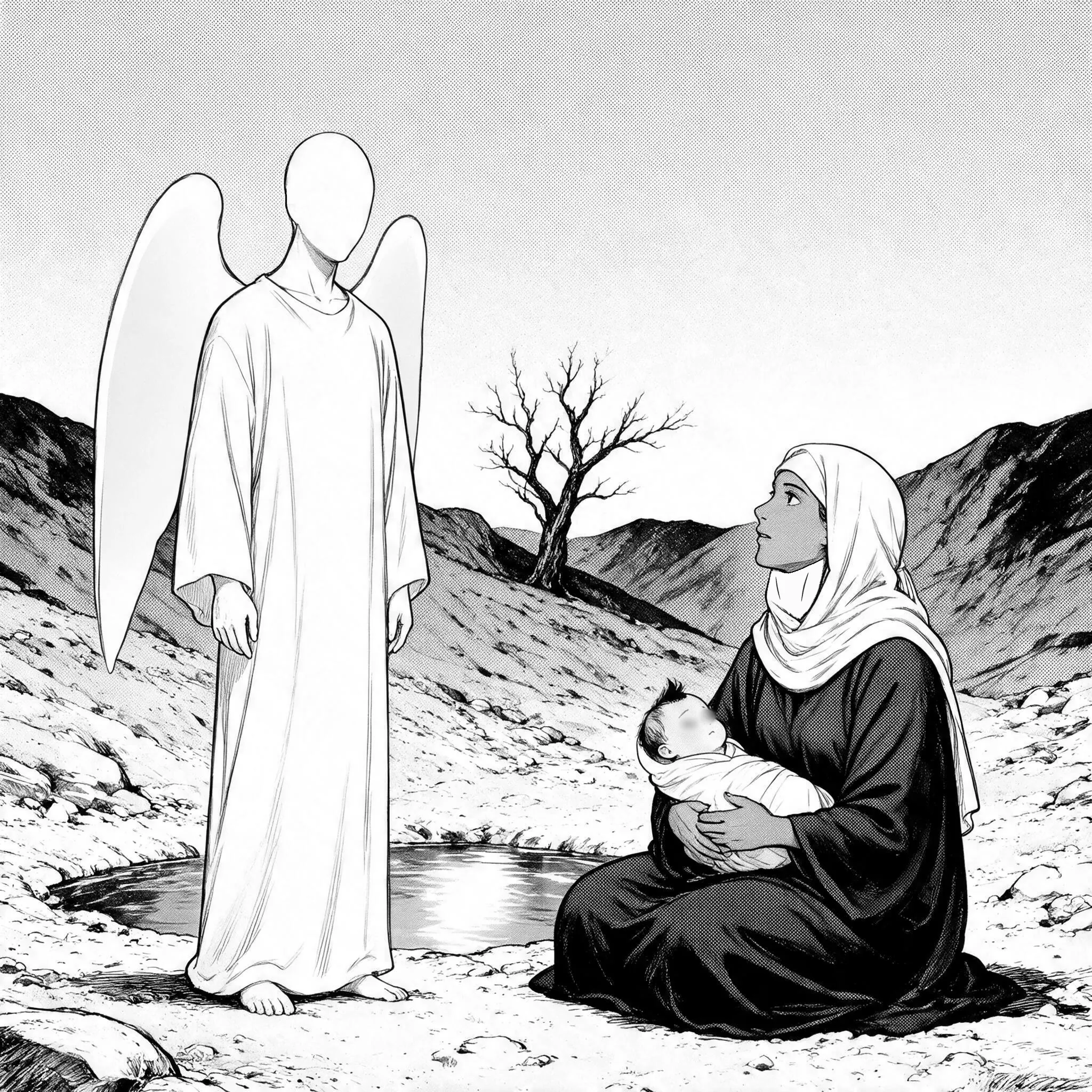
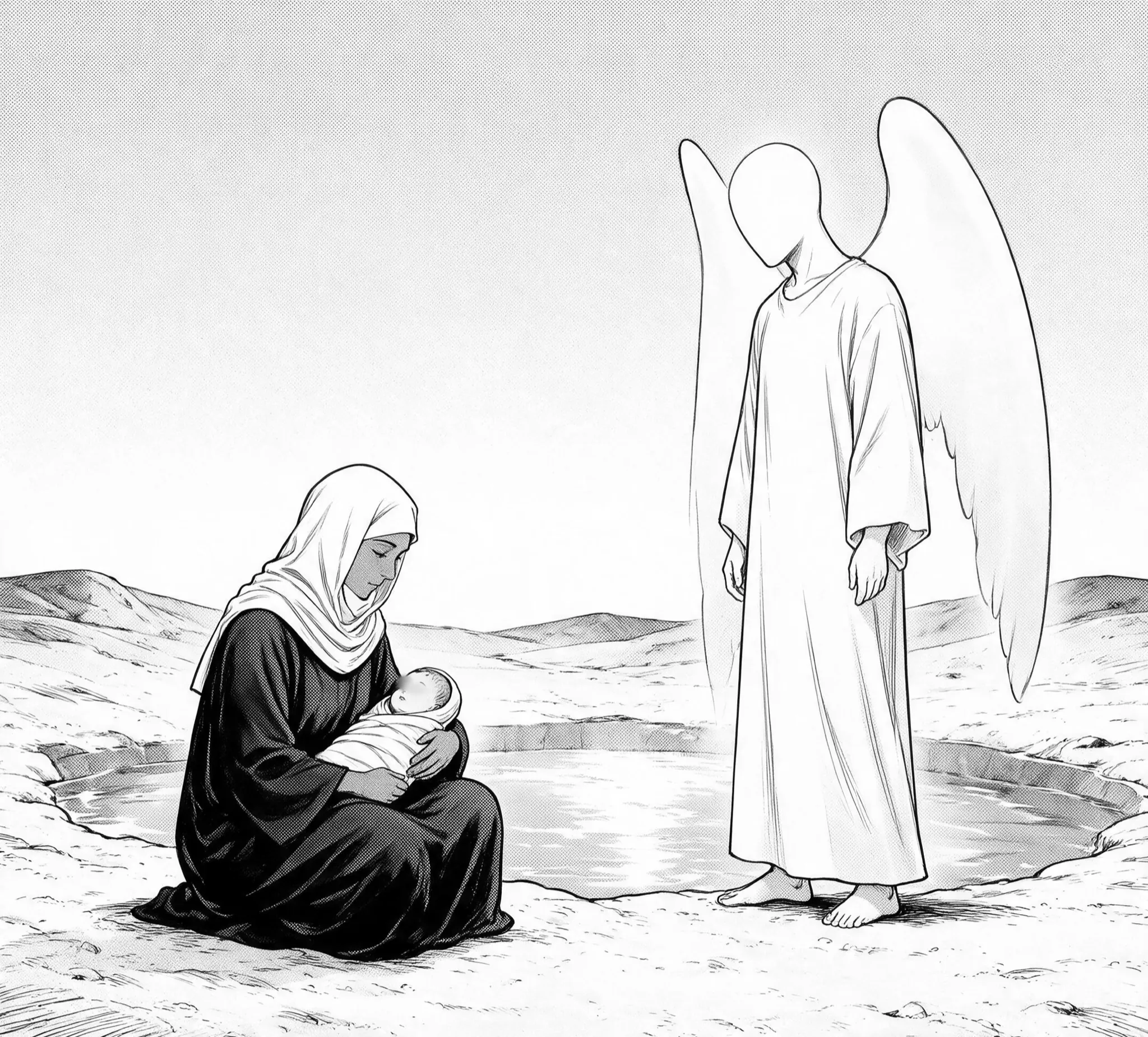
- Sahih al-Bukhari 3364 (Ibn Abbas) - she nursed her son and drank from the skin until the water was gone; both grew thirsty; she could not bear to watch him and left him; al-Safa was the nearest hill, and from it she saw nobody; she came down, tucked up her robe and ran across the valley like a person in distress to al-Marwa, where she saw nobody again; she did this seven times (p51 to p57)
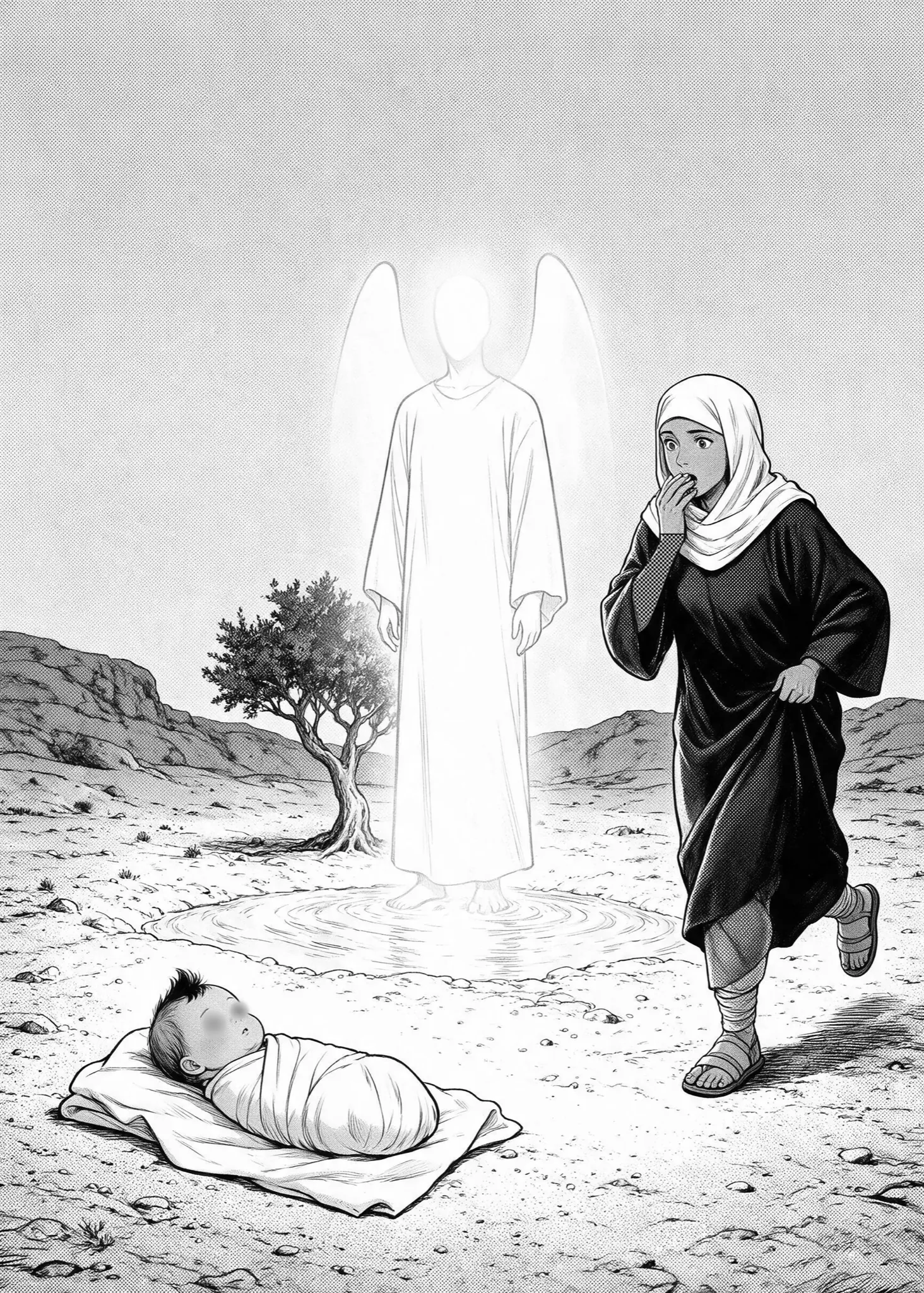
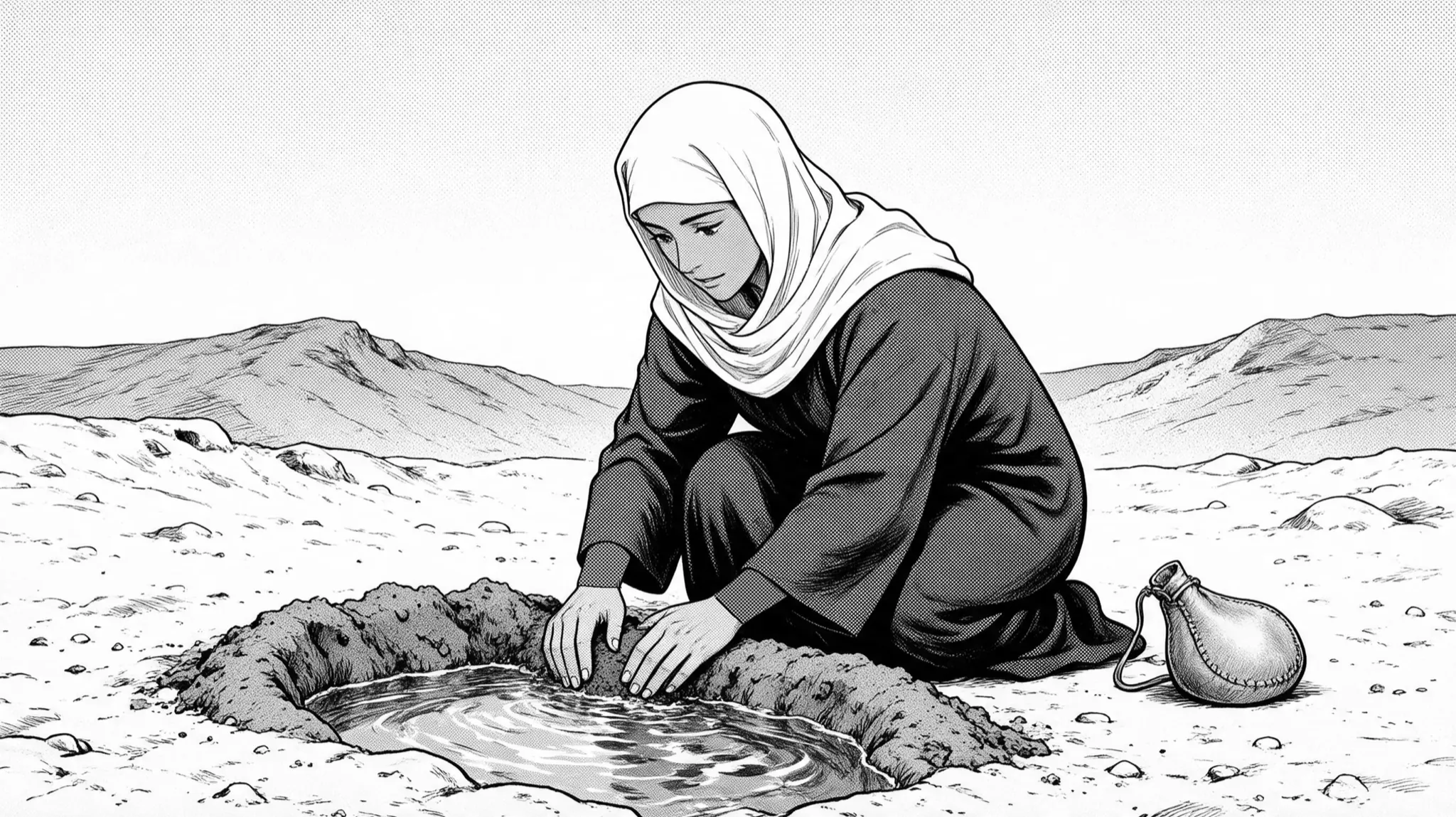
- Sahih al-Bukhari 3364 (Ibn Abbas) - at al-Marwa the last time she heard a voice and said, 'You have made me hear your voice; have you got something to help me?' (p58); she saw an angel at the place of Zamzam and water coming out of the ground (p59); she made a basin round it with her hand and filled her skin (p60); the angel's words, 'Don't be afraid of being neglected, for this is the House of Allah which will be built by this boy and his father, and Allah never neglects His people' (p61, p62), verbatim. The report has the angel digging with his heel (or his wing); the picture draws no digging
- Qur'an 2:158 - the pause page: Allah's word that al-Safa and al-Marwah are among the symbols of Allah, the span and nothing else (p64); p63's caption says only that pilgrims walk between the two hills, the walking the ayah itself names
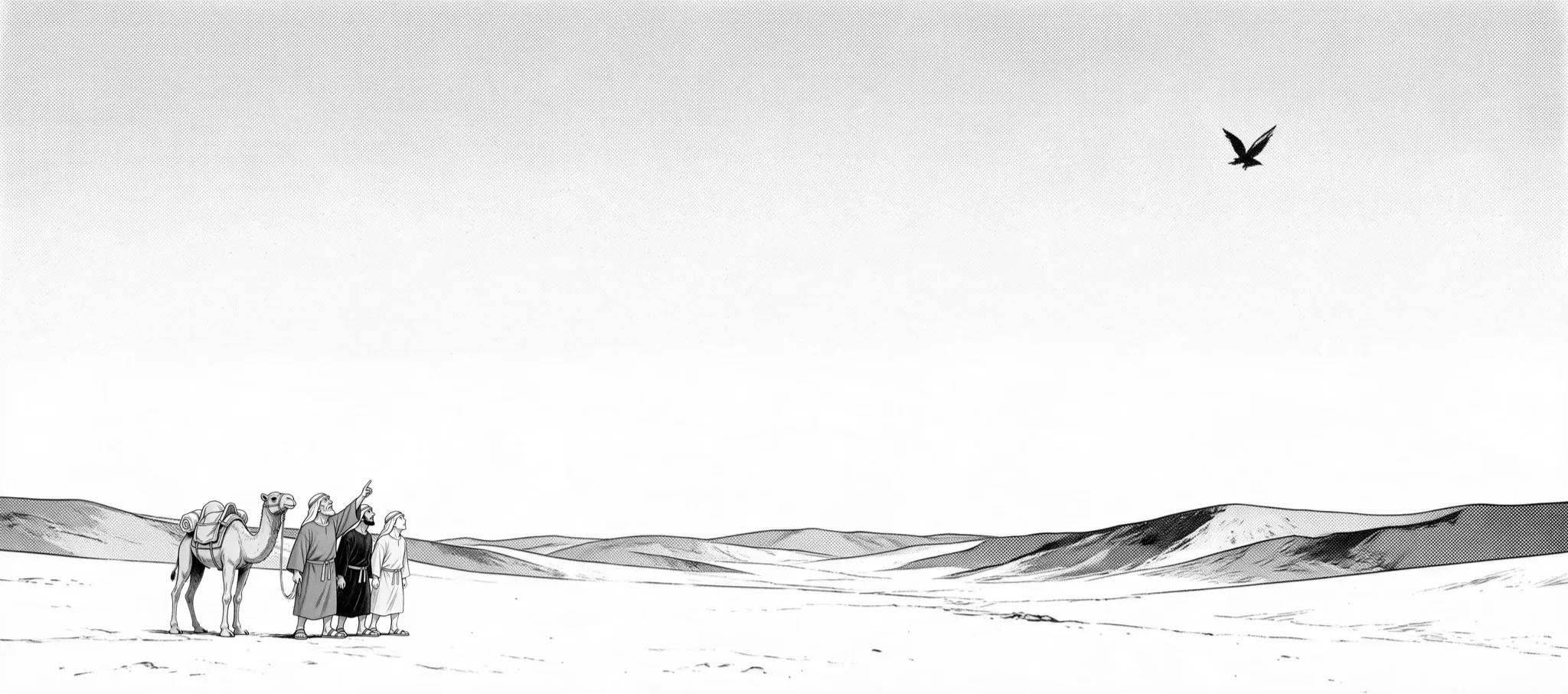
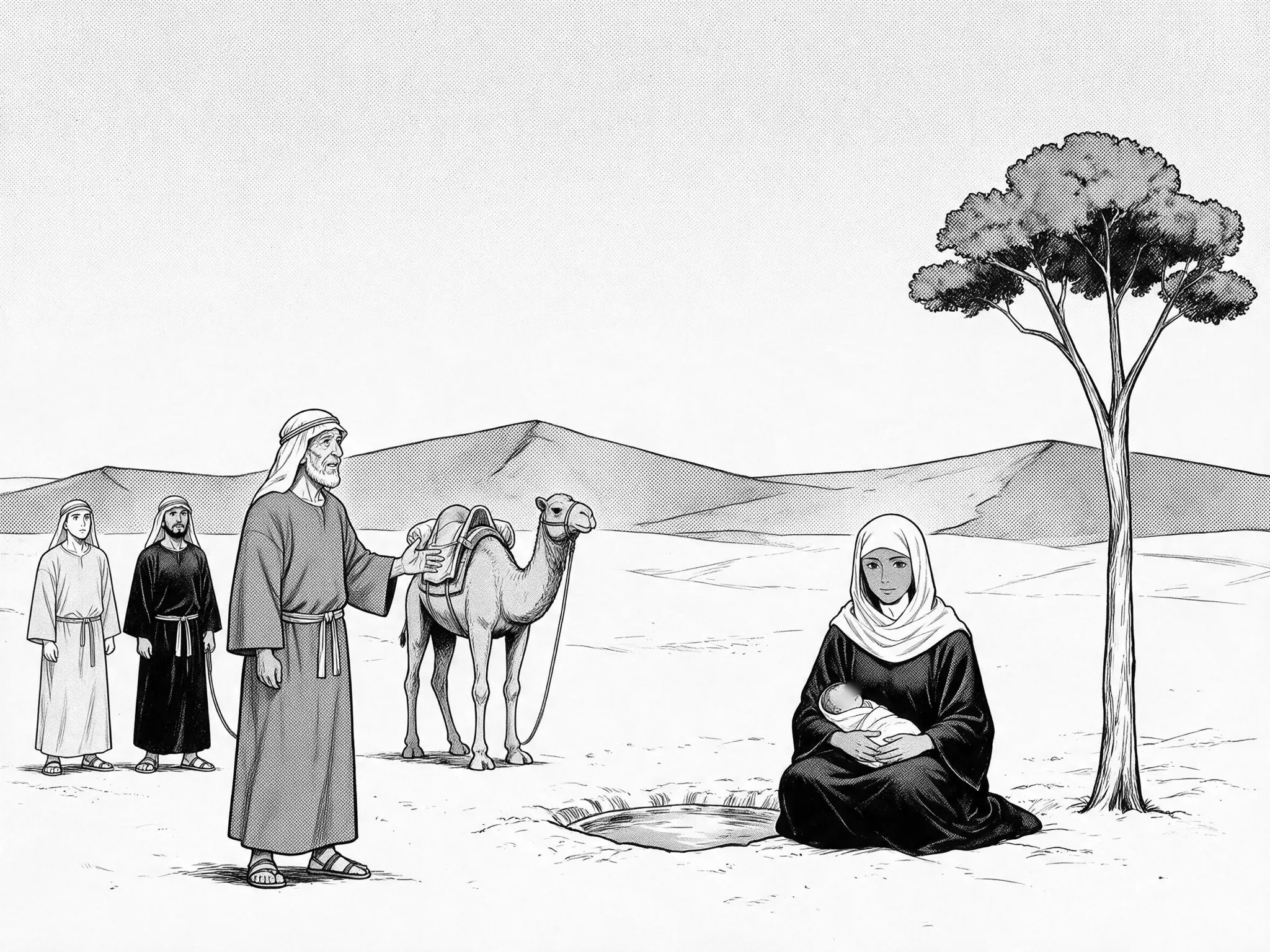
- Sahih al-Bukhari 3364 (Ibn Abbas) - travellers of the tribe of Jurhum saw a bird that kept flying round one place and knew there must be water; they sent a messenger or two, who found it (p65); 'Do you allow us to stay with you?' and her answer, 'Yes, but you will have no right to possess the water', verbatim (p66). The report says 'some people from the tribe of Jurhum or a family from Jurhum'; the three men and the camel are the picture's
- Sahih al-Bukhari 3364 (Ibn Abbas) - the boy grew up among them, learnt Arabic from them, and they loved and admired him (p67); no age is told
- Sahih al-Bukhari 3364 (Ibn Abbas) - not told here: the sentence about Sarah and the girdle that opens the report, the Prophet's (peace be upon him) own remarks inside it, Ismail's marriage, Ibrahim's visits to him and the building of the House
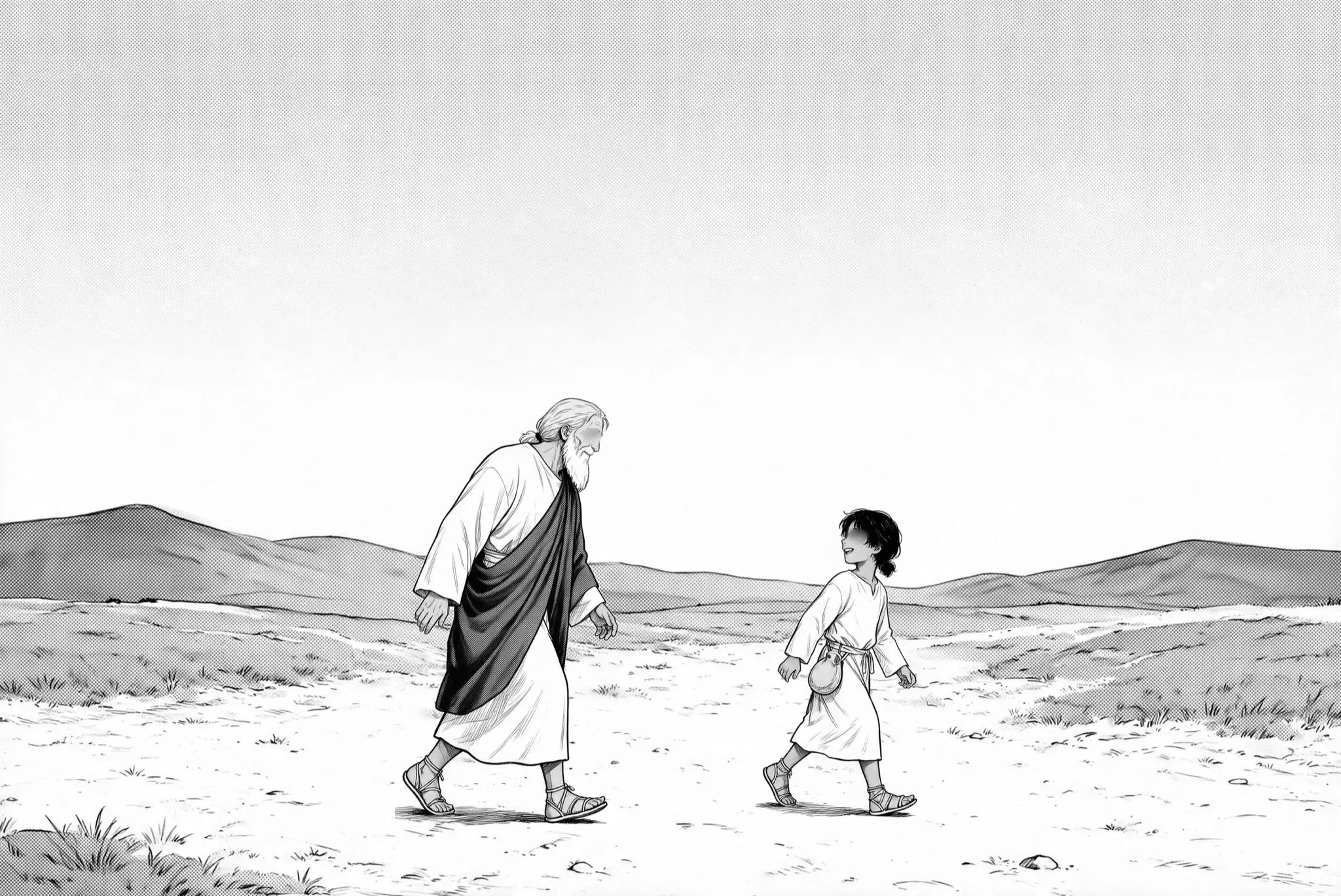
- Qur'an 37:100 to 111 - the Qur'an does not name the son of the dream, and scholars differ between Ismail and Ishaq; p68's caption says only that. Ismail is named earlier as Hajar's infant (p40; Qur'an 14:39 and Sahih al-Bukhari 3364), and nothing in the words says he is the boy of p68; the pictures draw the infant and the youth alike, which is the studio's staging
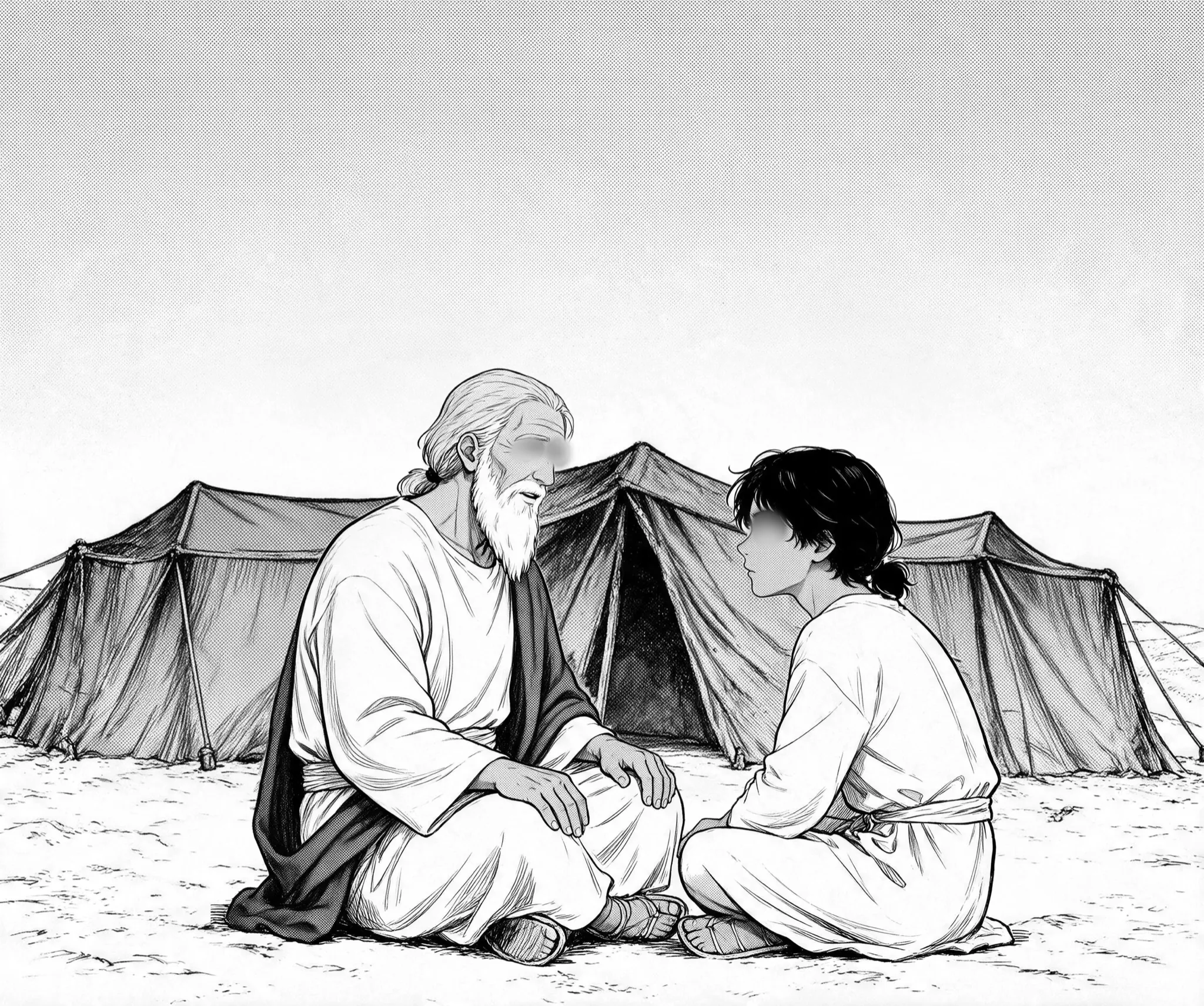
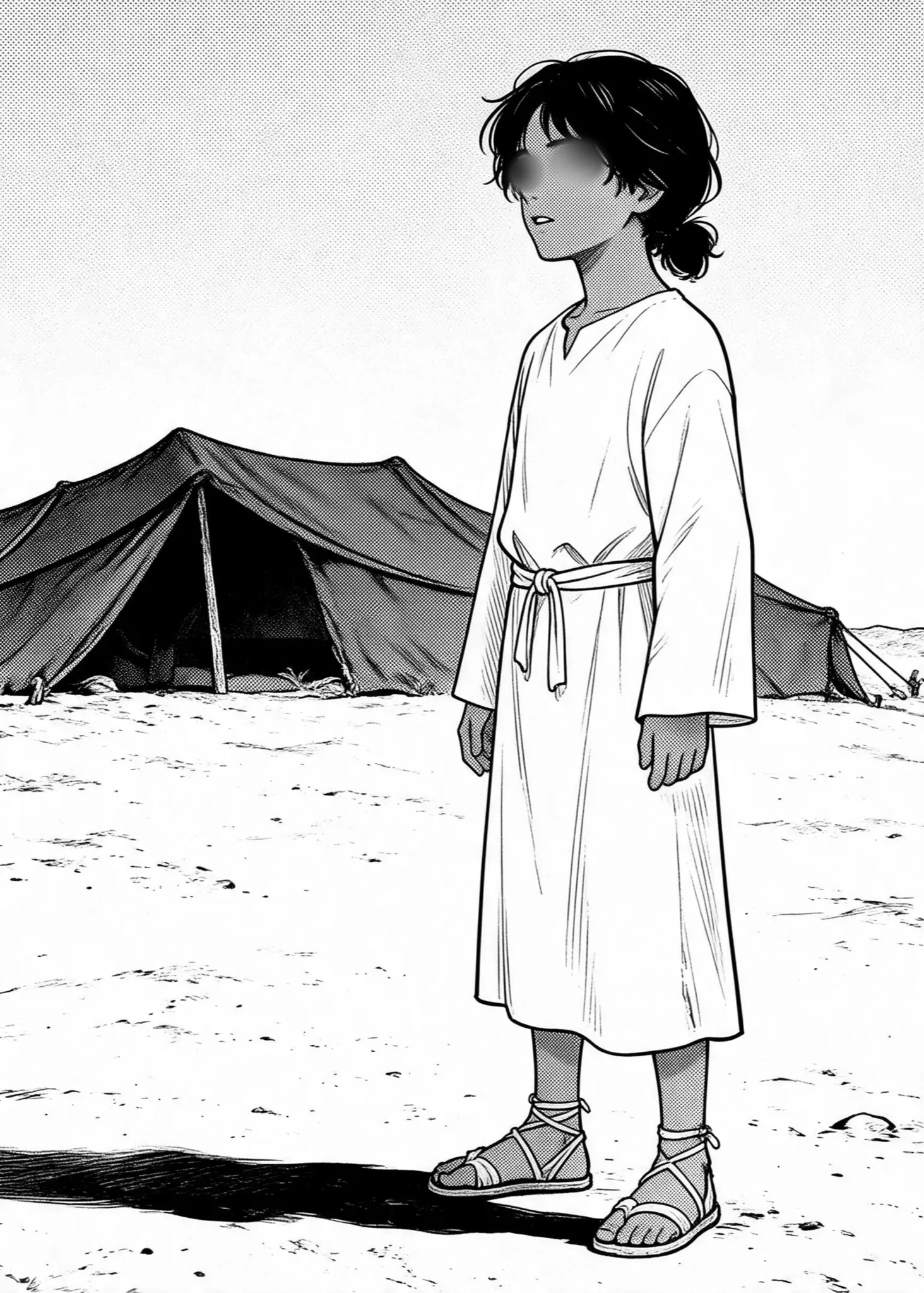
- Qur'an 37:102 - the boy reached 'the age of exertion'; his father told him his dream and asked what he thought, and the son answered (p69, p70). The youth of about thirteen is the studio's staging
- Qur'an 37:103 - not told here: the page before the pause page ends on the two walking up with their hands empty (p71)
- Qur'an 37:104-107 - Allah's call to Ibrahim, 'You have fulfilled the vision', 'the clear trial' and the ransom with 'a great sacrifice': all of it His speech, so the pause page carries the span and nothing else (p72)
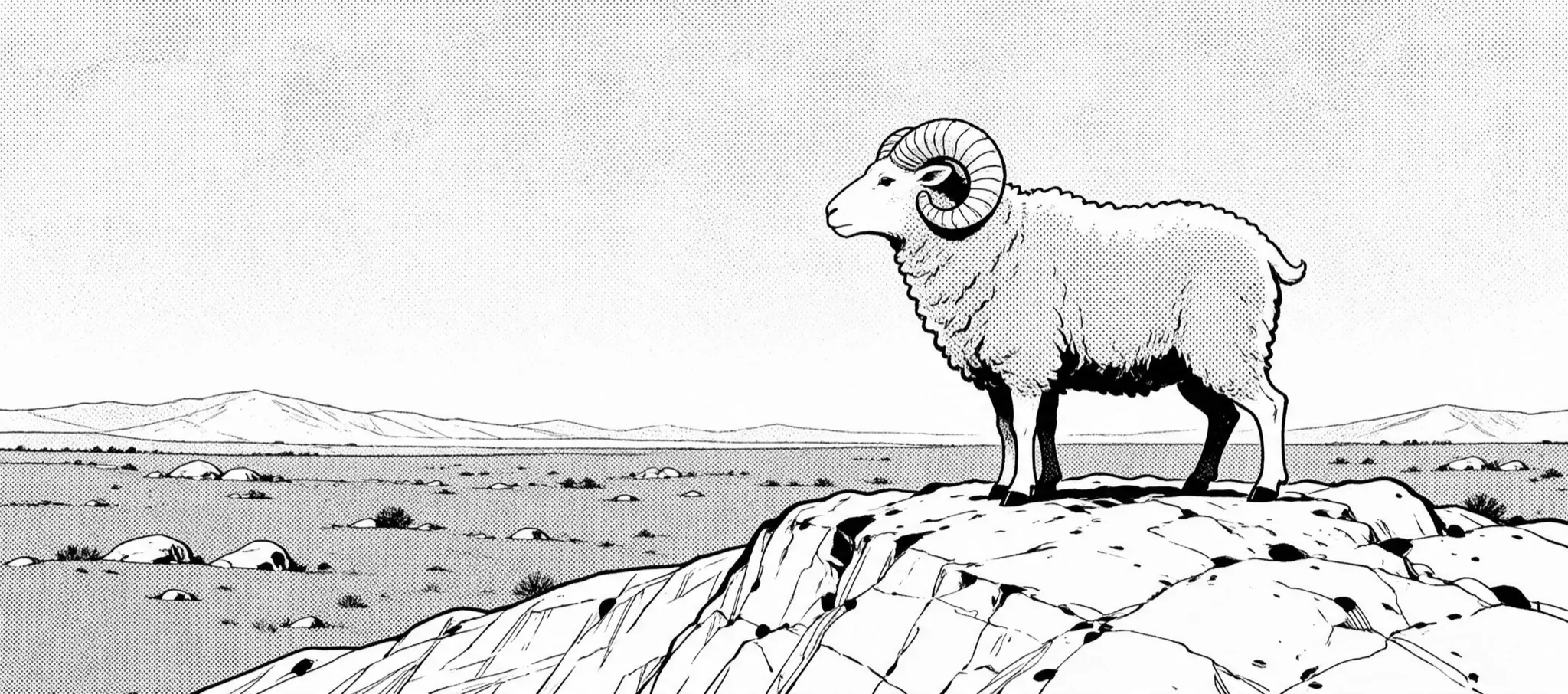
- Qur'an 37:107 - the ransom was 'a great sacrifice' (dhibh azim); that it was a ram is tradition's, and the caption says so (p73)
- Qur'an 37:108 to 109 - Allah left a greeting for Ibrahim among the later generations ('Peace upon Ibrahim'): the narrator reports THAT, in the narrator's own words (p74)
- Qur'an 37:112 and 37:113 - the good news of Ishaq, a prophet from among the righteous, which follows in the surah's order (p75); the guests who bring it elsewhere (11:69 to 73; 15:51 to 56; 51:24 to 30) are not told here
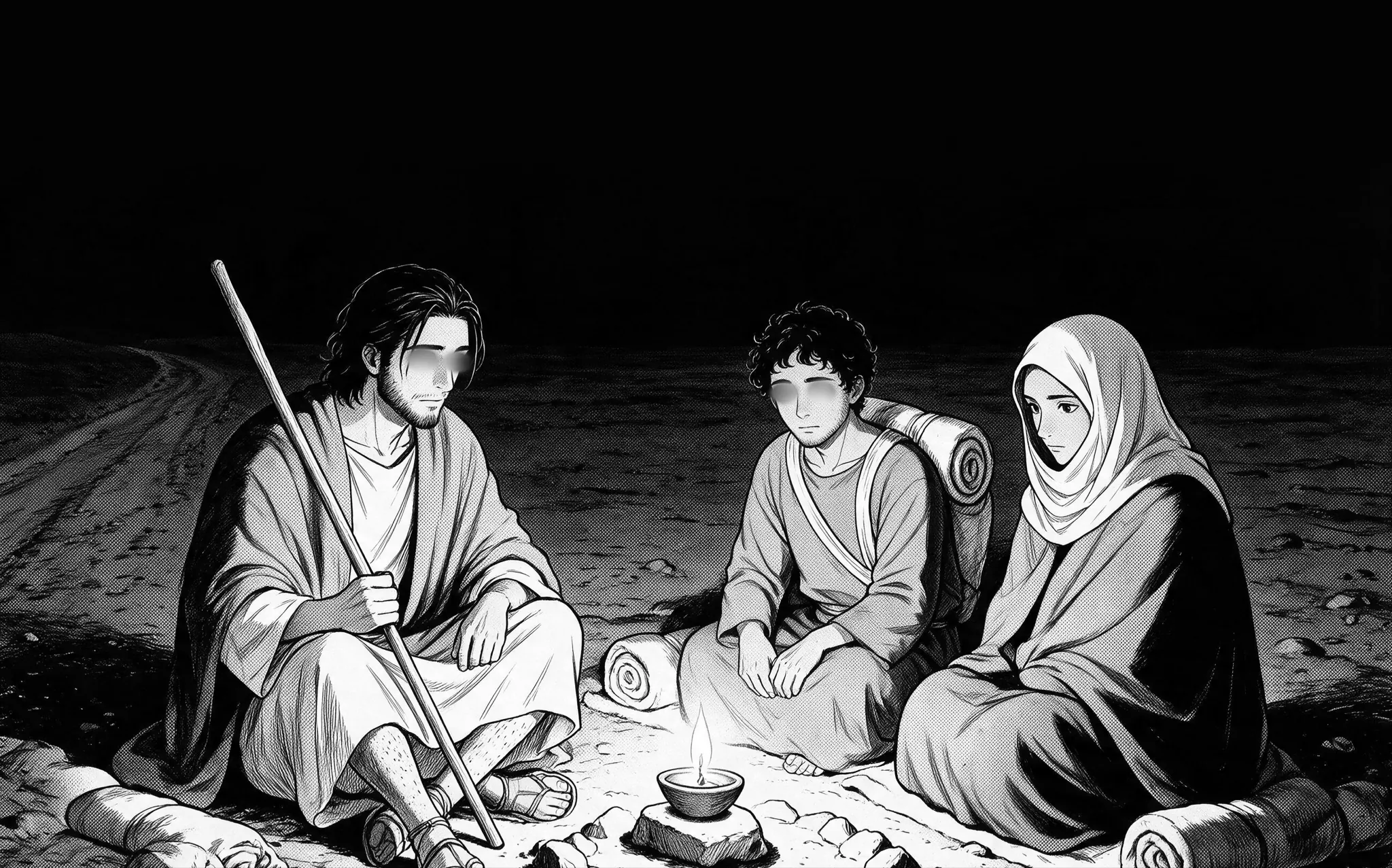
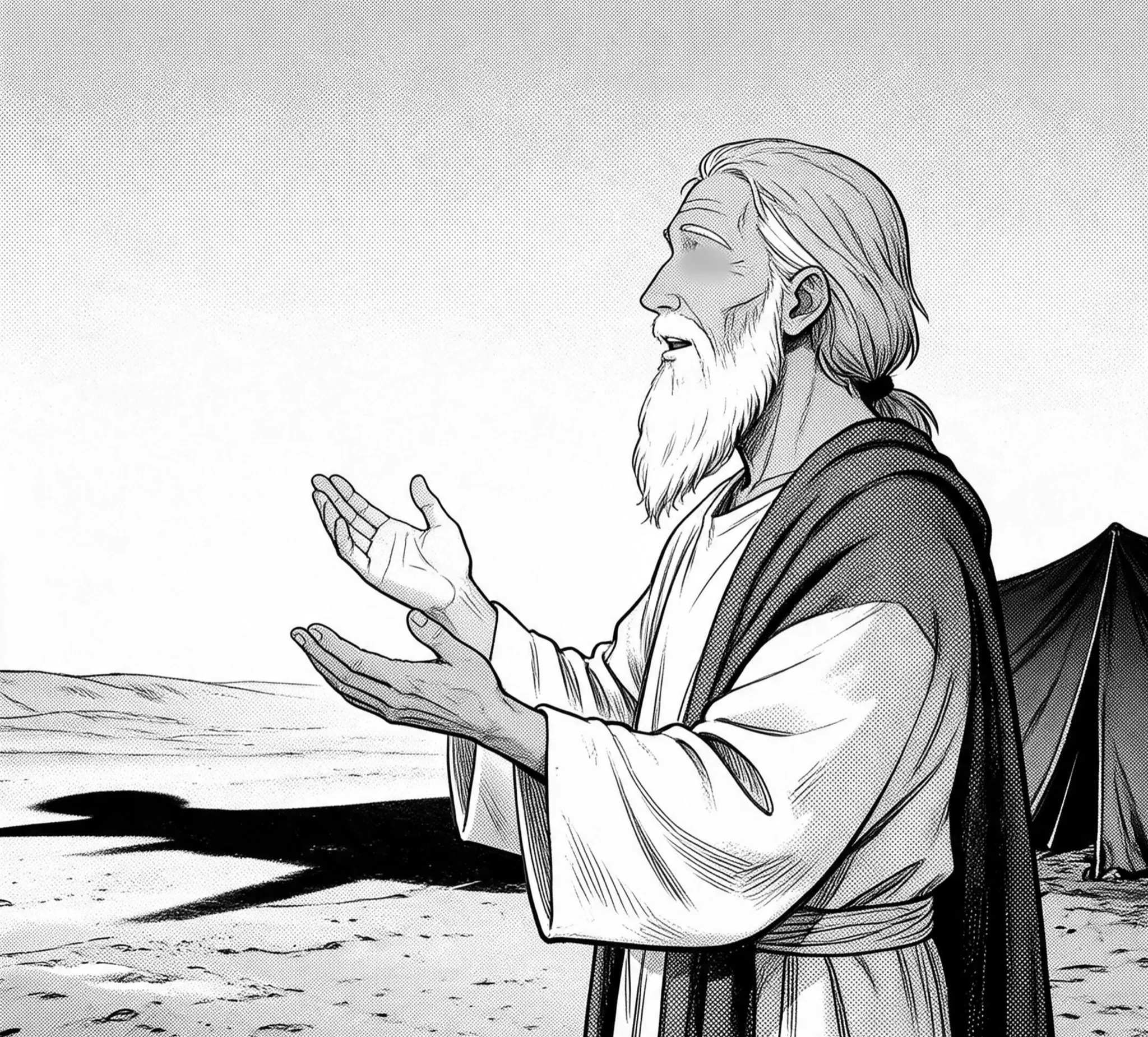
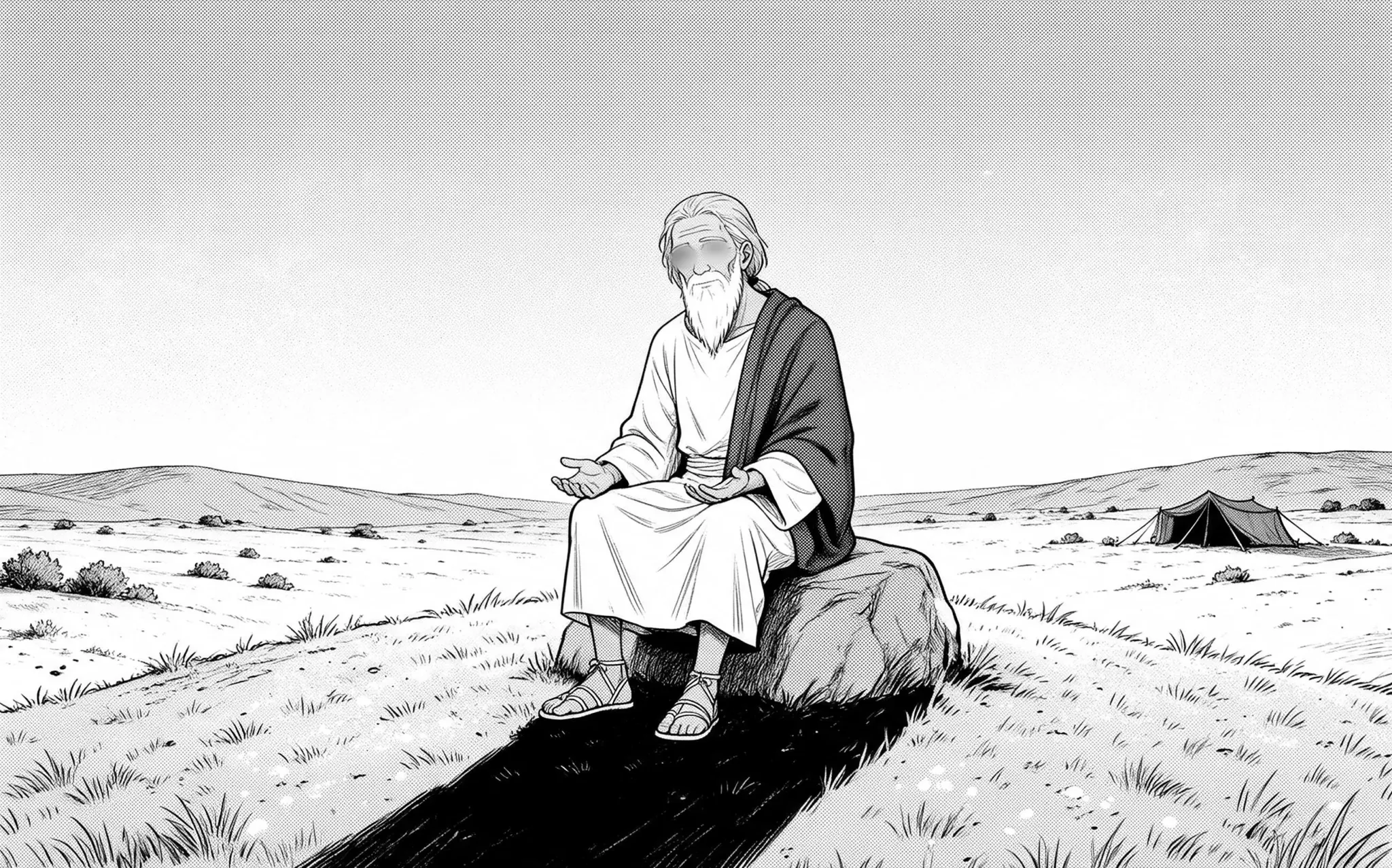
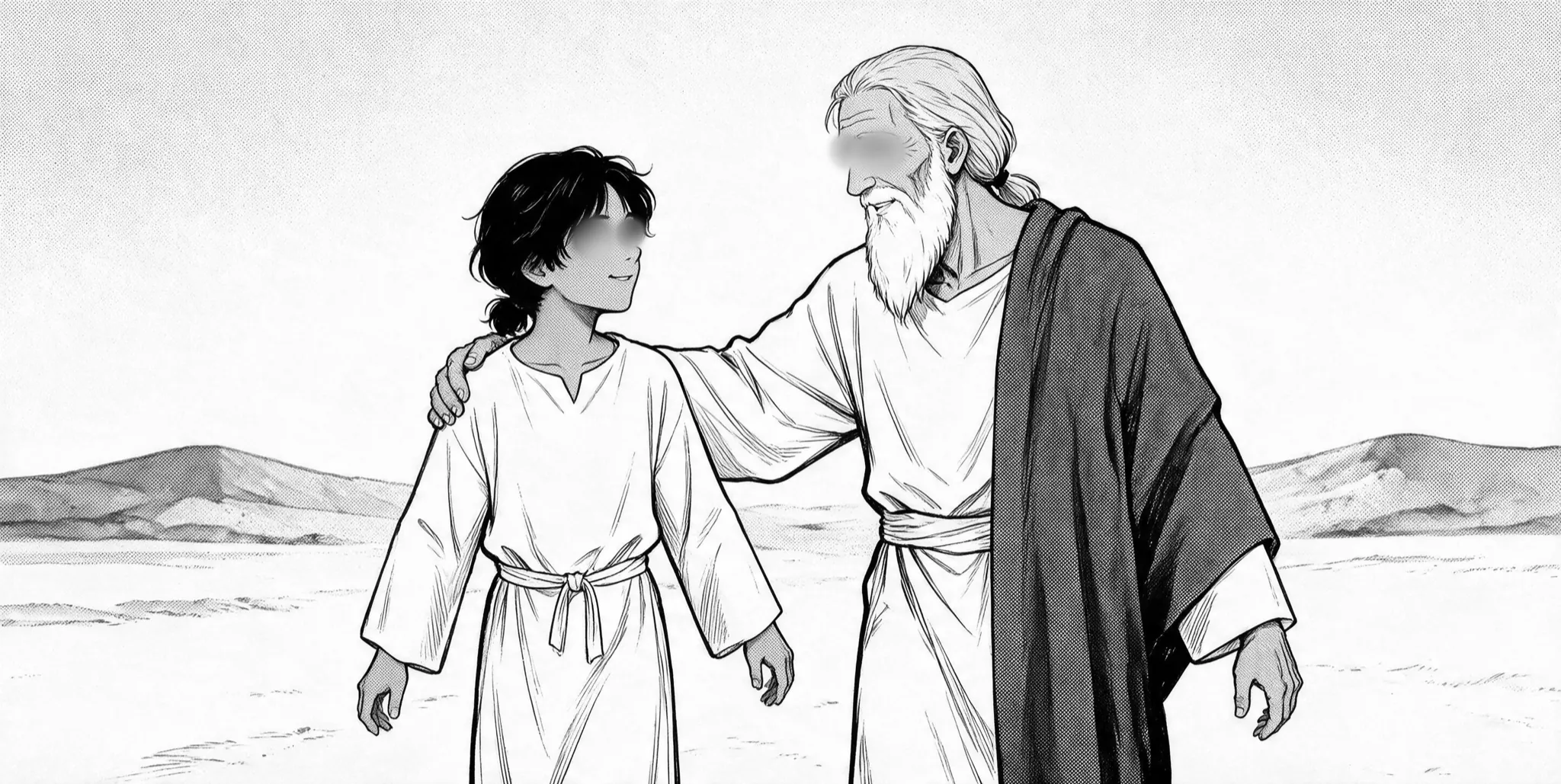
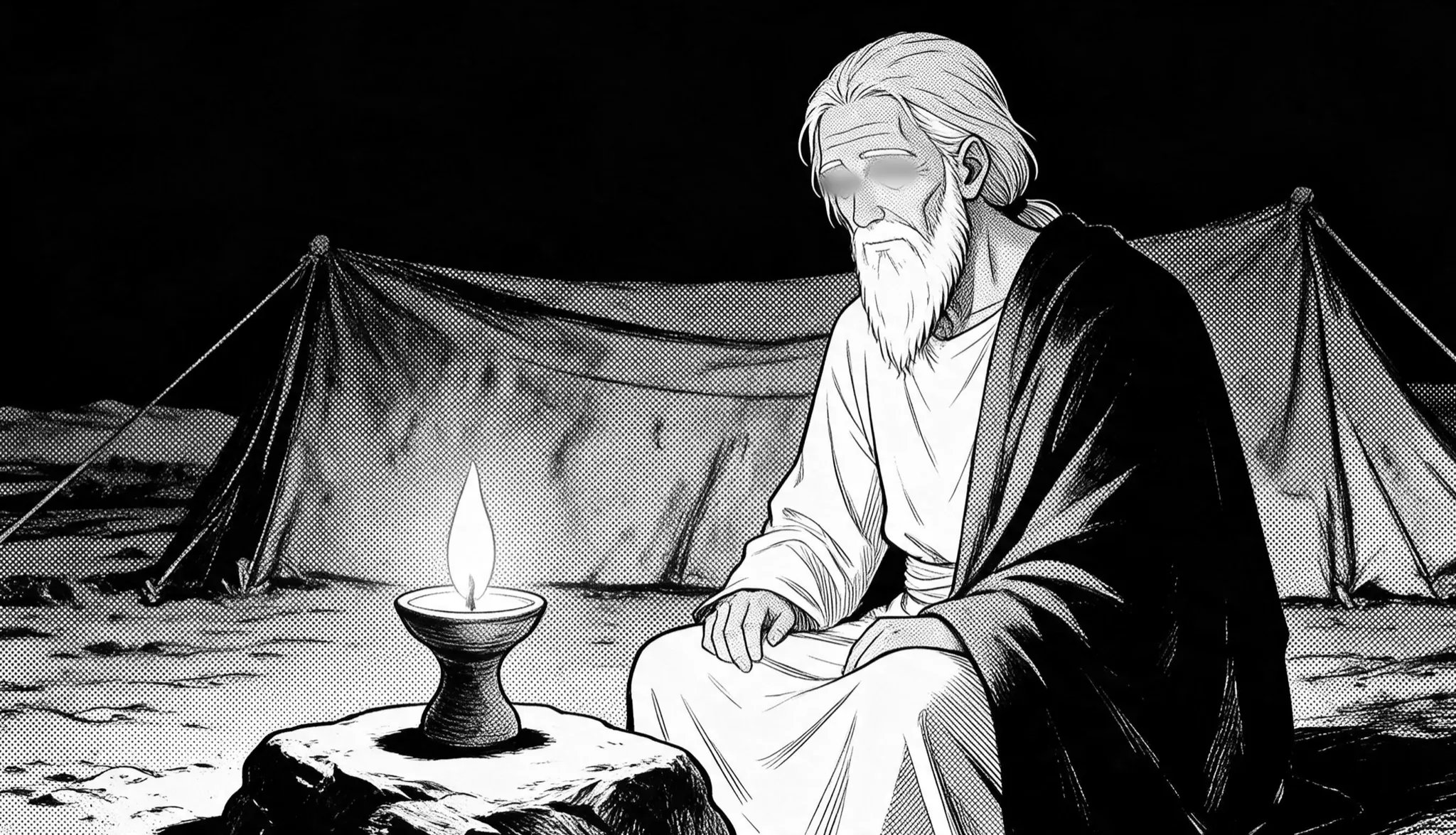
- What the act stages inside the verses and the report is the studio's own: the old man's camp at dusk and his open hands, the rise at first light, the valley with its lone tree on a bare rise, the leather bag and the water-skin as drawn, the pass where he stops, the two bare hills and the worn track between them, the basin of earth round the spring, the figure of light, the circling bird and the travellers' camel, the path at the foot of the hills, the telling of the dream and the answer at the tent, the ridge at dawn, the ram on a rocky rise, the arm round the youth's shoulders, and the camp's lamp lit again; and the old man, Hajar, the infant, the youth and the travellers as drawn, their ages included
- Recitation on the pause pages: Muhammad Siddiq al-Minshawi, murattal, Hafs from Asim, streamed per ayah from everyayah.com
- Arabic text on the pause pages: the Uthmani text, Hafs from Asim, as quran.com serves it
- Hadith wording in the bubbles (p44 to p47, p58, p61, p62, p66): Sahih al-Bukhari 3364, its Arabic and Muhammad Muhsin Khan's English as the open hadith dataset (fawazahmed0/hadith-api, from sunnah.com) serves them, each line trimmed to the clause its speaker speaks and the translator's brackets dropped
Play this chapter
Test what you know about this chapter.
Every story on this page is a chapter in DeenOD: Islamic Trivia & Games - free, no ads, every question source-cited.